

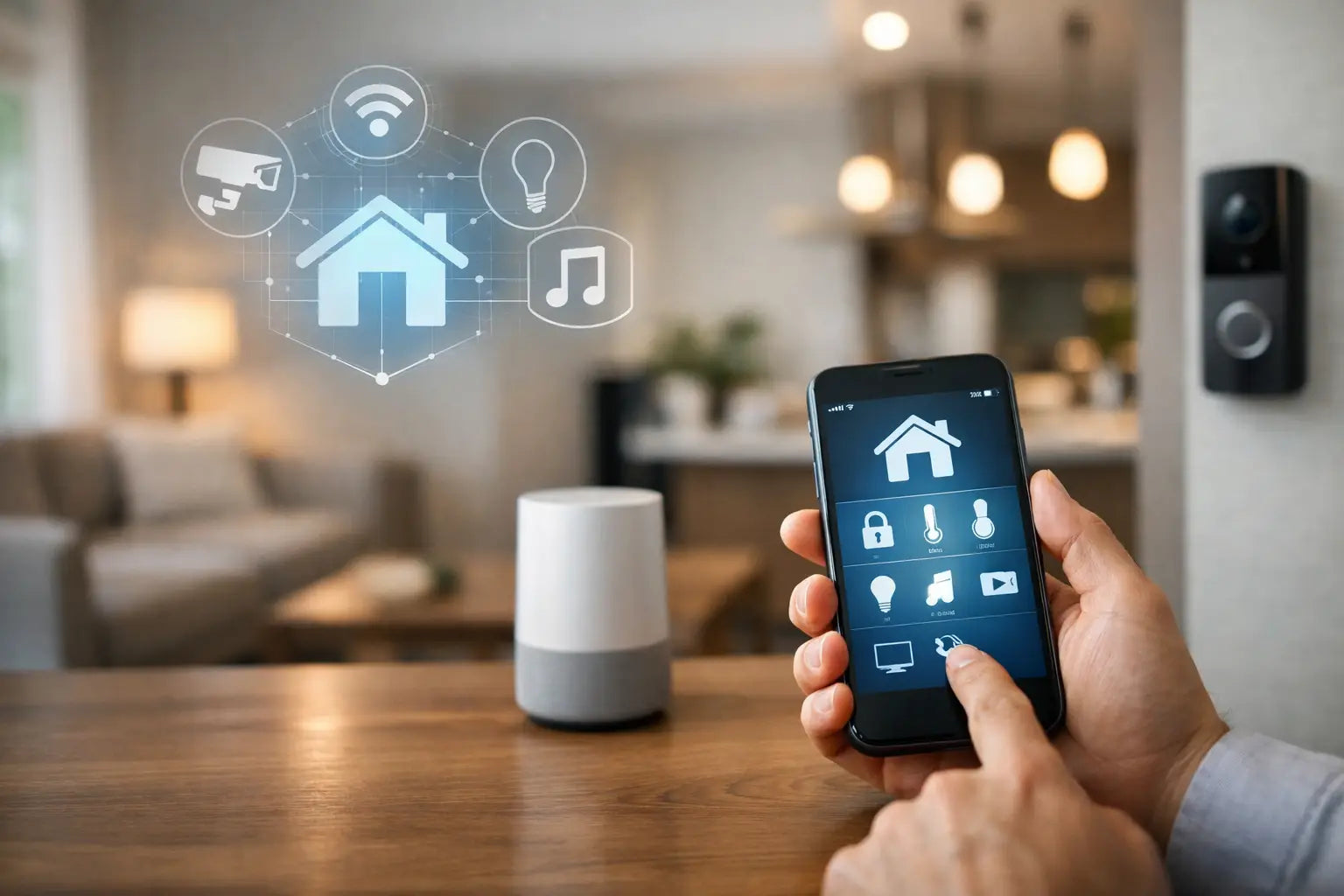
You notice it most in a beautifully designed home when something feels slightly off. The lighting is perfect, but the shades need adjusting. The room is cool, but the AC in the guest wing is still running. The security system works, yet it sits apart from the gate, cameras, and door access. This is exactly why is smart home automation important for modern living - it turns excellent individual systems into one intelligent environment.
For premium homes, automation is not about novelty. It is about control, consistency, and the kind of quiet sophistication that makes a property feel effortless to live in. When lighting, climate, curtains, security, audio, and entertainment respond together, the home begins to work with you rather than asking to be managed room by room.
Why is smart home automation important in luxury living?
In a high-end residence, expectations are different. Owners are not simply buying devices. They are shaping an experience. A villa with custom finishes, refined architectural details, and carefully selected materials should not be undermined by a stack of unrelated apps, visible remotes, or systems that require constant manual intervention.
Smart home automation brings order to complexity. Instead of treating lighting control, HVAC, access control, surveillance, and audiovisual systems as separate layers, it integrates them into a single operating logic. One command can prepare an entire space for evening entertaining. Another can secure the property at night, lower selected shades, dim pathway lighting, and arm perimeter protection.
That level of coordination matters because luxury is often defined by what you do not have to think about. The best systems do not demand attention. They support comfort, privacy, and atmosphere with precision.
It simplifies daily living without reducing sophistication
Many homeowners assume automation is mainly about convenience, and that is true, but the real value runs deeper. Convenience becomes meaningful when it saves time every day and removes friction from the routines that shape how a home feels.
A well-integrated system can adjust lighting based on time of day, manage indoor temperature by occupancy or zone, open curtains in the morning, and activate selected music in the areas being used. In large homes especially, this prevents the all-too-common problem of expensive technology becoming fragmented and underused.
There is also an important distinction between adding smart products and designing an automated home. A collection of standalone gadgets may offer app control, but it rarely delivers the consistency, speed, and reliability expected in premium spaces. True automation is engineered. It is planned around how the property functions, how the owners move through it, and how each system should respond in relation to the others.
Security becomes stronger when systems work together
Security is one of the clearest answers to the question, why is smart home automation important. A camera system on its own records events. An automated security environment helps manage them.
When access control, smart locks, video surveillance, gate systems, motion sensing, lighting scenes, and remote alerts are integrated, the property becomes more responsive. If someone approaches an entry point after hours, exterior lighting can activate immediately, cameras can focus on the relevant area, and the owner can receive a notification tied to live visuals rather than a vague alarm.
For families with multiple staff, guests, and service providers entering throughout the week, automation also creates better oversight. Access can be scheduled, monitored, and limited to specific zones or time windows. That is far more refined than handing out keys or relying on isolated intercoms.
Of course, not every home requires the same level of security logic. A city apartment, a private estate, and a seasonal property all present different priorities. The importance of automation lies in tailoring response, not applying one generic solution everywhere.
Energy efficiency matters more in larger homes
Luxury homeowners are often less interested in cutting every utility bill to the minimum and more interested in avoiding waste without compromising comfort. That is where automation becomes especially valuable.
Large homes frequently lose efficiency through inconsistency. Lights remain active in unused spaces. AC systems cool rooms that are not occupied. Curtains stay open during peak heat hours, forcing HVAC systems to work harder. These are not dramatic failures, but over time they create significant operational inefficiency.
Automation solves this elegantly. Lighting schedules, occupancy sensors, climate zoning, and shade control can all work together to reduce unnecessary energy use. The result is not a home that feels restricted. It is a home that maintains comfort more intelligently.
This matters for developers and property owners as well. Buyers increasingly expect premium residences to include not just fine finishes, but intelligent environmental control. Energy-aware automation is becoming part of what defines a forward-looking property.
Entertainment feels more immersive when it is integrated
One of the most overlooked reasons smart home automation is important is that it transforms entertainment from a collection of devices into a curated experience. In a cinema room, media lounge, or open-plan living area, the difference is immediate.
Instead of switching inputs manually, adjusting lights separately, lowering shades with another remote, and fine-tuning audio after the fact, a single scene can prepare the room in seconds. The projector powers on, the screen drops, accent lighting dims to the right level, climate settings adjust for occupancy, and the sound system enters the correct mode.
That same logic applies beyond dedicated cinema spaces. Multi-room audio, terrace speakers, gym AV, and family living zones all benefit from centralized control. The home becomes more enjoyable because entertainment is simpler to access and better aligned with the design of the space.
For architects and interior designers, this is also where automation supports aesthetics. It reduces visual clutter. Wall controls can be refined, equipment can be concealed, and the overall environment stays clean and intentional.
Property value is influenced by how future-ready a home feels
Premium real estate is judged on more than size and finishes. Buyers pay attention to how a home performs. They notice whether systems feel current, integrated, and easy to manage.
A well-executed smart home infrastructure can strengthen property appeal because it signals long-term quality. It suggests the home was not assembled in pieces, but planned with foresight. That matters in a market where discerning buyers increasingly expect modern security, intelligent lighting, climate control, and entertainment capability to be part of the package.
That said, value depends on execution. Poorly chosen devices, inconsistent interfaces, or unreliable programming can create the opposite effect. Smart home automation adds prestige when it is invisible in the right ways and intuitive in the moments that matter.
The real advantage is personalization
The best automated homes are not the ones with the most features. They are the ones that understand the people living in them.
A family with young children may prioritize nighttime pathways, nursery comfort, pool and perimeter alerts, and simple one-touch routines for mornings and evenings. A frequent host may want entertainment scenes, outdoor audio zones, elegant lighting transitions, and guest access controls. A business owner with multiple residences may value remote monitoring, energy oversight, and the ability to prepare a property before arrival.
This is where bespoke design becomes essential. Automation should reflect the architecture, the lifestyle, and the operational demands of the property. For that reason, the question is not only why is smart home automation important, but why thoughtful integration matters more than buying smart products off the shelf.
At the premium end of the market, details define the result. Interface design, equipment placement, system programming, acoustic performance, lighting intent, and long-term service support all shape whether the experience feels exceptional or merely technical.
Why smart home automation matters now
The modern home carries more systems than ever before. Security expectations are higher. Entertainment standards are higher. Comfort is no longer judged only by furniture and finishes, but by how responsive the environment feels throughout the day.
Smart home automation matters because it brings those expectations into alignment. It gives homeowners a way to live with greater ease, protect what matters, reduce waste, and enjoy their spaces at a higher level. For developers, designers, and decision-makers shaping premium environments, it also creates a stronger final product - one that feels contemporary, considered, and complete.
For clients who expect their homes to be as intelligent as they are elegant, this is no longer an extra layer. It is part of what makes the space truly finished. At I-Trust Systems, that is where technology stops feeling like equipment and starts feeling like living well.
Share:
High End Projectors for Home Theater
10 Best Smart Home Automations for Luxury Living