

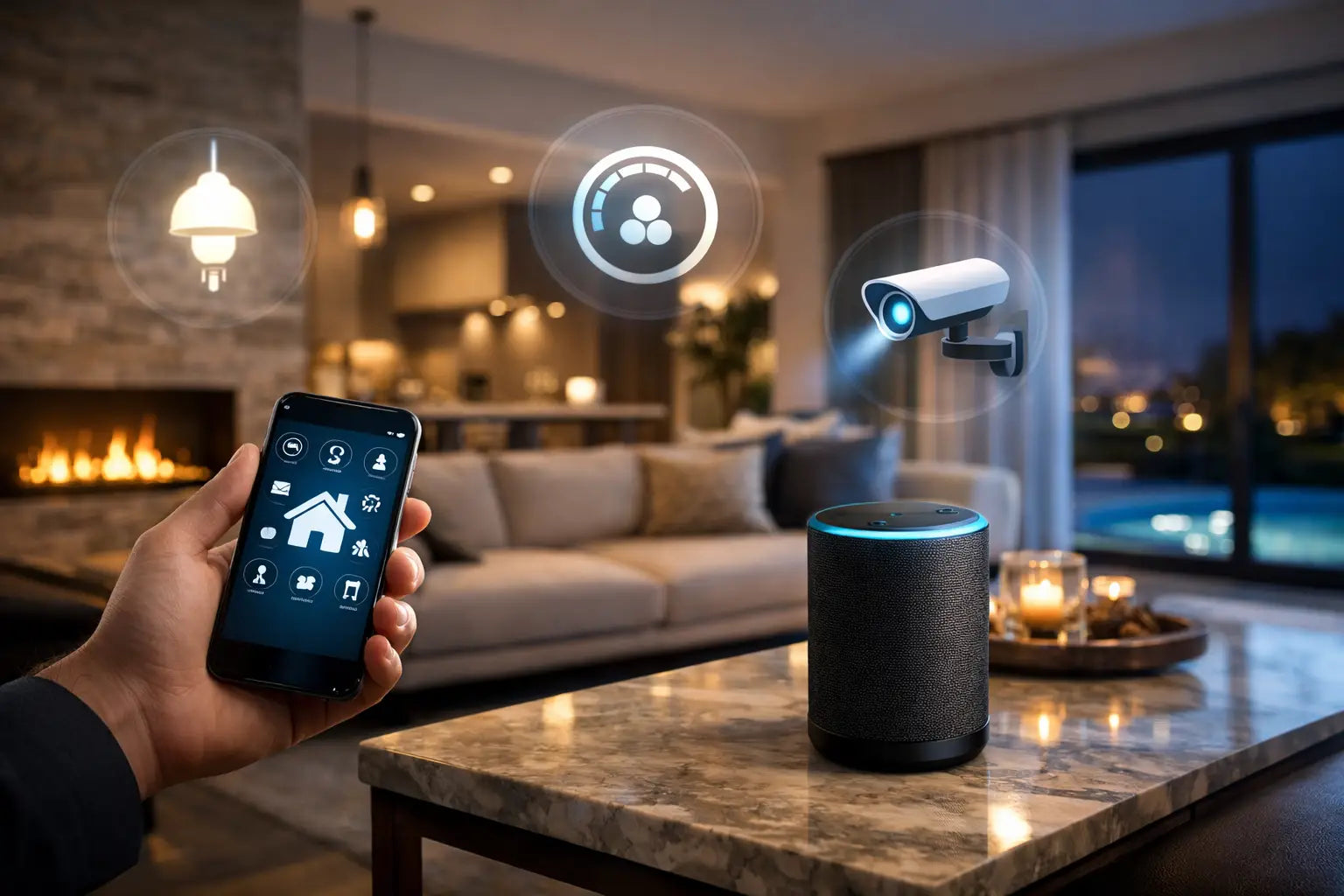
A well-designed home should respond before you ask. The best smart home automations do exactly that - they remove friction, protect the property, and shape the atmosphere of each room with quiet precision. In a premium residence, automation is not about adding novelty. It is about creating a home that feels composed, intuitive, and fully in step with the way you live.
For villa owners, developers, and design professionals, the real question is not which gadget is trending. It is which automations deliver meaningful daily value without compromising aesthetics, reliability, or control. The strongest systems are the ones that disappear into the architecture while elevating comfort, efficiency, entertainment, and peace of mind.
What makes the best smart home automations worth installing?
Not every automation deserves space in a high-end project. The best results come from systems that solve repeated daily tasks, work consistently, and integrate cleanly with the wider environment. A single smart switch or stand-alone camera may be useful, but that is not the same as a coordinated system where lighting, climate, shading, security, and AV respond together.
That distinction matters. In luxury homes, fragmented technology quickly becomes frustrating. Multiple apps, mismatched finishes, and unreliable routines can make an expensive property feel less refined, not more. The better approach is engineering-led integration, where each automation supports the others and the user experience remains simple.
1. Intelligent lighting scenes
Lighting is often the first automation clients notice and the one they appreciate longest. A proper lighting control system allows one-touch or scheduled scenes for arrival, dining, entertaining, evening wind-down, and late-night movement. Instead of adjusting individual fixtures, the room shifts instantly to the right mood.
This also serves a practical purpose. Pathway lighting after dark, occupancy-based lighting in corridors, and timed exterior lighting improve convenience and security. For larger homes, centralized lighting reduces the need for banks of wall switches and keeps the visual language of the interiors cleaner.
The trade-off is that lighting design must be planned early. Scenes only feel luxurious when fixtures, dimming protocols, keypad placement, and control logic are considered as part of the architecture.
2. Smart climate control that follows real use
A premium home should feel consistently comfortable without constant thermostat adjustments. Smart climate automation allows AC zones to respond to time of day, occupancy, outdoor conditions, and preferred room schedules. Bedrooms can cool before bedtime, living spaces can relax to an efficient setting while unoccupied, and guest rooms can remain dormant until needed.
In warmer regions, this is one of the most valuable automations in the home. It protects comfort while reducing waste. More importantly, it delivers a better experience than simply switching AC units on and off remotely.
The best systems are discreet and responsive. They balance comfort with energy management rather than forcing homeowners into rigid schedules. In larger villas, zoned climate control is especially effective because different spaces are used very differently across the day.
3. Motorized curtain and blind automation
Curtain automation is where convenience and elegance meet. Morning scenes can open drapery gradually with soft lighting, while afternoon routines can close blinds on sun-exposed elevations to reduce heat gain and preserve interior finishes. In media rooms and private cinemas, blackout control can be tied directly to entertainment scenes.
This is one of the best smart home automations for homes with expansive glazing, double-height spaces, or difficult-to-access window treatments. It enhances comfort, supports energy performance, and adds a level of polish that manual operation rarely matches.
It does, however, require coordination with interior design. Fabric weights, track types, pocket details, and power provisions all affect the final result. When planned well, the automation feels effortless. When added late, compromises appear quickly.
4. Arrival and departure scenes
Few automations are used more often than the routines that frame the day. An arrival scene might disarm selected security zones, light the entrance sequence, adjust the AC, and cue a preferred music profile in the main living areas. A departure scene might turn off nonessential lighting, close curtains, set back the climate, and activate perimeter security.
This is where integrated design outperforms stand-alone products. The homeowner is not managing separate tasks. The property responds as one coordinated environment.
For families with staff, guests, or multiple access points, these routines need thoughtful logic. The right setup depends on lifestyle, occupancy patterns, and the level of automation the owner actually wants. Good design never makes the house feel unpredictable.
5. Layered smart security automation
Security automation should do more than send alerts. In a premium home, it should create a layered response that includes smart locks, access control, video surveillance, perimeter monitoring, gate integration, and lighting triggers. If motion is detected in a restricted zone, the system can illuminate the area, flag the relevant camera view, and notify the homeowner or security team immediately.
This is also where automation adds reassurance during travel. Scheduled occupancy lighting, remote video access, and status monitoring help the property feel actively managed even when vacant.
The key is balance. Overly aggressive notifications or poorly calibrated motion logic can become noise. Effective security automation is precise, selective, and easy to oversee from a single interface.
6. Multi-room audio that follows the moment
Music changes how a space feels, but only when control is simple. Multi-room audio automation allows background music to begin in selected zones at specific times, shift with entertaining modes, or pause automatically when the home enters a cinema or quiet scene. Outdoor areas, gyms, majlis spaces, kitchens, and circulation zones all benefit from this kind of orchestration.
The appeal is not only convenience. It is consistency. Properly engineered audio keeps equipment concealed, sound balanced, and control unified. There is a clear difference between portable speakers scattered across a property and a distributed audio system designed as part of the architecture.
For clients who entertain often, this becomes one of the most enjoyed automations in the home.
7. Home cinema and media room presets
A luxury cinema should not begin with five remotes and a checklist. One command should dim the lights, close the curtains, lower the projector screen if needed, switch the AV sources, and set the room to the right acoustic and visual state. The same principle applies to media lounges and family rooms.
This kind of automation turns high-performance equipment into an experience rather than a technical exercise. It protects the investment in audio, projection, seating, and interior finish by making the room genuinely easy to use.
The most successful cinema automations are tailored. A dedicated theater, an open-plan media zone, and a gaming room each require a different control philosophy. That is where a bespoke approach matters.
8. Occupancy-based utility control
Some of the smartest automations are the least visible. Utility-based routines can switch off lighting and AV equipment in unused areas, reduce cooling in unoccupied zones, and prevent systems from running unnecessarily in service spaces or secondary rooms.
In larger residences, this can produce meaningful operational savings without changing the feel of the home. The trick is subtlety. Occupancy logic should support the household, not interrupt it with lights turning off too quickly or climate settings changing at the wrong moment.
This is why calibration matters as much as hardware. Sensor placement, timeout periods, and room purpose all affect whether the automation feels intelligent or irritating.
9. Outdoor living automation
For homes with gardens, pools, terraces, or majlis-style outdoor entertaining areas, automation should extend beyond the interior. Exterior lighting scenes, landscape audio, pool equipment scheduling, misting or fan control, and gate access can all be integrated into a unified outdoor experience.
This is particularly valuable in properties designed for hospitality and evening entertaining. The outdoor setting can transition from daytime function to nighttime ambiance with minimal intervention.
Weather exposure and maintenance planning are important here. Outdoor systems need suitable hardware, thoughtful zoning, and installation standards that match the environment.
10. Whole-home control from one interface
The most valuable automation is often the one that brings everything else together. Centralized control allows lighting, climate, shading, security, and AV to operate from a single app, keypad family, or touch panel design. This is what gives a property coherence.
Without that unification, even strong individual systems can feel disconnected. With it, the home becomes easier to manage for owners, family members, and staff alike. It also creates a cleaner handover experience for developers delivering premium residences to buyers.
For discerning clients, simplicity is not a basic feature. It is part of the luxury.
Choosing the best smart home automations for your project
The best smart home automations are not always the ones with the longest feature list. They are the ones that suit the architecture, the daily rhythm of the property, and the expectations of the people using it. A penthouse, a family villa, and a high-traffic commercial space will not need the same logic, even if some of the same systems appear in each.
That is why planning matters early. Lighting loads, AC strategy, joinery details, speaker placement, rack space, Wi-Fi design, acoustics, and user interface decisions all affect how successful the finished automation will be. Premium integration companies such as I-Trust Systems approach this as a complete design and engineering exercise, not a collection of products.
If you are investing in a high-end property, choose automations that make the home calmer, sharper, and easier to enjoy every day. The right system should feel less like technology and more like the home finally behaving the way it always should have.
Share:
Why Is Smart Home Automation Important?
7 Smart Home Automation Trends to Watch