

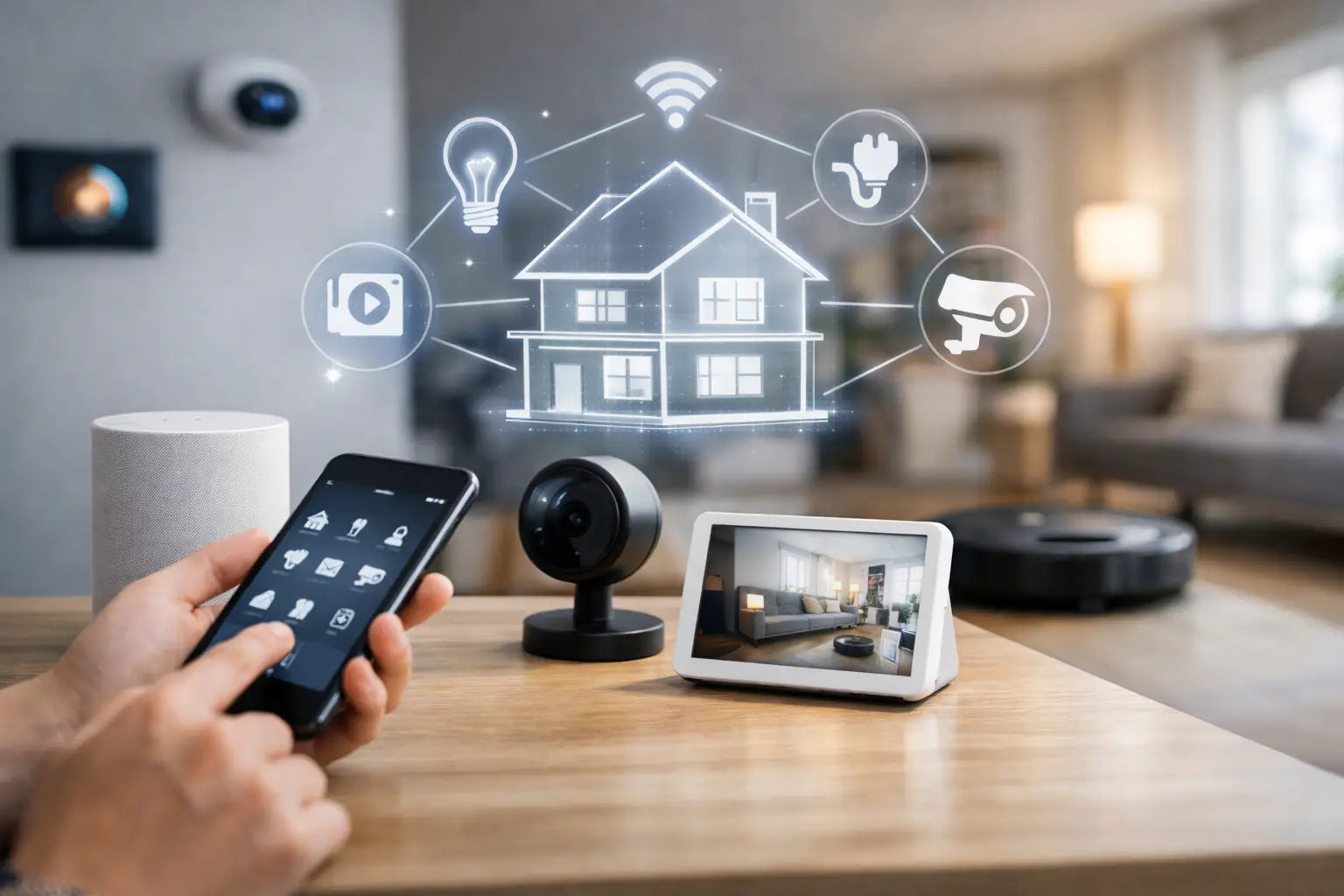
A luxury home no longer feels complete when lighting, climate, audio, security, and shading all operate as separate islands. The most relevant smart home automation trends are not about adding more gadgets. They are about turning a property into a coordinated environment that responds elegantly, looks refined, and performs reliably every day.
For homeowners, developers, and design professionals working at the premium end of the market, that shift matters. Expectations have changed. Clients want technology that disappears into the architecture, supports comfort without effort, and elevates both daily living and entertaining. They also want systems that hold up over time, not a patchwork of apps that feels dated in a year.
Smart home automation trends are moving beyond gadgets
The market has matured. A few years ago, many projects focused on individual devices - a smart speaker here, a video doorbell there, app-controlled bulbs in one room. Today, the direction is more disciplined. The strongest projects are built around integration, infrastructure, and user experience.
That distinction is especially important in large villas, multi-level residences, and premium commercial spaces. A fragmented approach may look affordable at first, but it often creates visual clutter, inconsistent performance, and a frustrating control experience. In contrast, professionally engineered automation treats the property as a whole. Lighting scenes, climate schedules, motorized curtains, surveillance, access control, and entertainment systems are planned together so they behave like one system rather than a collection of products.
1. AI is refining automation, not replacing design
Artificial intelligence is becoming part of the conversation, but its role in luxury projects is more practical than dramatic. The best use of AI is not to make a home feel experimental. It is to make automation more intuitive.
Instead of forcing homeowners to build dozens of manual routines, systems are becoming better at learning usage patterns. A home can anticipate preferred lighting levels in the evening, adjust AC settings based on occupancy and weather, or prepare entertainment spaces before guests arrive. Voice control is improving as well, though in premium environments it works best as one control layer among several, not the only interface.
There is a trade-off here. More intelligence can improve comfort, but only if the underlying system is structured properly. Poorly designed automation that keeps guessing wrong is not luxurious. It is intrusive. That is why bespoke programming and clear user logic still matter more than novelty.
2. Energy management is becoming a luxury feature
Efficiency used to be framed as a cost-saving conversation. In high-end properties, it is increasingly a performance conversation. Owners want homes that maintain comfort intelligently, especially in large spaces where cooling, lighting, and shading can create substantial energy loads.
This is why energy-aware automation is gaining traction. Occupancy sensors, daylight-responsive lighting, scheduled climate zones, and motorized curtain control all help reduce waste without asking the homeowner to compromise. In a properly integrated home, a room should not be cooled aggressively when it is unoccupied, and artificial lighting should not fight against natural daylight.
For developers and architects, this trend is particularly relevant because it aligns luxury with long-term operational intelligence. The property feels more advanced, and it performs more responsibly. In many projects, that combination now carries more appeal than isolated smart devices ever did.
3. Hidden technology is defining premium interiors
The most sophisticated automation is often the least visible. One of the clearest smart home automation trends is the move toward concealed, design-sensitive technology that protects the visual language of the space.
That means flush keypads instead of bulky plastic switches. It means speakers that blend into ceilings and walls, discreet motorized shades, hidden equipment racks, and cinema systems that are engineered around both acoustics and interior aesthetics. Screens may disappear when not in use. Hardware finishes are selected to complement architectural materials rather than compete with them.
For interior designers and villa owners, this matters because badly integrated technology can diminish an otherwise exceptional project. A premium residence should not feel like a showroom for visible equipment. It should feel calm, tailored, and intentional. The technology should support the architecture, not interrupt it.
4. Whole-home entertainment is becoming more architectural
Entertainment is no longer confined to a single media room. Clients increasingly want consistent, high-quality audio and video experiences across multiple zones - formal living rooms, outdoor terraces, gyms, bedrooms, lounges, and dedicated cinema spaces.
This trend is pushing projects toward more deliberate AV planning. Multi-room audio is expected to be stable, simple to control, and capable of delivering different content in different spaces without friction. Home cinemas are also becoming more specialized, with stronger attention to acoustic treatment, screen selection, projector performance, seating design, and ambient lighting control.
What has changed is the level of expectation. Affluent homeowners are not just asking for louder sound or larger screens. They want immersive performance with interior cohesion. That requires engineering, calibration, and a deep understanding of how sound, light, finishes, and room dimensions work together. It is one reason many premium clients now prefer a single integration partner rather than separate vendors for audio, lighting, security, and controls.
5. Security is becoming more intelligent and more discreet
Security has moved well beyond alarms and cameras at the perimeter. The current direction is integrated protection that feels effortless for authorized users while remaining serious about monitoring and control.
Advanced surveillance, smart locks, video intercoms, gate automation, and remote access are now being tied into broader automation platforms. A homeowner can verify a visitor, unlock an entry, adjust exterior lighting, and view key zones from a single interface. In larger residences and mixed-use projects, that level of oversight is increasingly expected.
At the same time, premium buyers are more sensitive to privacy and aesthetics. They want strong security, but they do not want a home that feels defensive or visually overburdened by hardware. This is where discreet placement, thoughtful wiring infrastructure, and clean interface design become essential. A well-executed system should provide confidence without creating visual noise.
6. Better interfaces are replacing app overload
One of the least glamorous but most important trends is the move away from too many disconnected apps. Many homeowners have already experienced the downside of buying smart products one by one. The result is often a phone full of icons, inconsistent controls, and systems that no one in the household wants to manage.
The premium market is correcting that problem. Unified control interfaces are becoming a priority because they reduce friction and improve adoption. Whether through elegant wall keypads, touch panels, mobile control, or voice commands, the goal is consistency. A guest should understand basic lighting and shading controls instantly. A homeowner should not need technical knowledge to activate an evening scene or secure the property at night.
This trend sounds simple, but it has major implications for project planning. Interface design should be considered early, not added after equipment is chosen. The best systems feel intuitive because someone planned the user journey with the same care given to the architecture and finishes.
7. Wired infrastructure is gaining respect again
Wireless products will remain part of the market, especially for retrofits and smaller applications. But in premium new-builds and major renovations, there is renewed appreciation for hardwired infrastructure.
That is not because wireless has no place. It is because reliability matters more as projects become larger and more integrated. Lighting control, surveillance, distributed audio, network performance, motorized systems, and professional AV all benefit from proper cabling, rack design, and network architecture. A beautiful interface means very little if latency, dropouts, or poor coverage undermine the experience.
For property developers and discerning homeowners, this is one of the most practical smart home automation trends to understand. The visible elements may get the attention, but the real quality of an automated environment often depends on what is planned behind the walls. Infrastructure is what gives a system longevity.
What these trends mean for a luxury project
The common thread across these shifts is clear: the market is moving from device ownership to integrated living. Clients are no longer impressed by technology simply because it is connected. They are impressed when it feels considered, refined, and dependable.
That changes how successful projects are delivered. Product selection still matters, but the real value comes from design coordination, engineering discipline, programming, acoustics, user interface planning, and installation quality. It also changes when decisions should happen. The earlier automation, AV, and security planning are brought into the process, the better the result tends to be.
For firms such as I-Trust Systems, this is where premium integration stands apart. A luxury automated property is not assembled at the end of a build. It is designed into the experience from the start.
The smartest homes over the next few years will not be the ones with the most visible technology. They will be the ones that feel composed, responsive, and effortless from the moment you walk in.
Share:
10 Best Smart Home Automations for Luxury Living
7 Benefits of Smart Climate Control