

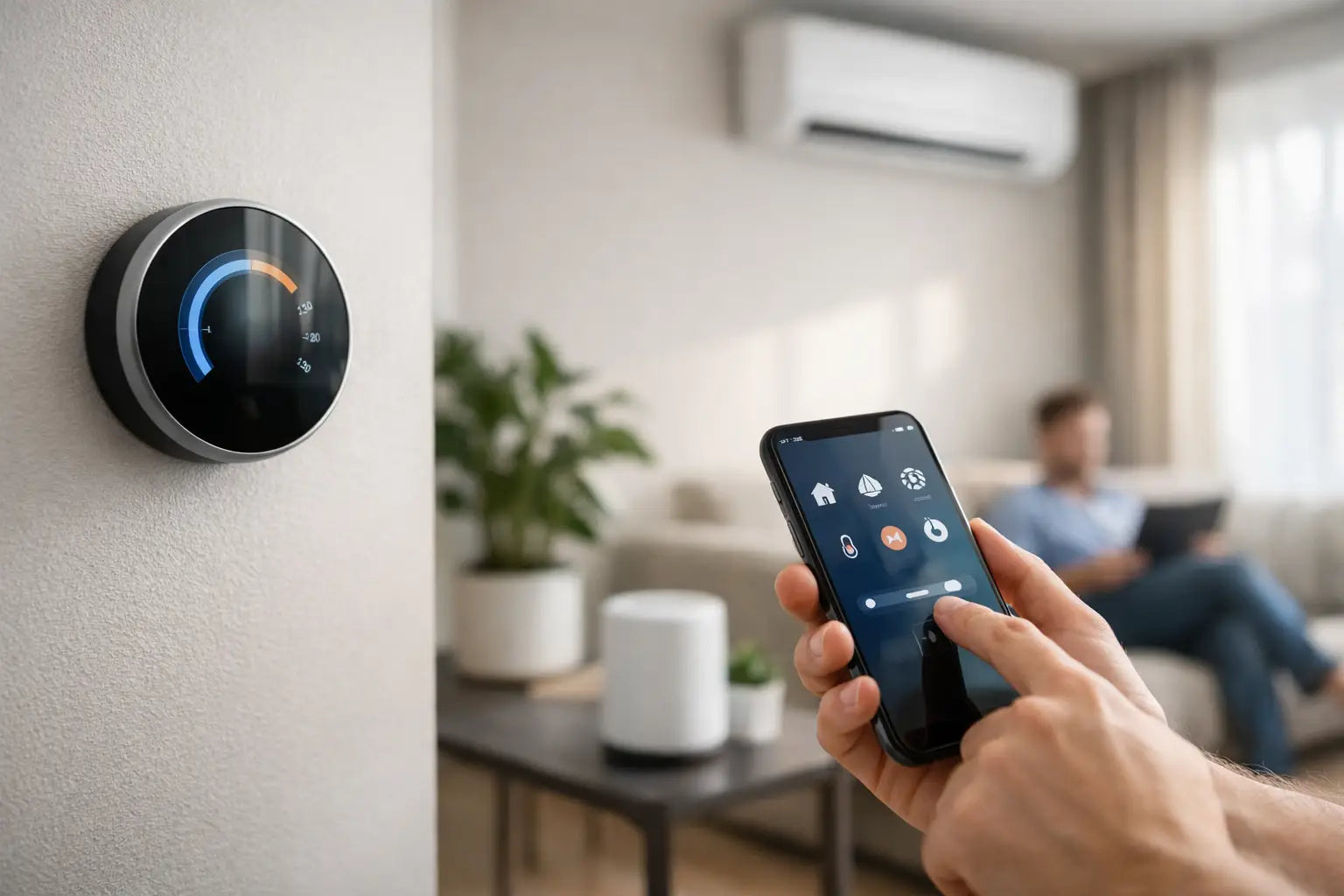
You feel it the moment you walk in. A well-designed home does not greet you with a blast of cold air, a stale hot room, or the familiar shuffle to adjust the thermostat. It feels composed. That is where the benefits of smart climate control become immediately clear - comfort is no longer left to chance.
For luxury homes, high-spec apartments, and refined commercial spaces, climate control should do more than switch heating or cooling on and off. It should respond to occupancy, time of day, sunlight, room usage, and the wider rhythm of the property. When integrated properly, it becomes part of a larger experience of intelligent living - quiet, efficient, and nearly invisible.
Why the benefits of smart climate control go beyond temperature
Many property owners first think about climate automation in simple terms: lower bills and easier control. Both matter, but the real value is broader. Smart climate control turns HVAC from a standalone utility into a coordinated environmental system.
In a premium residence, that means the master suite can be kept at a different setting from the cinema room, guest areas, or a double-height living space with significant solar gain. In a commercial setting, it means offices, meeting rooms, prayer spaces, fitness areas, or retail zones can perform according to how they are actually used rather than being forced into one fixed schedule.
That precision changes the feel of a property. Instead of reacting to discomfort, the environment is already calibrated for the people in it.
Comfort becomes consistent, not occasional
Traditional thermostats tend to create uneven results. One room feels too warm, another too cold, and spaces with large windows often swing dramatically throughout the day. Smart climate control addresses that by introducing zoning, scheduling, and sensor-based adjustments.
The practical effect is simple but significant. Bedrooms can be cooler at night without over-conditioning the rest of the home. Living spaces can adjust as afternoon sun intensifies. A home gym can be brought to a lower temperature before a workout, while a formal dining room remains idle until needed.
This is one of the strongest benefits of smart climate control for larger homes and architecturally ambitious properties. The more varied the space, the more valuable responsive zoning becomes. In smaller homes, the gains may be subtler, but the consistency is still noticeable.
Better comfort for homes with complex layouts
Open-plan villas, multi-story homes, glass-heavy facades, and properties with specialty rooms rarely behave well under basic HVAC control. Heat loads shift. Occupancy changes. Some areas need tighter environmental management than others.
A smart system can account for those differences. Rather than treating the entire property as one thermal condition, it manages each area according to its purpose. That is a more sophisticated approach to comfort, and it aligns far better with the expectations of premium living.
Energy use becomes more intelligent
Energy savings are often the headline feature, and for good reason. Heating and cooling usually account for a substantial share of a building's energy use. When a system runs on static schedules or manual overrides, waste is almost inevitable.
Smart climate control reduces that waste by making better decisions. If a zone is unoccupied, output can be reduced. If the house is in away mode, the system can maintain an efficient baseline rather than full comfort settings. If outdoor conditions are mild, the response can be gentler and more measured.
This does not mean every property will achieve the same savings. The outcome depends on insulation quality, system design, occupancy habits, glazing, ceiling heights, and local climate. But in well-integrated projects, the reduction in unnecessary runtime can be meaningful.
For developers and owners managing multiple spaces, there is another benefit: visibility. Smart control makes it easier to understand how the building performs and where adjustments can improve efficiency over time.
It supports healthier indoor living
Temperature is only part of climate. Air quality, humidity, and ventilation also shape how a space feels and how well it supports everyday life. In premium homes especially, people increasingly expect the indoor environment to do more than remain cool or warm.
Smart climate systems can help maintain more stable humidity levels, which matters for comfort, respiratory health, and even the preservation of finishes, furnishings, and woodwork. In spaces that are too humid, rooms can feel heavy and uncomfortable even when the temperature appears correct. In spaces that are too dry, the environment can become irritating and less pleasant over time.
When paired with ventilation and air purification strategies, climate automation contributes to a cleaner and healthier interior atmosphere. This is particularly valuable in bedrooms, children's rooms, home offices, gyms, and media rooms where people spend extended periods indoors.
Air quality matters in high-performance interiors
Tightly built modern homes often look exceptional but can trap heat and airborne particles if ventilation is not managed properly. Smart control helps coordinate the HVAC response with broader environmental systems so performance and wellness are considered together rather than in isolation.
Luxury is often about what you do not notice
The best technology in a home does not constantly ask for attention. It works quietly, predictably, and with a level of polish that feels natural. That principle applies directly to climate control.
With smart automation, there is less need to walk from room to room making manual adjustments or dealing with the frustration of conflicting temperature preferences. Occupants can control the property from a wall interface, mobile device, or centralized automation platform, but ideally they should rarely need to intervene at all.
That ease is one of the less obvious benefits of smart climate control. It removes friction from daily life. Morning routines feel smoother. Guest spaces are ready without effort. Second homes can be prepared in advance. Commercial managers can maintain consistency across multiple zones without depending on constant staff input.
In high-end projects, convenience is not a gimmick. It is part of the standard of living the space is meant to deliver.
Smart climate control works best when it is integrated
A standalone smart thermostat can offer some improvement, but the real transformation happens when climate is designed as part of a larger control ecosystem. Lighting, curtains, occupancy scenes, security modes, and HVAC all influence one another.
For example, automated shades can reduce solar gain before the cooling system has to compensate. An away mode can set back climate settings while also turning off lighting and activating security. A night scene can lower bedroom temperatures, dim corridors, and close motorized curtains in one command.
This is where an engineering-led integration approach matters. Premium environments demand more than add-on devices. They need coordinated design, proper programming, and hardware that suits the architecture, the mechanical system, and the expectations of the client.
For villas, luxury apartments, offices, and hospitality settings, the question is rarely whether smart features are desirable. The real question is whether they are being implemented with enough precision to feel worthy of the space.
There are trade-offs, and they should be handled properly
Not every smart climate solution is equal. A poorly configured system can frustrate users, create inconsistent room performance, or add complexity where simplicity was expected. That usually happens when products are selected in isolation without considering ducting, zoning strategy, sensor placement, user behavior, or integration with other building systems.
There is also the matter of scale. A compact apartment may only need elegant scheduling and a few zones. A large custom villa may require a far more advanced architecture with layered controls, multiple interfaces, and close coordination between design, AV, electrical, and HVAC teams.
Budget matters too. The right approach is not always the most elaborate one. It is the one that delivers measurable comfort, clean aesthetics, and dependable control for the way the property will actually be used.
That is why bespoke planning matters. Companies such as I-Trust Systems approach climate automation not as a boxed gadget, but as part of a fully integrated living environment where performance and design must align.
The long-term value is bigger than the feature list
Smart climate control is easy to frame as a convenience upgrade, but that understates its impact. In a premium property, it protects comfort, supports efficiency, enhances wellness, and strengthens the overall experience of the space. It also complements the broader design language of intelligent living, where lighting, shading, audio, security, and environmental control work together rather than competing for attention.
For homeowners, that can mean a home that feels ready for you at every hour. For developers and designers, it means delivering a more complete and compelling standard of modern luxury. For commercial operators, it means more reliable conditions for guests, staff, and clients.
The best systems do not simply control temperature. They shape atmosphere. And when the environment feels consistently right, every other detail in the space has a better chance to be appreciated.
Share:
7 Smart Home Automation Trends to Watch
Home Automation Installation Process Explained