

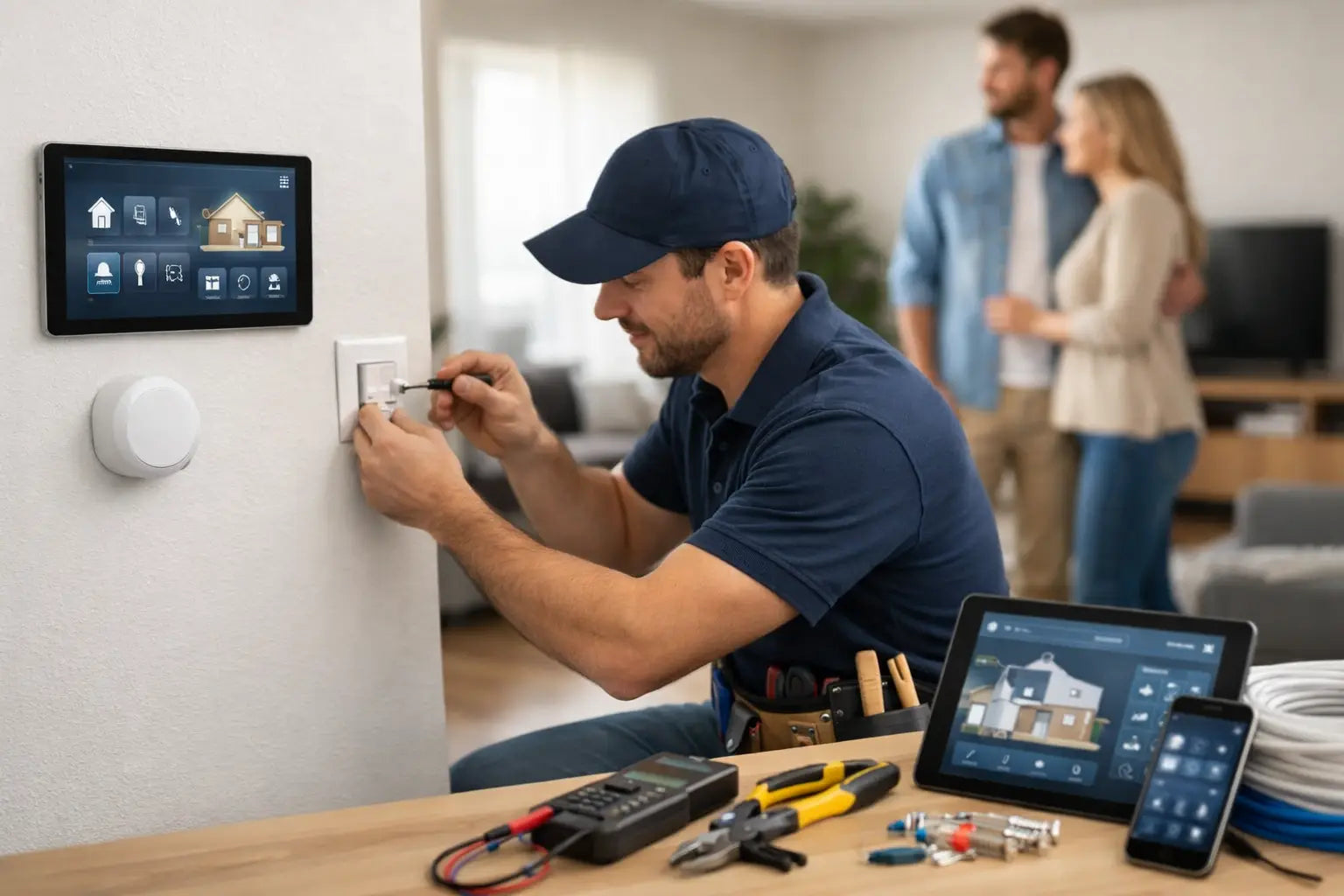
A beautifully finished home can still feel incomplete when lighting, climate, shading, security, and entertainment all operate as separate systems. The home automation installation process solves that problem by turning isolated technologies into one intelligent environment - designed to perform reliably, look refined, and feel effortless to use.
In premium homes, automation is not about adding gadgets after the fact. It is about shaping how the property functions from the earliest planning stages. When done well, the result is not only convenience. It is cleaner design, stronger system reliability, better energy control, and a more composed living experience.
Why the installation process matters
Luxury clients rarely struggle to find devices. The real challenge is integration. A villa may include smart lighting, motorized curtains, climate control, CCTV, gate access, multi-room audio, home cinema, and outdoor entertainment. If each system is specified in isolation, the home becomes harder to manage, not easier.
That is why the installation process matters as much as the products themselves. A high-performance automation system depends on engineering, infrastructure, programming, and coordination with architects, interior designers, MEP teams, and fit-out contractors. The visual finish is important, but the hidden layers - cable routes, rack layout, network design, power conditioning, and control logic - determine whether the experience feels polished or frustrating.
The home automation installation process from start to finish
1. Discovery and lifestyle planning
The first phase is not technical. It is strategic. Before any equipment is selected, the project team needs a clear view of how the space will be used. A family villa has different priorities than a penthouse designed for entertaining, and a private majlis requires a different audio and lighting approach than a minimalist open-plan living room.
This stage usually covers daily routines, privacy expectations, preferred control methods, entertainment habits, security concerns, and aesthetic requirements. Some clients want wall keypads kept to a minimum. Others prefer tactile control in key spaces and app access everywhere else. Neither approach is automatically better. It depends on the users, the scale of the property, and how much flexibility is needed.
2. System design and scope definition
Once the brief is clear, the next step in the home automation installation process is detailed system design. This is where convenience becomes engineering. The design team maps the systems to be integrated, the zones to be controlled, and the user experience expected in each area.
For example, lighting control may include dimming scenes for entertaining, late-night navigation lighting, and automated exterior schedules. Climate control may be integrated room by room, while curtain automation may respond to time of day, occupancy, or sunlight exposure. Audio distribution might cover formal living areas, bedrooms, outdoor zones, and wellness spaces, each with different acoustic and control requirements.
At this point, the project also needs a realistic scope. There is often a trade-off between ambition and complexity. Full-property integration delivers the most cohesive experience, but some projects benefit from phased deployment. If the infrastructure is planned correctly, a client can start with core systems such as lighting, AC, curtains, and security, then expand into cinema, acoustic treatment, or landscape AV later.
3. Infrastructure planning before finishes begin
This is the stage many homeowners underestimate. Smart performance depends heavily on what happens before walls are closed and ceilings are finished. Cable pathways, control panel locations, equipment racks, network points, speaker positions, and power requirements all need to be resolved early.
In new builds and major renovations, this phase is where the best results are achieved. Low-voltage wiring can be routed cleanly, equipment spaces can be ventilated properly, and architectural details can be protected. In retrofit projects, the process is still very workable, but it often requires more compromises. Wireless solutions can reduce disruption, though they may not always offer the same level of flexibility or infrastructure depth as a fully prewired system.
A premium installer will coordinate closely with all relevant trades. That matters because automation touches almost everything - electrical works, HVAC interfaces, joinery details, ceiling layouts, security hardware, networking, and audiovisual elements. Poor coordination leads to visible sensors in the wrong place, inaccessible equipment, keypad locations that conflict with interior design, or speakers positioned without regard for acoustics.
4. First-fix installation and cabling
With approved drawings in place, the first-fix stage begins. This is where the physical backbone of the system is installed. Cables are run, back boxes are placed, conduit pathways are secured, and rack locations are prepared.
For luxury properties, this stage demands discipline. Cabling should be labeled properly, routed methodically, and documented for future maintenance. Equipment rooms should be laid out for serviceability, not simply packed for convenience. A well-built rack is not just tidy. It improves cooling, troubleshooting, upgrades, and long-term reliability.
This is also the moment to think beyond current needs. A home may not need every feature on day one, but adding spare conduit, network points, or speaker cabling during construction can protect future flexibility at a modest cost compared with reopening finished surfaces later.
5. Device installation and hardware integration
After major finishes are complete, devices are installed. This includes control processors, touch panels, smart keypads, sensors, dimming modules, thermostats, motor controllers, cameras, speakers, amplifiers, projectors, screens, and networking hardware, depending on the scope.
Precision matters here because premium projects are judged on both performance and presentation. A keypad should align perfectly with adjacent electrical accessories. Speakers should integrate into ceilings and walls without disrupting the design language. Cameras should be positioned for effective coverage without creating a visual burden.
This phase is also where product compatibility becomes very real. Not every lighting system, HVAC unit, curtain motor, and media platform integrates equally well. An experienced integrator plans around that early. Trying to force unsupported products into a unified control environment is one of the most common causes of disappointment in smart home projects.
6. Programming, scene creation, and user logic
A system is not intelligent just because the hardware is installed. It becomes intelligent through programming. This is where the home starts behaving as one connected environment.
Lighting scenes are configured for dining, hosting, reading, and evening transitions. Climate settings are adjusted by zone and time schedule. Curtains can open gradually in the morning or close automatically during peak heat. Security and access events can trigger pathway lighting or occupancy-based responses. In a cinema room, a single command might dim lights, close curtains, lower the screen, and power the AV system in the correct sequence.
This stage should feel tailored, not generic. The best automation systems reflect the rhythm of the household or commercial environment. They also avoid overcomplication. More automation is not always better. If a scene is too rigid or a control interface requires explanation every time it is used, the experience loses its elegance.
7. Testing, commissioning, and refinement
Commissioning is where professional standards show. Every button, relay, sensor, audio zone, HVAC trigger, camera feed, and automation sequence should be tested under real-world conditions. That includes failover behavior, startup timing, network stability, and user interface consistency.
In larger homes, testing often reveals adjustments that improve the final experience. A motion sensor may need a different timeout. A lighting scene may be too bright for evening use. Outdoor audio may require tuning for better coverage without spill. These are not flaws in the concept. They are part of refinement.
This is also when client handover should happen properly. Homeowners and facility managers need a clear introduction to the system, not a rushed demonstration. Premium technology should feel intuitive from the first day.
What can affect timeline and cost
The home automation installation process varies widely depending on property size, construction stage, and integration depth. A focused retrofit in an occupied residence can move quickly if the scope is limited to wireless lighting, climate, and security control. A fully integrated villa with dedicated cinema, acoustic treatments, structured cabling, centralized racks, and extensive AV distribution will require much more coordination.
Design changes during construction are another major factor. When ceiling details move, joinery is revised, or HVAC equipment changes late in the project, automation plans often need to shift with them. That is why early involvement is valuable. It protects both design intent and project efficiency.
Choosing the right installation partner
For discerning clients, the key question is not simply who can supply devices. It is who can translate architecture, technology, and lifestyle into one coherent system. That takes more than product knowledge. It takes design sensitivity, engineering discipline, and the ability to execute across lighting, control, security, sound, and entertainment without fragmentation.
A premium integrator should be able to advise on trade-offs with clarity. Wired versus wireless. Centralized versus distributed control. Dedicated theater versus media room. Visible control surfaces versus hidden automation. There is rarely one answer for every property, and that is precisely why bespoke planning matters.
At I-Trust Systems, that installation philosophy is centered on performance, finish, and integration depth. The aim is not to fill a property with technology. It is to create an intelligent environment that feels considered in every detail.
The best smart homes do not announce themselves with complexity. They simply feel calm, responsive, and exceptionally well resolved - exactly as a luxury space should.
Share:
7 Benefits of Smart Climate Control
What Is Home Automation, Really?