

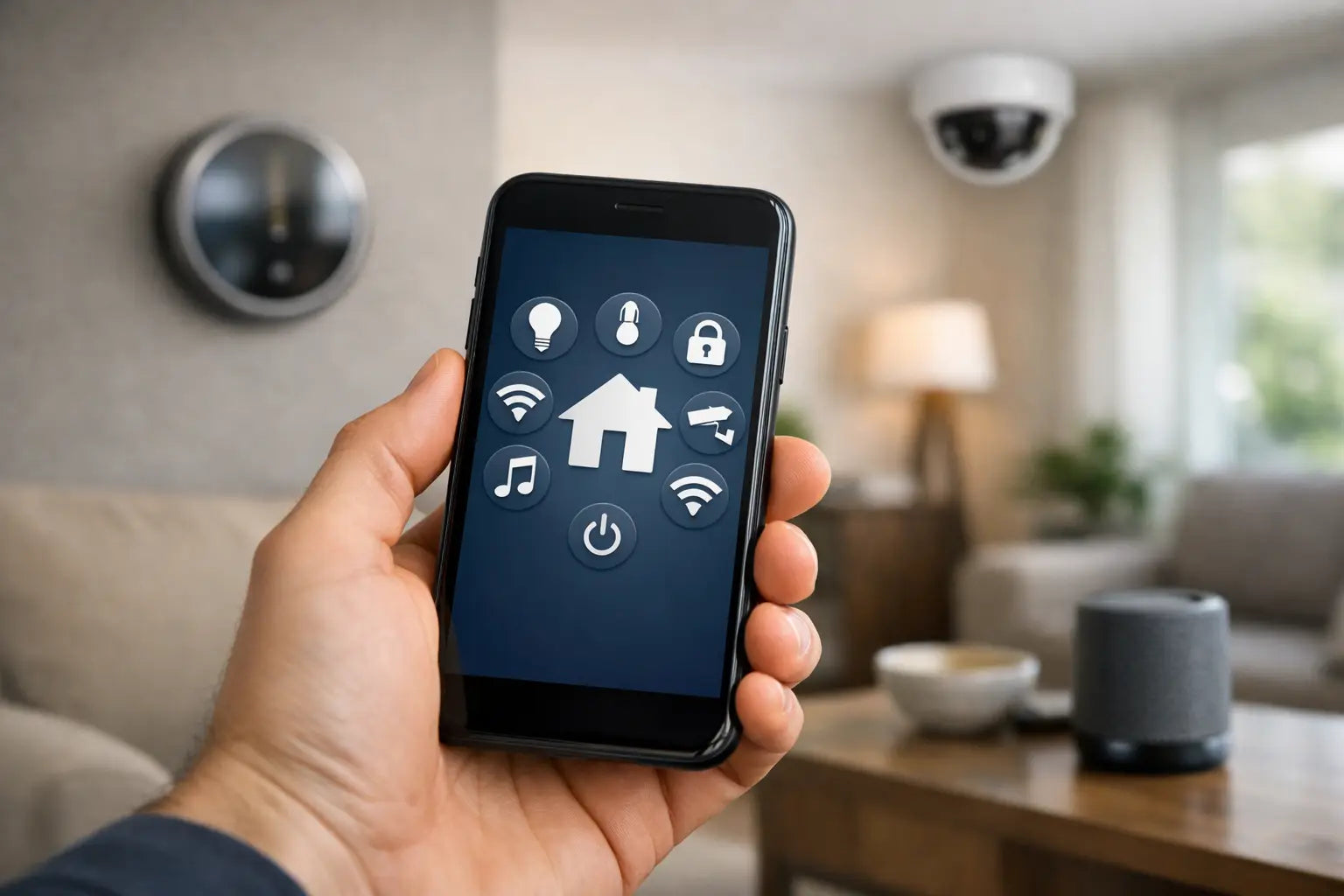
A well-designed home should respond to you effortlessly. Lights adjust to the time of day, the temperature stays exactly where you want it, shades move with the sun, and your security works quietly in the background. That is where the benefits of smart home automation become clear - not as a collection of gadgets, but as a more intelligent way to live.
For homeowners, villa owners, and design professionals working on premium spaces, automation is no longer a novelty purchase. It is part of how modern luxury is defined. The real value is not just convenience. It is how multiple systems are engineered to work together, with less friction, better performance, and a cleaner visual result.
Why the benefits of smart home automation go beyond convenience
Many people first approach automation because they want to control lighting or manage devices from a phone. That is understandable, but it is also a narrow view. In a high-end residence, the real advantage comes from integration.
When lighting, climate control, curtains, audio, security, and entertainment are designed as one environment, the home feels calmer and more refined. You stop managing separate systems and start experiencing a property that behaves intelligently. That distinction matters, especially in larger homes where fragmented controls quickly become frustrating.
There is also a difference between adding smart devices and creating a smart home. A few connected products may solve isolated problems. A professionally integrated system creates consistency across the entire property, from the entrance gate to the cinema room.
1. Daily living becomes more comfortable
Comfort is often the first thing people notice after installation. Instead of adjusting lights, thermostats, and curtains separately, scenes can shape the mood of the home in a single command.
A morning scene might raise selected blinds, soften bedroom lighting, and bring the AC to a comfortable daytime setting. An evening mode can dim architectural lighting, close drapery, and shift shared spaces into a more relaxed atmosphere. None of this feels excessive when it is done properly. It feels natural.
The best systems are also responsive without becoming intrusive. Occupancy sensors, scheduling, and personalized presets can make a property feel attentive rather than mechanical. That balance is what separates premium automation from basic convenience tech.
2. Energy use becomes more intelligent
Luxury and efficiency are often treated as opposites. In reality, well-planned automation can support both.
Lighting control reduces unnecessary usage by dimming where full output is not needed and switching off areas that are unoccupied. Smart climate control can regulate cooling based on room use, time of day, and occupancy. Automated curtains and blinds help manage solar gain, which matters considerably in large glazed spaces and warm climates.
The result is not simply lower utility bills, although that can be part of it. It is smarter environmental control. A home should not overcool empty rooms or run lighting schemes at full intensity in the middle of the afternoon. Automation brings precision to systems that are often wasteful when left manual.
That said, the savings depend on the quality of the design. Random devices installed without a control strategy rarely deliver meaningful efficiency. The gains come from thoughtful programming and coordination between systems.
3. Security feels stronger and more controlled
Security is one of the most practical benefits of smart home automation, particularly in larger residences or properties that are not occupied year-round.
Integrated systems can bring together surveillance cameras, motion detection, gate access, smart locks, perimeter alerts, intercoms, and lighting response. Instead of juggling separate apps and disconnected hardware, homeowners can monitor and manage security from one interface.
There is also a psychological benefit. A property that can simulate occupancy, notify you instantly, and allow remote verification offers a greater sense of control. If someone rings the entrance while you are away, you can respond. If an unusual event occurs, the home can trigger lighting, alerts, or camera recording automatically.
Of course, security design should be tailored. A city apartment, a family villa, and a seasonal estate have very different requirements. Good automation does not force the same setup on every property. It adapts to the way the space is used and the level of protection the client expects.
4. Entertainment becomes cleaner and more immersive
In premium homes, entertainment should feel effortless. That applies whether you are enjoying background music by the pool, watching a film in a dedicated cinema room, or switching between media zones during a gathering.
Automation allows audio, video, lighting, and shading to work together. A movie scene can lower lights, close curtains, power up the projector, and set audio levels in seconds. In open-plan living spaces, music can be distributed across zones without visible clutter or the need for multiple remotes.
The appeal is not just technical. It is aesthetic. Integrated entertainment systems reduce wall clutter, eliminate control confusion, and preserve the design integrity of the space. For homeowners who have invested heavily in architecture and interiors, that matters as much as the sound quality.
5. Design stays elegant because control is centralized
One overlooked advantage of automation is visual discipline. Without a proper system, homes often accumulate switches, thermostats, remotes, speakers, and aftermarket accessories that interrupt otherwise beautiful interiors.
Centralized control reduces that noise. Keypads can be simplified. Equipment can be concealed. User interfaces can be unified so that the technology supports the design rather than competing with it.
This is especially important in luxury residences, where every surface, finish, and sightline has been considered. Smart technology should complement the architecture, not announce itself at every turn. The most successful projects feel polished because the engineering has been coordinated with the interior vision from the start.
6. Large properties become easier to manage
The bigger the property, the more valuable automation becomes. In a compact apartment, manual control may still be workable. In a multi-level villa with outdoor spaces, guest areas, security zones, and entertainment rooms, it quickly becomes inefficient.
Automation simplifies oversight. One platform can manage access, climate, lighting scenes, irrigation triggers, poolside audio, and outdoor lighting schedules. Staff and family members can use the home more consistently because the controls are logical and centralized.
This is where bespoke system design matters. A large property does not need more technology for its own sake. It needs a better control framework. When that framework is engineered properly, the home feels organized rather than complicated.
7. Remote access adds real peace of mind
For frequent travelers, second-home owners, or clients who manage multiple properties, remote access is not a novelty feature. It is a practical necessity.
Being able to check cameras, adjust climate settings, review alerts, or confirm that lights and gates are secure brings confidence when you are away. If a room is being cooled unnecessarily or an exterior light schedule needs adjustment, it can be handled immediately.
Remote access does come with an important caveat. It should be deployed with serious attention to network reliability and cybersecurity. Premium automation is not just about what the homeowner sees on screen. It is about the integrity of the infrastructure behind it.
8. Property value and market appeal can improve
Well-executed automation can strengthen a property's appeal, especially in the premium segment where buyers increasingly expect advanced control, security, and entertainment infrastructure.
A residence with integrated lighting, climate control, smart shading, multi-room audio, and modern security feels current in a way that dated systems do not. It also signals that the property has been developed with care. Buyers may not always evaluate the technical architecture in detail, but they respond immediately to ease of use and the sense of sophistication it creates.
That does not mean every automation investment produces equal resale value. Trend-driven gadgets age quickly. Integrated systems with strong engineering, quality components, and intuitive control tend to hold their relevance better.
9. The home becomes more personal
At its best, automation is not about technology taking over. It is about the home reflecting the routines and preferences of the people who live there.
One family may prioritize security and perimeter control. Another may care most about entertaining, acoustic quality, and cinematic performance. Some clients want low-key automation that works mostly in the background, while others prefer granular control over scenes, schedules, and room behavior.
This is why consultation matters. The right solution is rarely the one with the longest feature list. It is the one that fits the architecture, the lifestyle, and the expectations of the client. That level of tailoring is what turns automation from a smart add-on into a genuine enhancement of daily life.
What to consider before investing
The benefits of smart home automation are substantial, but the outcome depends heavily on planning. System reliability, interface simplicity, infrastructure quality, and future scalability all matter more than flashy features.
It is also worth deciding early whether automation will be part of a new build, a renovation, or a retrofit. New construction offers the cleanest path for fully integrated control, but existing homes can still benefit significantly when the design is approached carefully. The key is to avoid piecemeal decisions that create disconnected systems later.
For discerning homeowners and project teams, this is where an experienced integration partner makes the difference. A company such as I-Trust Systems approaches the project as a complete environment, balancing performance, aesthetics, and long-term usability rather than treating each system as a separate purchase.
Smart homes are no longer defined by novelty features or app-controlled gadgets. They are defined by how well a space supports living, entertaining, protecting, and managing a property with quiet precision. When automation is designed properly, the technology fades into the background and the quality of the experience comes forward.
Share:
Hik-Partner Pro: A Smarter Way to Manage Hikvision CCTV Systems for Businesses
Best Smart Home Automation System for Luxury Homes