

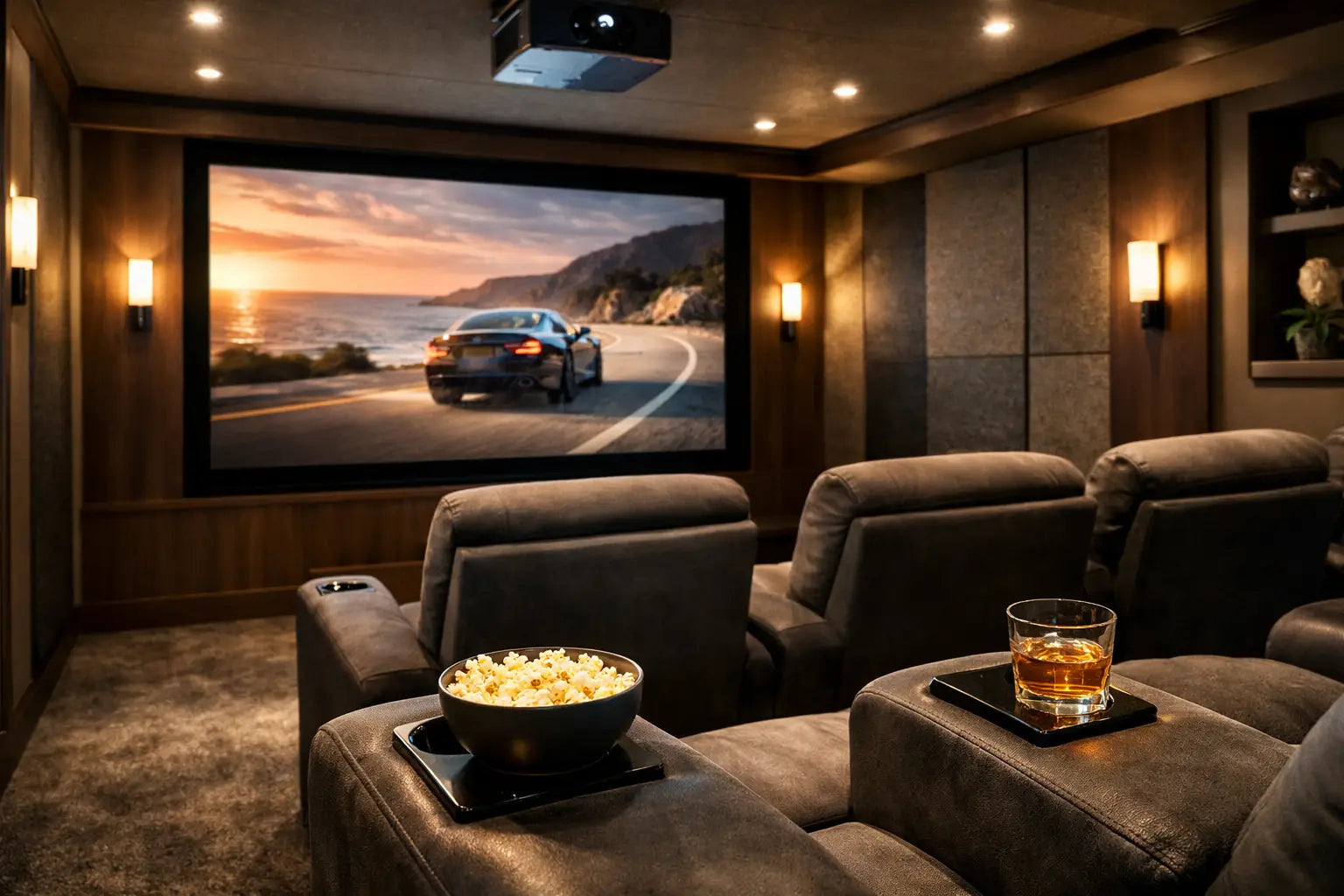
A compact cinema room can feel more exclusive than a sprawling media space when every surface, sightline, and control point is resolved with intent. That is the real advantage of small luxury home theatre design - it rewards precision. In a smaller footprint, the margin for error is tighter, but so is the opportunity to create a room that feels deeply tailored, technically disciplined, and genuinely immersive.
For discerning homeowners, architects, and interior designers, the goal is rarely just to fit a screen and a few seats into a spare room. The goal is to create a cinematic environment that performs at a high level while still reading as part of a refined residence. That means balancing acoustic science with interior elegance, and equipment performance with architectural restraint.
What defines small luxury home theatre design?
Luxury in a compact theatre is not about excess. It is about proportion, material quality, and system integration. A room can be modest in size and still feel exceptional if the experience is cohesive from the moment the lights dim.
In practical terms, small luxury home theatre design relies on disciplined planning. Screen size must suit viewing distance. Speaker placement must respect room geometry. Seating must feel generous without overcrowding the floor plan. Lighting cannot be treated as decoration alone because glare, reflection, and contrast all influence image quality. Every decision carries more weight in a smaller room, which is why engineered design matters.
There is also a lifestyle consideration. Many premium homes do not have the appetite for a cavernous dedicated cinema used once a month. A compact, beautifully resolved theatre often delivers better day-to-day value. It can be more intimate, easier to control, more energy conscious, and simpler to maintain, while still delivering the prestige of a bespoke entertainment space.
Start with the room, not the equipment
One of the most common mistakes in cinema planning is choosing products first and forcing the room to adapt later. In smaller spaces, that approach usually leads to compromised circulation, speaker conflict, or visual clutter.
A better starting point is the room envelope itself. Ceiling height, wall construction, door placement, HVAC noise, and natural light all shape performance long before the projector or speakers are selected. A narrow room may favor one seating row over two. A low ceiling may call for careful projector positioning and acoustic treatment integration. A room adjacent to bedrooms or a majlis may require stronger sound isolation than expected.
This is where bespoke design separates a luxury result from an expensive collection of components. The room should dictate the engineering brief, and the engineering brief should support the interior concept.
Size changes the viewing strategy
Bigger is not automatically better. In a small theatre, an oversized screen can create neck strain, poor edge visibility, and underwhelming image balance if the projector cannot deliver adequate brightness at the chosen size. The right screen is the one that feels cinematic from the primary seats without overwhelming the room.
The same logic applies to seating. Deep recliners with oversized armrests may look luxurious in a showroom, but they can consume valuable floor area and disrupt proper viewing distance. In compact rooms, tailored seating dimensions often produce a more sophisticated and comfortable outcome than standard bulky models.
Acoustics are where luxury becomes credible
Many rooms look impressive in photographs and disappoint the moment sound begins. In premium cinema design, acoustic performance is not a hidden technical extra. It is central to the experience.
Small rooms are particularly vulnerable to bass buildup, echo, and uneven frequency response. Without treatment, dialogue can sound blurred, low frequencies can feel boomy, and surround effects can lose precision. The solution is not simply adding more speakers or a larger subwoofer. It is designing the room to support controlled, balanced playback.
Acoustic wall systems, bass management, absorptive layers, diffusive elements, and strategic speaker positioning all contribute to a room that sounds composed rather than aggressive. In a luxury setting, these treatments should be integrated into the visual language of the room, not applied as afterthoughts. Fabric panels, fluted finishes, timber detailing, and concealed treatment zones can preserve a polished aesthetic while delivering measurable performance gains.
Sound isolation deserves equal attention. If the theatre shares walls with living areas, guest rooms, or service spaces, isolation design becomes essential. A room that leaks bass into the rest of the house never feels fully resolved, no matter how elegant it looks.
Lighting should flatter the room and protect the image
Cinema lighting is often misunderstood. The objective is not darkness alone. It is control.
A refined theatre needs layered lighting scenes that support entry, intermission, cleaning, and movie viewing without compromising image contrast. Step lights, cove lighting, wall sconces, and low-glare accent lighting can all work well, provided they are dimmable and carefully aimed. Reflections on the screen, glossy finishes near the front wall, and bright trim details can all erode picture quality.
This is where integration adds real value. When lighting, shading, and AV systems respond together, the room feels effortless. One command can lower blackout shades, bring lights to preset levels, power the projector, and prepare the audio system. That level of control is not just convenient. It reinforces the sense that the space has been professionally composed.
Materials matter more in a small room
In compact spaces, every finish sits closer to the eye. That makes material selection especially important.
Small luxury home theatre design works best when finishes are tactile, quiet, and intentional. Rich fabrics, matte timber veneers, brushed metals, acoustic suede, and tailored carpet textures can create visual depth without making the room feel busy. High-gloss surfaces and highly reflective stone may suit other parts of the home, but they often work against cinematic performance.
Color palette also deserves restraint. Darker tones near the screen improve perceived contrast, while warmer accent materials can prevent the room from feeling flat or overly technical. The strongest projects usually avoid theme-park cinema styling. Instead, they take cues from hospitality, fine joinery, and contemporary residential design.
Hidden technology creates a cleaner luxury statement
In a premium residence, visible clutter undermines the result. Rack equipment, cable routes, ventilation strategy, and speaker integration should be resolved as part of the architecture. Acoustic transparency, concealed subwoofer locations, trimless lighting details, and integrated control interfaces all help the room feel calm and complete.
There is a trade-off, of course. Hidden solutions often require more design coordination and more precise installation. But in a luxury theatre, that discipline is exactly what elevates the space.
Seating, comfort, and circulation
A small theatre should never feel cramped. The room may be intimate, but movement and comfort still need to feel generous.
That usually means prioritizing fewer, better seats rather than pushing for maximum capacity. Two to four beautifully specified seats can outperform a crowded six-seat layout if they offer proper spacing, sightlines, and acoustic alignment. In some rooms, a front platform with a lounge-style daybed or a tailored rear bar can work better than traditional rows. It depends on how the space will be used and who it is for.
Families may want flexibility for casual streaming and gaming. A villa owner focused on private screening may prefer a more formal arrangement. Developers planning a show home may need a room that photographs as well as it performs. These differences matter, and they should shape the design.
The best theatres feel integrated into the home
A cinema room should not feel like an isolated technology bunker disconnected from the rest of the residence. Its finishes, control philosophy, and detailing should sit comfortably within the larger home.
That does not mean every room must look the same. It means the theatre should reflect the same design intelligence found elsewhere in the property. Joinery details, metal finishes, lighting language, and automation standards should align. For clients investing in a broader smart home ecosystem, this becomes even more important. The theatre should work as part of an intelligent environment, not as a standalone island of complexity.
This is where an engineering-led partner becomes valuable. When AV design, automation, acoustics, and interior coordination are considered together, the result is cleaner, more intuitive, and more durable over time. At I-Trust Systems, that joined-up thinking is what turns a compact room into a genuinely elevated entertainment environment.
Why small can feel more exclusive
There is a particular confidence in a room that does not try too hard. A smaller theatre, executed with precision, often feels more private, more curated, and more sophisticated than a larger room filled with visual noise and technical compromises.
It also invites better use. Because the room is easier to control and more comfortable to occupy, it becomes part of everyday living rather than a rarely visited showpiece. That is the strongest argument for compact luxury cinema design. It is not simply about fitting premium technology into a smaller footprint. It is about creating a room where design discipline and immersive performance work together without friction.
If you are planning a private cinema in a compact space, treat every inch as an opportunity to refine the experience. The room does not need to be large to feel exceptional. It needs to be designed with care.
Share:
Luxury Home Cinema Design That Performs
High End Projectors for Home Theater