

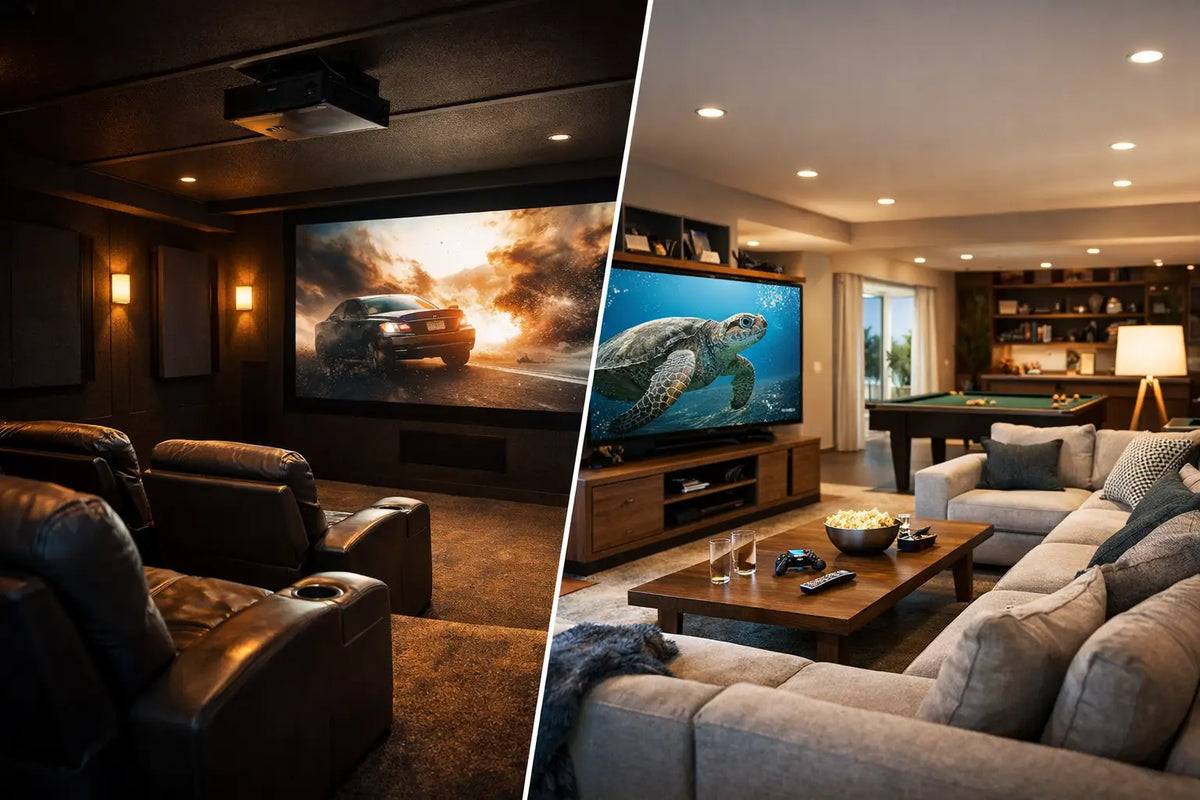
A spectacular screen is only one part of a great entertainment space. The real decision in a home cinema vs media room comes down to how you want to live: do you want a dedicated, reference-level place to disappear into film, or a beautiful, flexible room that performs equally well for sports, gaming, family gatherings, and everyday relaxation?
For a luxury residence, neither option should feel like an afterthought. Both can be engineered with exceptional sound, intelligent control, tailored lighting, and furniture that belongs within the architecture. The distinction is in the level of specialization - and the compromises you are willing to make for versatility.
Home Cinema vs Media Room: The Essential Difference
A home cinema is a purpose-built viewing environment designed to reproduce the cinematic experience as faithfully as possible. It is typically enclosed, acoustically treated, light-controlled, and planned around a single viewing direction. The seating, screen size, speaker positions, room finishes, and lighting are all coordinated for one outcome: immersive film and premium content playback.
A media room is a more adaptable entertainment lounge. It may host a large television or projection system, surround sound, gaming consoles, multi-room audio, and automated lighting, but it also works as a social space. It can be integrated into a family room, basement lounge, penthouse living area, or multipurpose recreation room.
The difference is not simply projector versus television. A media room can feature a high-performance projector, while a home cinema can use a large-format direct-view display. The defining factor is whether the room is optimized for critical viewing or designed to accommodate a wider range of daily activities.
When a Dedicated Home Cinema Is the Right Choice
A dedicated cinema is for homeowners who see film, concerts, and major sporting events as occasions worth planning the room around. It is also the stronger choice when a residence has a basement, a spare enclosed room, or a private wing where the space does not need to serve another function.
Performance Begins With Control
The most convincing cinematic experiences are built in rooms where light and sound can be controlled. Blackout treatments, dark low-reflectance finishes, concealed lighting zones, and carefully selected screen materials preserve contrast and depth. Instead of fighting daylight from large windows or reflections from glossy décor, the system performs in the conditions it was designed for.
Acoustics are equally central. Soundproofing can limit disturbance to bedrooms and adjacent living areas, while acoustic treatment manages reflections, bass buildup, and dialogue clarity within the room. This is where a professionally designed cinema separates itself from a collection of premium equipment. Even exceptional speakers cannot deliver their full potential in an untreated space with poor placement.
Seating and Sightlines Are Deliberate
In a home cinema, every seat is planned. The screen is sized according to viewing distance, projector throw, image format, and desired field of view. Speaker locations are measured around the seating layout rather than fitted wherever cabinetry or wall space permits.
This creates a more consistent experience across the room. Whether you choose classic tiered theater seating, refined reclining loungers, or a custom sofa arrangement, the design can provide clear sightlines and convincing surround effects for every guest.
A Cinema Can Be Architecturally Beautiful
Dedicated does not mean commercial or themed. Some clients prefer a dramatic, art-deco-inspired theater with rich wall panels and sculptural sconces. Others favor a restrained contemporary room with concealed speakers, fabric acoustic surfaces, and a screen that disappears when not in use.
The strongest designs allow technology, acoustics, and interiors to work as one composition. Equipment is integrated with joinery, wiring is hidden, ventilation is considered early, and control interfaces remain elegant and uncomplicated.
When a Media Room Makes More Sense
A media room suits homeowners who want premium entertainment without reserving an entire room for movie nights. It is especially compelling in open-plan residences, active family homes, and spaces where people gather casually throughout the day.
The same room may host a Sunday game, a children’s gaming session, an afternoon of music, and an evening film. With the right engineering, that flexibility does not have to mean ordinary performance.
Brighter, More Social, More Adaptable
Media rooms are often designed around a large television because it handles ambient light well and turns on instantly for everyday viewing. High-end direct-view displays can deliver remarkable brightness, contrast, and color in living spaces with windows, decorative lighting, and lighter finishes.
Projection can still work beautifully in a media room, particularly with ambient-light-rejecting screen technology, automated blackout shades, and thoughtful lighting control. However, the more daylight and reflective surfaces a room contains, the more careful the design must be. A projector setup that is breathtaking after sunset may feel compromised during a bright afternoon unless the room can transform with the touch of a button.
Comfort is also less formal. Instead of fixed rows, a media room may use deep sectionals, lounge chairs, ottomans, and flexible seating. That makes it inviting for conversation, but it can produce less precise viewing angles and less uniform surround sound than a cinema designed around fixed positions.
Integration Elevates the Everyday Experience
A premium media room benefits from intelligent scenes. One command can lower shades, adjust lighting, power the display, select the preferred source, and set audio to the appropriate level. Another can shift the room into entertaining mode, with background music extending to the terrace or adjacent kitchen.
This is where a media room becomes more than a television wall. It becomes a connected living environment, coordinated with lighting, climate, curtains, security, and distributed audio rather than operating as a separate collection of remotes and devices.
The Trade-Offs That Matter Most
The choice between these spaces is not about which one is better. It is about which one respects the way your household uses the home.
A home cinema offers the superior environment for serious viewing. It delivers greater immersion, more dependable sound, stronger image consistency, and a sense of occasion that a shared living room rarely matches. In return, it requires a dedicated footprint and is less likely to be used for spontaneous daytime viewing or informal conversation.
A media room offers broader day-to-day value. It can become one of the most active rooms in the house and may be easier to justify when square footage is valuable. Its trade-off is that the room’s visual openness, furniture choices, daylight, and social layout can limit the precision of the cinematic experience.
Budget follows the same pattern, although not always in the way clients expect. A dedicated cinema can require investment in acoustic construction, isolation, seating, ventilation, custom finishes, and specialized control. A media room may involve less construction, but a premium display wall, concealed audio, motorized shading, bespoke cabinetry, and automation can also become a significant project. The answer is not to choose the lower-cost category - it is to allocate the budget where it will be felt every time the room is used.
Design the Technology Before the Finishes
Whether you select a cinema or a media room, involve the AV and automation team early. By the time drywall, millwork, and furniture are finalized, many of the decisions that determine performance have already become difficult or expensive to change.
Early design coordination addresses speaker positions, equipment ventilation, cable routes, power requirements, network coverage, acoustic construction, lighting zones, screen recesses, and control locations. It also prevents the common visual compromises of exposed wires, poorly positioned speakers, oversized equipment cabinets, and televisions mounted without regard for viewing height.
For architects and interior designers, this approach protects the design intent. For homeowners, it protects the investment. At I-Trust Systems, cinema, automation, acoustics, and interior integration can be considered as one engineered experience rather than separate trades competing for the same walls and ceiling space.
Consider a Hybrid Only With Clear Priorities
Some homes benefit from a hybrid approach: a refined media room with serious audio, automated shading, and a concealed projection system capable of delivering a more cinematic experience when desired. This can be an excellent solution, but only when expectations are realistic.
A hybrid room will not usually equal a fully isolated, darkened cinema in acoustic precision or image control. Conversely, it may offer a level of convenience and architectural openness that makes it the more valuable choice for the household. The goal is not to imitate a dedicated theater at every cost. It is to design a room that performs brilliantly for its intended life.
The best choice is the one you will use with pleasure. Start with your habits, the room’s architecture, and the experience you want guests and family to remember, then let the technology serve that vision with quiet precision.
Share:
Commercial AV Design Guide for Premium Spaces
Audio Visual Engineering for Exceptional Spaces