

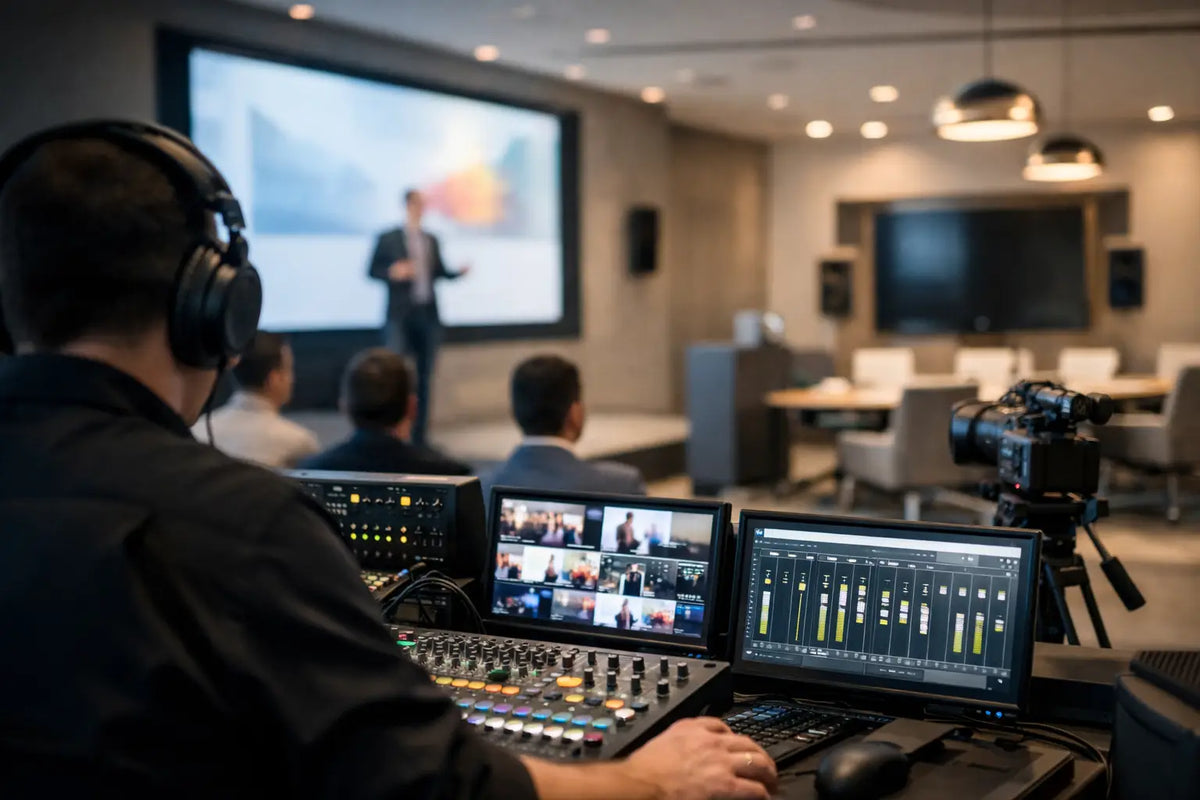
A cinema room can have a premium projector, luxurious seating, and a large screen, yet still feel disappointing when dialogue is unclear, bass overwhelms the room, or controls are scattered across five remotes. That gap between impressive equipment and an exceptional experience is where audio visual engineering makes its value known.
For luxury residences and ambitious commercial projects, AV is not a collection of products. It is a carefully coordinated system of acoustics, displays, lighting, networking, control, and interior detailing. When it is engineered from the beginning, technology feels effortless while the room retains the visual calm and refinement its architecture deserves.
What Audio Visual Engineering Actually Delivers
Audio visual engineering is the disciplined process of designing, specifying, integrating, and commissioning sound and visual systems for a particular space. It begins with how people will use the environment, not with a catalog of speakers or screens.
In a villa, the goal may be a private cinema that feels cinematic without becoming visually intrusive, distributed music that follows daily life from the kitchen to the garden, and elegant touch controls that simplify entertainment. In an office, gym, mosque, school, or retail environment, the priorities may shift toward speech intelligibility, coverage consistency, reliability, flexible zoning, and simple operation by staff.
The best results come from considering the entire signal path and the entire room. Audio sources, amplifiers, speakers, microphones, projectors, LED displays, screens, network infrastructure, power protection, and control interfaces must work as one coordinated environment. Each decision influences another. A beautiful display has limited impact if viewing angles are poor. High-end speakers cannot compensate for a reverberant room. Smart control is only valuable when it makes common actions easier.
Engineering the Room Before Selecting Equipment
A premium AV project should start with drawings, room dimensions, finishes, intended occupancy, natural light, and the client’s expectations. This early planning is what protects both performance and aesthetics later.
Acoustics shape the listening experience
Every room has an acoustic signature. Hard stone floors, glass walls, tall ceilings, and open-plan layouts can create reflections that blur speech and make music feel harsh. Conversely, excessive absorption can make a space sound flat and lifeless. Acoustic treatment is not simply about adding panels. It is about managing reflection, reverberation, bass behavior, and noise transfer in a way that suits the room’s use.
For a dedicated home theater, this often includes carefully placed absorption, diffusion, bass management, and sound isolation strategies. In a boardroom or auditorium, speech clarity and microphone performance may be the defining measures of success. A restaurant, boutique, or gym requires even coverage without uncomfortable volume hotspots.
The aesthetic trade-off matters. Some clients prefer visible architectural acoustic finishes that add texture and character. Others want treatments fully concealed within fabric walls, joinery, or ceilings. Both approaches can perform beautifully when they are planned correctly.
Display selection depends on the environment
There is no single best display technology for every project. A large OLED television may offer exceptional contrast in a refined living room, while a projection system can create a more cinematic scale in a controlled theater. For bright commercial spaces, an LED wall or high-brightness display may be the more reliable choice.
Ambient light, viewing distance, seating layout, content type, and wall architecture all affect the correct specification. A screen that appears dramatic in a showroom may be oversized for a room where viewers sit close to it. A projector that performs superbly at night may not meet expectations in a sun-filled multipurpose lounge.
Professional AV planning considers these real-world conditions before equipment is ordered. It also accounts for ventilation, service access, cable routes, equipment rack space, and the way the display will integrate with millwork or interior finishes.
Control Is Where Luxury Becomes Effortless
An exceptional system should not require technical knowledge from the person using it. One refined interface can set the room for a movie, begin music in selected zones, lower shades, adjust lighting, and select the right source. The experience should feel considered rather than complicated.
This is especially valuable in homes with multiple entertainment zones. A homeowner may want quiet music in the bedroom, a live game in the family room, and a playlist by the pool, all without interference. Centralized control makes these experiences intuitive while allowing the underlying system to remain sophisticated.
For commercial settings, control design should be equally practical. Staff need clear, reliable options for opening routines, background music, presentations, and announcements. A complicated interface can create support calls and operational errors. A well-engineered one reduces both.
Integration also extends beyond AV. Lighting, climate control, motorized shades, security, and access can be coordinated around how a space is used. In a home cinema, selecting “Movie Night” might adjust the lighting, close curtains, activate the projector, and set the audio profile. In a presentation space, a single command can prepare the display, microphones, and room lighting for a meeting.
Why Infrastructure Matters More Than Clients Expect
Much of the most important AV work is invisible. Correct cabling, network design, power conditioning, cooling, labeling, and rack organization determine whether a system performs reliably years after installation.
Wireless products have their place, particularly for flexible and smaller-scale applications. However, premium fixed installations benefit from a structured wired backbone. It provides stability, predictable performance, cleaner installation, and greater flexibility for future upgrades. This is particularly relevant for high-resolution video distribution, multiple audio zones, security cameras, and integrated automation.
A thoughtfully designed equipment rack is another mark of professional execution. It keeps components ventilated, protected, accessible, and organized. When service is required, technicians can identify and address an issue efficiently without disturbing finished interiors.
Future readiness is not about buying every emerging technology. It is about allowing sensible room for change. Conduit pathways, reserved rack capacity, strong network infrastructure, and accessible service points make later improvements far less disruptive.
Different Spaces Demand Different AV Priorities
Audio visual engineering should always respond to the purpose of the property. A luxury residence is personal and lifestyle-driven. A commercial project must often balance experience with durability, daily operation, and scale.
A private cinema may prioritize controlled acoustics, deep contrast, tactile comfort, and concealment of equipment. A whole-home audio system prioritizes natural coverage, discreet speaker placement, and independent control across rooms and outdoor areas. A garden system must account for weather resistance, landscape design, and sound containment so music enhances the property without intruding on neighbors.
In commercial environments, consistency is often the defining standard. A fitness facility needs energizing sound that remains clear across active zones. An auditorium needs even coverage from the front row to the back. A mosque requires intelligible speech and carefully managed reverberation. Retail and hospitality spaces need background audio that supports the atmosphere without competing with conversation.
The engineering process accommodates these differences rather than applying a residential formula to every room.
The Value of a Single Engineering Partner
When AV, automation, acoustics, interiors, and security are planned in isolation, problems tend to emerge during construction. Ceiling speaker locations conflict with lighting. Display walls lack proper support or ventilation. Equipment closets are undersized. Acoustic requirements arrive after decorative finishes are complete.
A single systems partner brings these disciplines together early, coordinating with architects, interior designers, contractors, and MEP teams. This protects the design intent while ensuring that the technology performs at the level the finished space suggests.
At I-Trust Systems, the objective is not simply to install premium equipment. It is to shape environments where sound, image, control, and architecture feel naturally connected. That distinction is particularly meaningful in high-value properties, where every visible detail and every daily interaction reflects the standard of the project.
Start With the Experience You Want
Before choosing brands, screen sizes, or speaker finishes, define the moments the space should create. Consider whether the room is for intimate film nights, lively gatherings, focused presentations, reflective worship, high-energy training, or quiet background atmosphere. Those answers guide every technical and aesthetic decision that follows.
The right audio visual system should disappear into the experience: clear when someone speaks, powerful when a soundtrack rises, simple when a guest picks up the controller, and visually composed even when the technology is off. That is the standard worth designing for.
Share:
Home Cinema vs Media Room: Which Fits Your Home?
Commercial AV System Guide for Premium Spaces