

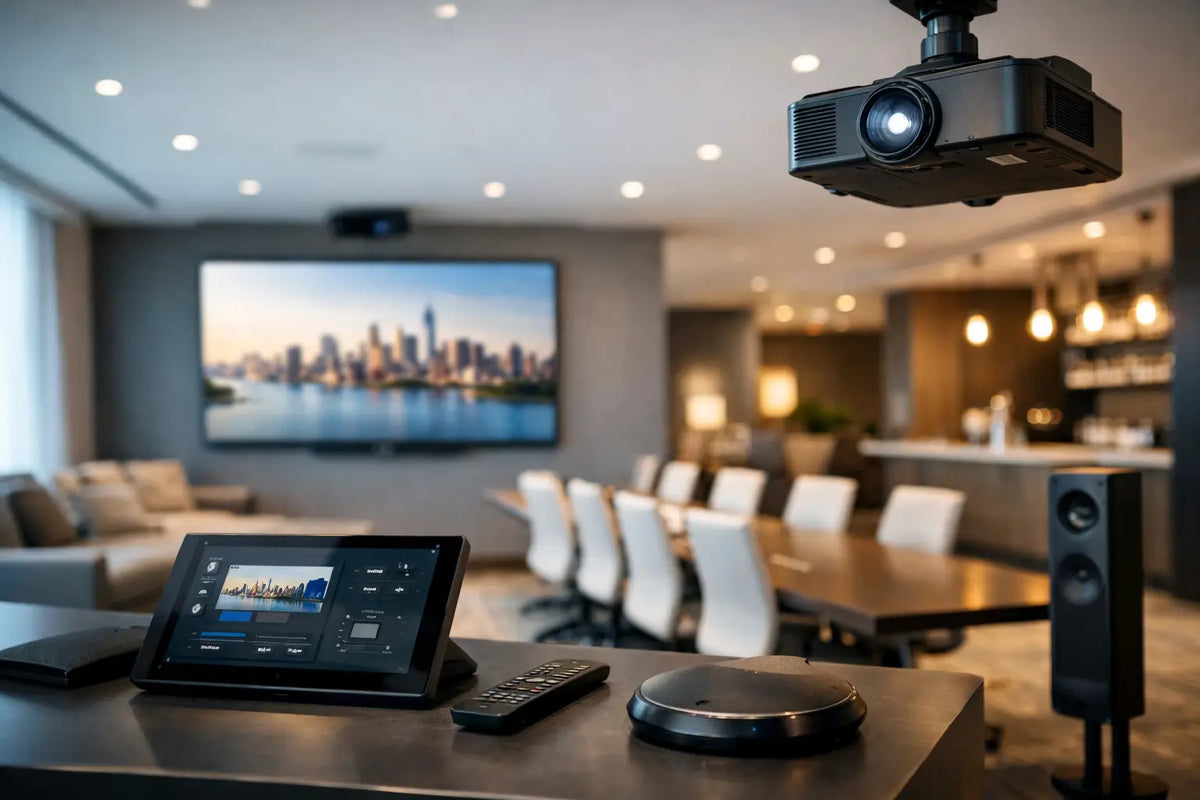
A boardroom can have a magnificent display and still fail the moment a remote participant cannot be heard. A boutique fitness studio can have a powerful sound system and still feel disappointing when speech becomes harsh, music is uneven, and the control interface confuses staff. This commercial AV system guide approaches technology as part of the environment itself: engineered around how people gather, communicate, train, learn, worship, shop, and experience a space.
For premium commercial projects, AV is not a collection of devices added near the end of construction. It is a coordinated system of audio, video, control, network infrastructure, acoustics, and interior design. When those elements are planned together, the result feels effortless to the user while maintaining the performance, reliability, and visual restraint that a high-value property demands.
Start With the Experience, Not the Equipment
The first question is not which speakers, displays, or amplifiers to buy. It is what the room must achieve. A hotel lobby may need refined background music that changes character from morning to evening. A school auditorium may need intelligible speech at every seat, flexible presentation capability, and enough headroom for performances. A mosque requires clarity, natural vocal reproduction, and carefully controlled coverage. A luxury retail store needs sound and visual content that strengthen the brand without competing with the merchandise.
These requirements influence every technical decision. Room dimensions, ceiling height, finishes, ambient noise, seating layout, window placement, lighting conditions, and expected occupancy all matter. A system designed for quiet presentations will not automatically suit high-energy events. Likewise, a large LED display may be the right choice for a bright public-facing venue, while a fine-pitch LED wall or projection solution may better serve a design-led auditorium or cinema-style presentation room.
At this stage, the value of professional AV engineering is clear. It replaces assumptions with a deliberate brief, so budgets are invested in performance that users will genuinely notice.
Commercial AV System Guide: The Core Design Decisions
A well-designed commercial AV system is built around a few connected decisions. Audio coverage determines whether every listener receives consistent sound. Video design determines whether content remains legible from real viewing distances and under actual lighting conditions. Control design determines whether the system is adopted by staff or left underused. Infrastructure determines whether the installation can be serviced, expanded, and protected over time.
Define zones with purpose
Most premium spaces need more than one AV zone. Reception, corridors, meeting rooms, executive offices, outdoor terraces, training areas, and event spaces often require independent control, even when they share content sources or central equipment. Zoning allows one area to play curated background music while another hosts a presentation or operates in silence.
The trade-off is complexity. More zones create more flexibility, but they also require a clearer control strategy and additional equipment. The right approach is not to maximize the number of zones. It is to create zones that correspond to how the building is truly used.
Plan infrastructure before finishes are finalized
The finest equipment cannot compensate for insufficient cabling, poorly located equipment racks, limited ventilation, or inaccessible service pathways. Structured cabling, speaker wiring, conduit capacity, network switches, power conditioning, and rack locations should be coordinated alongside electrical, HVAC, ceiling, and joinery plans.
This is especially significant in high-end interiors. A display can be recessed into a feature wall, speakers can be integrated into ceilings with carefully matched finishes, and control panels can sit discreetly within millwork. Yet those elegant details require early coordination. Retrofitting after stone, timber, or custom wall panels are complete is usually more expensive and less refined.
Engineer Audio for Clarity, Coverage, and Character
Audio is often the most underestimated element of commercial AV. People may forgive a small delay before a presentation begins. They are far less forgiving when voices sound distant, music is fatiguing, or certain tables receive dramatically more volume than others.
Speaker selection begins with coverage, not brand preference alone. Pendant speakers can provide excellent distribution in open-ceiling restaurants and atriums. In-ceiling speakers suit many offices, retail environments, and hospitality areas where visual discretion is essential. Column arrays can be highly effective in reverberant worship spaces and halls because they direct sound toward listeners rather than ceilings and walls. Subwoofers may be appropriate in fitness, entertainment, and hospitality environments, but their placement must be controlled so impact does not become vibration or disturbance in adjacent spaces.
Speech reinforcement deserves particular attention. Wireless microphones, lectern microphones, ceiling microphone arrays, and DSP processing must work as one system. In boardrooms, camera tracking and voice pickup may be as important as the display itself. In auditoriums, feedback control and consistent vocal intelligibility matter more than raw volume.
Acoustic treatment is not an optional finishing touch. Hard glass, marble, concrete, and timber surfaces can look exceptional while creating excessive reverberation. Strategically integrated acoustic panels, ceiling treatments, fabric finishes, and bass control improve intelligibility without compromising architectural intent. The goal is not a dead room. It is a room with the right acoustic character for its purpose.
Choose Video Around Viewing Conditions
Video technology should be selected according to content, distance, lighting, and usage frequency. A conference room focused on documents and video calls has different needs from a digital signage network or a multipurpose event hall.
Commercial displays are typically the dependable choice for meeting rooms, reception areas, and information screens, particularly where long operating hours are expected. LED walls offer scale, brightness, and visual impact for lobbies, showrooms, worship spaces, and large venues. Projection can create a more cinematic experience in auditoriums, training rooms, and immersive environments, but it requires controlled lighting and thoughtful screen selection.
Resolution alone does not define quality. Pixel pitch must suit viewing distance, display brightness must suit ambient light, and sightlines must suit the room layout. A spectacular screen positioned too high or too far from key viewers will still underperform. Content strategy also matters. A display that looks impressive with promotional visuals may not be ideal for detailed spreadsheets, architectural drawings, or small text.
Make Control Simple Enough to Disappear
Premium technology should feel considered, not complicated. A receptionist should be able to start background music without entering equipment menus. A teacher should be able to begin a lesson with one clear action. A facilities manager should be able to monitor system status without visiting every room.
Centralized control brings audio, displays, projection, lighting scenes, shades, climate settings, and source selection into an intuitive interface. In a boardroom, a single meeting mode can power the display, lower shades, adjust lights, select the preferred conferencing source, and prepare the room for presentation. In a hospitality venue, staff can recall music and lighting scenes tailored to dayparts or private events.
The interface should reflect the user, not the system diagram. Staff need familiar labels, simple choices, and sensible permissions. Advanced functions can remain available to administrators, but everyday operation should require little or no technical knowledge.
Design for Reliability Beyond Opening Day
Commercial AV systems work hardest when a venue is busy. That makes reliability an engineering priority rather than an afterthought. Professional-grade components, correctly sized amplification, stable network architecture, protected power, heat management, and remote monitoring all contribute to consistent performance.
It is also wise to consider service access and future flexibility. Equipment racks need ventilation and room for maintenance. Critical pathways should be labeled. Spare conduit and network capacity can make future additions far less disruptive. A system should not be oversized simply because expansion is possible, but it should avoid design choices that force major reconstruction for a modest upgrade.
For large or technically demanding projects, a single integration partner helps protect the design intent from concept through commissioning. I-Trust Systems coordinates AV engineering, automation, security, acoustics, and installation as connected disciplines, allowing technology to support the architecture rather than compete with it.
Match the System to the Setting
There is no universal commercial AV specification. A corporate headquarters may prioritize conferencing equity, presentation flexibility, and executive-level aesthetics. A gym may require high-output zoned music, durable controls, and clear instructor microphones. A retail space may prioritize even background audio and compelling visual content. An auditorium may require scalable stage inputs, professional mixing, recording, and acoustic control.
The most successful projects share one quality: each system is designed around a specific operational reality. This may mean choosing discreet in-ceiling audio over visually prominent speakers, or selecting a simpler control interface over a feature-rich one. It may mean investing more in acoustic treatment before upgrading a display. The right balance depends on the experience the space promises to deliver.
A commercial AV system becomes valuable when it quietly performs its role every day: voices carry clearly, content commands attention, controls feel natural, and the architecture remains uncompromised. Begin with the moments people will remember, then engineer every detail needed to make those moments feel effortless.
Share:
Audio Visual Engineering for Exceptional Spaces
How to Automate Villa Curtains in Style