

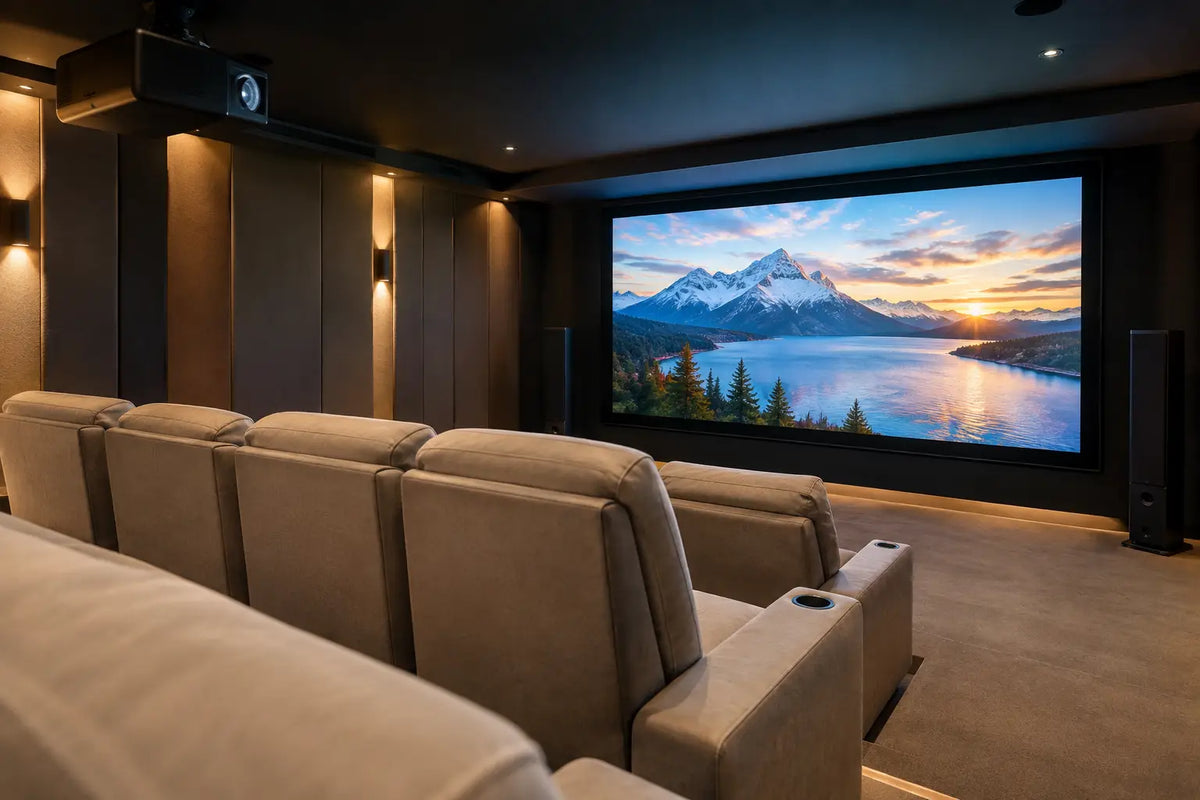
A remarkable private theater is not defined by a large screen alone. Cinema technology is the carefully engineered relationship between image, sound, acoustics, lighting, control, and interior design. When these elements are planned as one system, a film feels more immediate, dialogue stays clear at any volume, and every seat becomes the best seat in the room.
For villa owners, developers, and design professionals, this distinction matters. A beautiful room with disconnected equipment can look impressive yet underperform when the lights are on, the bass overwhelms the space, or several remotes are required to begin a movie. A properly designed cinema is quieter, more intuitive, and far more convincing.
What Cinema Technology Really Includes
Private cinema design begins with performance targets rather than product selection. The room dimensions, seating layout, viewing distance, ceiling height, wall construction, and ambient light all influence the technology that will perform best. Selecting a projector or speaker package before understanding these conditions often creates compromises that are expensive to correct later.
The visual system typically combines a high-performance projector or premium direct-view display with a screen chosen for the room. In a light-controlled dedicated theater, a projector and acoustically transparent screen can create the scale and atmosphere associated with commercial cinema, while allowing speakers to sit behind the image. In a multipurpose media room with daylight or social use, a large direct-view display may deliver stronger brightness and everyday convenience.
Neither approach is universally better. Projection offers cinematic size and a more discreet visual presence when the screen is concealed, but it requires disciplined control of light and thoughtful calibration. Direct-view displays provide exceptional brightness and contrast, although their available size, placement, and aesthetic integration need consideration. The right choice depends on how the room will actually be used.
Sound is equally central. Immersive surround formats place effects, music, and dialogue around and above the audience, producing a dimensional sound field rather than a front-facing presentation. But speaker quantity is only one part of the result. Speaker positioning, amplification, bass management, room calibration, and acoustic treatment determine whether a system sounds enveloping and controlled or merely loud.
Cinema Technology Should Be Designed With the Room
Even the finest equipment cannot overcome a room that has been ignored. Hard stone, glass, decorative panels, and expansive open surfaces may suit a luxury interior, yet they can reflect sound excessively. The result is often unclear dialogue, harsh high frequencies, and low-frequency buildup that changes from one seat to another.
Acoustic design solves these issues without making a cinema look technical or clinical. Absorption reduces unwanted reflections, diffusion maintains a sense of spaciousness, and bass control helps deliver weight without boom. These treatments can be integrated behind fabric walls, timber detailing, architectural panels, ceiling features, or custom finishes that complement the wider interior scheme.
Isolation deserves separate attention. Acoustic treatment improves what happens inside the theater. Soundproofing limits what escapes it. In a family home, that difference is significant: a room can sound excellent internally while still transmitting bass and vibration to adjacent bedrooms or living spaces. Construction details such as isolated walls, sealed doors, floating assemblies, and HVAC treatment should be considered early, particularly when the theater is close to quiet areas of the home.
A successful cinema room therefore involves more than AV equipment. It is an architectural and engineering exercise. The earlier the theater specialist collaborates with the architect, interior designer, and MEP team, the more elegantly speakers, cabling, ventilation, equipment racks, and acoustic construction can disappear into the design.
Picture Performance Is About More Than Resolution
Terms such as 4K, HDR, laser projection, and high refresh rate are useful, but they do not guarantee an exceptional picture in every setting. True picture quality relies on the balance of contrast, black level, color accuracy, brightness, screen material, and room light control.
For example, a bright projector may seem like the obvious upgrade, yet excessive brightness in a small dark theater can create visual fatigue. Conversely, a projector calibrated for a dedicated blacked-out room may look flat in a media room with windows and pale finishes. The screen gain, wall colors, and lighting strategy need to support the selected display technology.
Thoughtful lighting is especially important. Step lights, concealed cove lighting, wall sconces, and aisle illumination should create a refined atmosphere without washing out the image. Dimmable, scene-based lighting allows the room to transition from arrival to previews to feature presentation with the appropriate levels at every stage.
Immersive Audio Requires Precision, Not Excess
A premium cinema should deliver impact without demanding uncomfortable volume. That is where engineering makes the difference. A correctly specified system preserves speech intelligibility during quiet scenes, creates convincing movement during action sequences, and delivers low-frequency effects with authority rather than vibration and muddiness.
Seat count and room volume guide the specification. A compact theater may benefit from a carefully balanced surround layout with discreet architectural speakers, while a larger room may require more powerful amplification, dedicated subwoofers, and additional surround or ceiling channels. More channels can improve immersion, but only when placement and calibration support them. Adding speakers to an unsuitable room does not automatically create a better experience.
Subwoofers deserve particular attention because bass interacts strongly with room dimensions. One subwoofer may be sufficient in some spaces, but multiple carefully placed subwoofers can often provide more even bass across several rows of seating. This is a meaningful consideration for homeowners who expect every guest to enjoy the same level of performance.
Control Is the Most Visible Part of Cinema Technology
The most sophisticated theater should still feel effortless. A guest should not need to understand sources, inputs, projector warm-up procedures, or audio modes. One elegant interface can lower the lights, close the curtains, start the system, select a source, and set the room to the preferred viewing scene.
This is where cinema technology becomes part of a broader intelligent home. The theater can communicate with lighting control, motorized shades, climate control, security, and multi-room audio. A single “Movie Night” scene may prepare the room before the audience enters, while a “Pause” command can raise lighting subtly without interrupting the atmosphere.
Reliable control also protects the investment. Equipment can be housed in a ventilated rack away from the viewing area, minimizing fan noise and visual clutter while making service access easier. Wired network infrastructure and professionally managed power improve stability, particularly in systems that combine streaming, gaming, satellite content, media servers, and advanced control platforms.
The Details That Turn a Media Room Into a Destination
Luxury cinema design is experienced through small decisions. Seating should support the chosen screen height and sightlines, with enough spacing for circulation and recline. Upholstery, wall finishes, and carpeting should contribute to the acoustic strategy without losing their tactile appeal. Equipment should be visually quiet, whether concealed behind an acoustically transparent screen, integrated into architectural joinery, or finished to match the room.
Content habits matter, too. A theater designed primarily for films has different priorities than one used for live sports, console gaming, family streaming, or presentations. Sports fans may value brightness and social seating. Gaming may require low input lag and flexible display settings. Film enthusiasts may prioritize complete light control, reference-level sound, and a screen proportion that suits cinematic content. The best design reflects the owner’s real lifestyle rather than a standard package.
At I-Trust Systems, cinema rooms are approached as complete environments, where AV engineering, acoustic performance, automation, and refined interiors work together from the first design conversation. This integrated approach avoids the common problem of trying to force premium equipment into a room that was never prepared to support it.
A private theater should make ordinary evenings feel intentional: the room settles into the right light, the first frame fills the screen, and the outside world fades without effort. That experience begins long before play is pressed - with technology designed around the room, the architecture, and the people who will enjoy it.
Share:
How to Calibrate a Cinema Projector for True Color
Best Acoustic Panels for Offices That Perform