

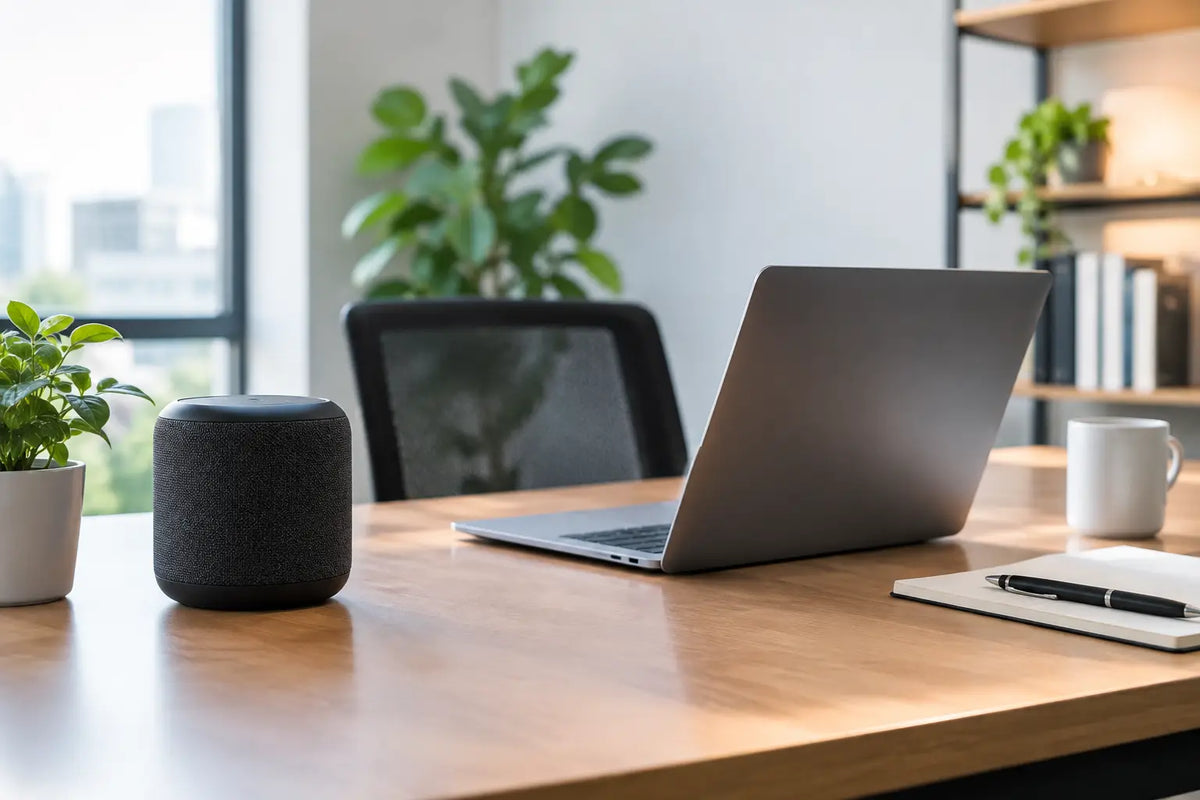
A reception area can feel considered before a visitor speaks to anyone. A calm, well-balanced music program supports that first impression, softens the mechanical sound of an active workplace, and gives the entire environment a more intentional character. The best office background music systems do far more than play a playlist through ceiling speakers. They combine carefully selected equipment, acoustic planning, intelligent zoning, and simple control into an experience that feels appropriate in every part of the building.
For premium offices, this is not a minor finishing detail. It is part of the workplace standard. Music must support focus without becoming distracting, reflect the brand without feeling promotional, and remain consistent from the boardroom to the lobby. Achieving that result requires more thought than selecting speakers and pressing play.
What Makes an Office Music System Worth Specifying?
A professional background music system is designed around the building, not around a single consumer audio device. It considers ceiling height, room finishes, ambient noise, occupancy patterns, and how each department uses its space throughout the day. The goal is even coverage at a comfortable level, with clear control over where music is heard and how it is managed.
The distinction matters. A few portable speakers may seem sufficient in a small office, but they rarely deliver controlled coverage, reliable operation, or a refined visual result. They can create loud and quiet pockets, introduce cable clutter, and force staff to manage audio manually. A properly engineered installation places discreet speakers where they will perform best, routes amplification and source equipment out of sight, and gives authorized users an intuitive way to adjust the system.
For offices with reception areas, executive suites, meeting rooms, open-plan workspaces, cafés, gyms, and outdoor terraces, the system should be designed as a connected audio environment. Each area has a different acoustic requirement and a different expectation of volume, content, and control.
Best Office Background Music Systems Start With Zoning
Zoning is often the decision that separates an adequate installation from an exceptional one. A zone is an independently controlled area of the office, allowing different spaces to have different volume levels, music sources, or schedules.
The reception may need a warm, welcoming soundtrack throughout business hours. An open workspace may benefit from low-level instrumental music during quieter periods, while a staff lounge can accommodate a more energetic selection. Meeting rooms are usually best kept independent, so music can be turned off entirely during presentations and video calls. In larger premises, outdoor areas, corridors, washrooms, and private client lounges may each require their own control.
A well-planned zone layout also prevents a common problem: turning the whole office up because one noisy area cannot be heard. With independent zones, the café or communal area can operate at a slightly higher level without disrupting teams focused on detailed work nearby.
There is a practical limit. Too many zones can complicate control and increase the system budget without improving the daily experience. The right approach is to group spaces with similar acoustic conditions and usage patterns, then create separate control only where it adds genuine value.
Source Flexibility Without Staff Confusion
Most offices need a stable, professionally managed music source rather than personal phones connected by Bluetooth. Commercial music services, network audio players, and centralized streaming sources offer predictable playback, curated programming, and scheduling options. They also avoid the awkward interruption of calls, notifications, or unauthorized content entering the sound system.
That does not mean every zone needs a different playlist. In many executive offices, one consistent source across public-facing areas creates a more cohesive atmosphere. What matters is that the system gives management the choice. A central audio matrix can distribute one source throughout the building or send selected content to designated zones when required.
Control should remain simple. A wall keypad, touchscreen, tablet interface, or integrated smart control platform can provide volume adjustment, source selection, mute functions, and scheduling without exposing complicated technical settings to every user.
Speaker Selection Is About Coverage, Not Just Volume
The finest music source cannot compensate for poorly placed loudspeakers. For most modern offices, architectural ceiling speakers offer the cleanest result. They sit discreetly within the ceiling plane, preserve the interior design, and distribute sound broadly enough to avoid obvious hot spots.
Speaker spacing should be calculated according to ceiling height, speaker dispersion, room geometry, and the level of sound required. In an open office with high ceilings and hard surfaces, a design may call for more speakers at lower output rather than fewer speakers driven louder. This produces a more even, comfortable sound field and reduces the sense that music is coming from one point overhead.
Surface-mounted speakers can be the better choice where ceilings are exposed, highly detailed, or unsuitable for recessed installation. They are also useful in parking structures, terraces, warehouses, and industrial-inspired office interiors. Premium models are available in finishes that complement the architecture rather than compete with it.
For executive lounges or client-facing spaces, discreet subwoofers may add warmth and fullness at low volume. They are not essential in every office, and they must be carefully calibrated. Excess bass travels through partitions and floors more easily than midrange sound, making it counterproductive near meeting rooms or focused work areas.
Acoustics Determine Whether Music Feels Refined
An office with glass walls, polished stone, exposed concrete, and minimal soft furnishings can look exceptional while sounding overly reflective. In these spaces, background music may become sharp or tiring even at modest volume. The issue is not necessarily the speakers. It is the room.
Acoustic treatment helps control excessive reverberation and improve speech comfort, which benefits both music playback and everyday communication. Decorative acoustic panels, ceiling treatments, acoustic baffles, upholstered furnishings, and strategically placed rugs can reduce reflection without compromising a luxury interior concept.
Sound isolation is a separate consideration. If a boardroom shares a wall with a reception lounge, background music should not intrude on confidential conversations. Likewise, a fitness room, entertainment area, or café within a larger commercial project may require isolation measures to protect adjacent offices. Acoustic planning should begin early, ideally alongside interior design and MEP coordination, rather than after the space is complete.
Reliability, Scheduling, and Centralized Management
Office audio should operate reliably without becoming another task for the facilities team. Professional amplifiers, networked audio components, and correctly sized power distribution are built for extended daily use. Equipment can be located in a ventilated rack or dedicated technical cabinet, keeping the working environment clean and allowing future service without disturbing finished spaces.
Scheduling adds another layer of polish. The system can begin playback before the reception opens, lower volume automatically during designated quiet periods, and power down after business hours. In multi-tenant or hospitality-led environments, schedules can be adjusted by zone to suit each operational area.
Centralized control becomes especially valuable when background music is integrated with lighting, shades, displays, and room control. A morning scene can prepare the office for arrivals with reception lighting, comfortable climate settings, and low-level music. An after-hours scene can shut down selected systems while maintaining audio in approved spaces. This is where a broader smart building strategy turns individual technologies into a coordinated experience.
Designing for Different Office Environments
The right system depends on the character of the workplace. A law firm, private wealth office, design studio, medical practice, and technology headquarters may all require professional audio, but their priorities differ.
A client-focused office may prioritize an understated, elegant soundtrack in arrival spaces and private lounges, with absolute discretion in consultation rooms. A creative studio may want flexible zones that support collaborative energy during the day and event mode after hours. A corporate headquarters may need centrally managed audio across several floors, including staff amenities and training spaces.
For offices with hybrid work patterns, meeting rooms deserve particular attention. Background music should be easy to mute automatically or manually when a room is booked, a video conference begins, or a presentation source is activated. No employee should have to search for an amplifier or call IT to silence music before an important discussion.
A Better Standard for Workplace Sound
The best results come from treating background music as part of the architecture, not an afterthought added once furniture arrives. Early planning allows speaker positions, cable routes, equipment locations, acoustic treatments, and control interfaces to align with the interior vision.
I-Trust Systems designs office audio environments with this full-picture approach, combining professional AV engineering, discreet installation, acoustic expertise, and intelligent control. The result is a workplace that sounds composed, looks uncompromised, and works effortlessly for the people using it.
When the music is properly designed, most people will not notice the technology at all. They will simply notice that the office feels more welcoming, more focused, and more complete.
Share:
Best Office Video Conferencing for Premium Spaces
How to Select Distributed Audio for Luxury Spaces