

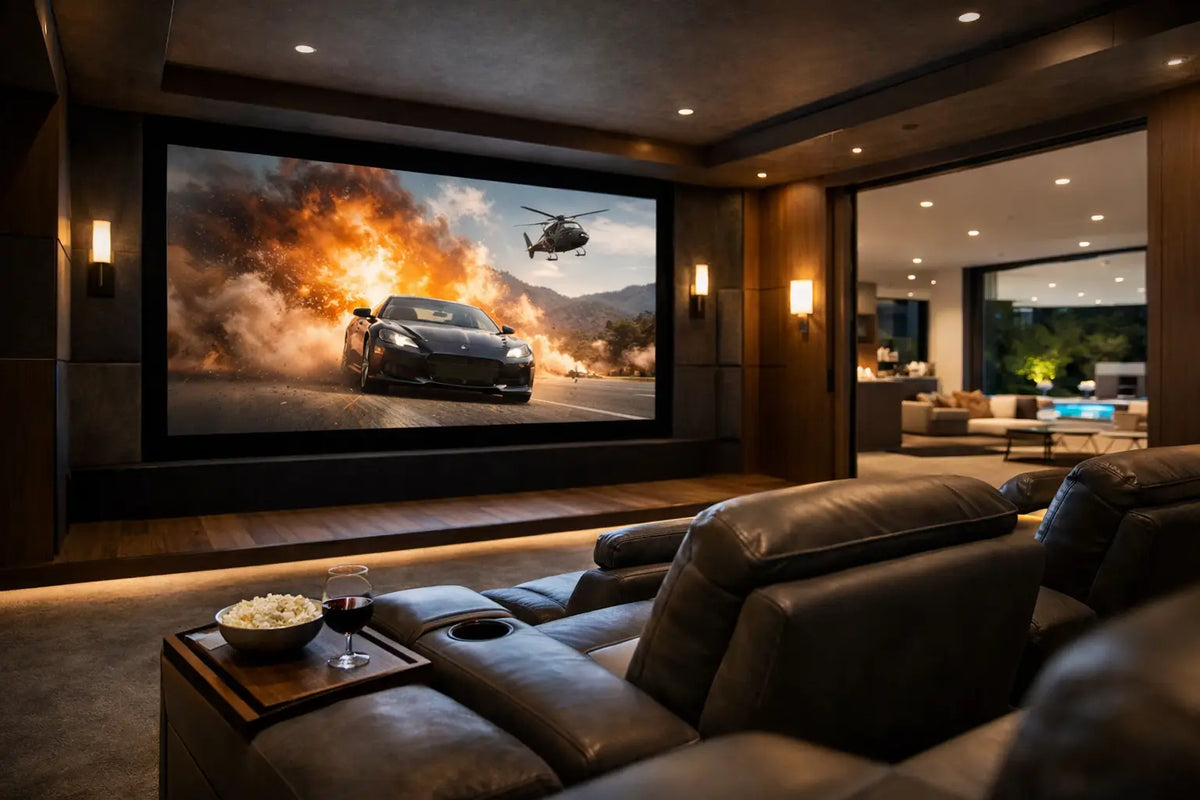
The difference between watching a film at home and feeling fully absorbed by it is rarely the size of the screen alone. It is the controlled light, the calibrated sound, the comfort of the seating, and the absence of everyday distractions. So, is home cinema worth it? For homeowners who value exceptional entertainment, thoughtful design, and a more complete use of their property, a professionally designed cinema can be one of the most rewarding investments in the home.
A luxury home cinema is not simply a television mounted on a wall with surround speakers. It is a purpose-built environment where technology, acoustics, interior finishes, and intelligent control are engineered to work as one. When that standard of performance matters, the value reaches well beyond movie night.
Is Home Cinema Worth It? It Depends on How You Live
A dedicated cinema is most worthwhile when it suits the rhythm of the household. Families who entertain frequently, enjoy live sports, play console games, or want a private place to enjoy films will use the room very differently from someone who watches occasional television in a living room.
For villa owners and clients with generous floor plans, a cinema can turn an underused basement, upper lounge, spare room, or private wing into a destination. It creates a setting that feels distinct from the rest of the house: quieter, more intimate, and designed for a single purpose. That separation is valuable. A living room must accommodate conversation, daylight, foot traffic, and everyday life. A cinema does not have to compromise.
The investment also makes sense for owners who prefer to host at home. A refined cinema room offers an experience that commercial venues cannot replicate: complete privacy, seating selected for your family, preferred refreshments nearby, and content chosen on your own schedule. It is entertainment shaped around convenience rather than inconvenience.
That said, a dedicated room is not essential for every property. If space is limited or the home is used primarily by one or two people, a high-performance media room may offer a better balance. The right answer is not always the largest screen or the most elaborate specification. It is the solution that delivers the desired experience without sacrificing how the home functions.
The Experience Is Built Around More Than the Screen
A premium projector and screen can create a scale that even the finest large-format televisions cannot always match. Yet projection is only one part of the equation. The image must be selected for the room's dimensions, viewing distance, ambient light, and preferred content. Screen material, projector brightness, and placement all affect whether the image appears rich and cinematic or merely oversized.
Sound is equally decisive. In a conventional room, audio reflects from hard surfaces, escapes through doors, and competes with appliances, traffic, and conversation. In a well-engineered cinema, speaker locations, subwoofer placement, acoustic treatments, and room proportions are considered together. Dialogue becomes clearer, music gains depth, and cinematic effects move naturally around the audience rather than becoming indistinct noise.
This is where a bespoke installation earns its place. Adding premium equipment to a poorly prepared room can produce disappointing results. By contrast, a system designed around the architecture can make every component perform closer to its potential. The goal is not simply louder sound. It is controlled, detailed sound that remains involving at both reference level and late-night listening levels.
Seating and sightlines deserve the same attention. A room with excellent equipment can still feel awkward if the front row sits too close, the rear row has a blocked view, or recliners are selected without allowing for circulation. Tiered platforms, carefully measured seating positions, and integrated lighting create the kind of comfort that encourages people to remain in the room long after the opening scene.
The Often-Overlooked Value of Acoustics and Isolation
Many homeowners begin with visuals because they are easy to imagine. The more meaningful transformation often comes from acoustic design and sound isolation. These are separate disciplines, and both matter.
Acoustic treatment improves what happens inside the room. Panels, bass management, diffusion, and selected finishes help control reflections and reduce muddiness. The result is greater clarity and a more balanced sound field throughout the seating area.
Sound isolation limits what travels outside the room and what enters it. This may involve upgraded doors, wall and ceiling construction, vibration control, sealed penetrations, and careful treatment of HVAC paths. Without this planning, a dramatic action sequence may be felt in bedrooms, hallways, or adjacent entertaining areas. With it, the cinema can operate at a satisfying level while the rest of the home remains calm.
This is particularly relevant in large residences where bedrooms, offices, prayer spaces, or formal lounges sit close to the entertainment zone. It is also a consideration for townhomes and properties in close proximity to neighbors. Investing in isolation early, especially during construction or renovation, is typically more efficient than attempting to correct sound transfer after finishes are complete.
Automation Makes the Room Feel Effortless
The finest cinema rooms remove friction from the experience. Instead of juggling remotes, searching for inputs, adjusting lights manually, and asking guests to silence notifications, a single control interface can prepare the room in seconds.
One command can lower blackout shades, dim architectural lighting, power the projector, select the correct source, set the desired audio mode, and activate pathway lights. At the end of the evening, the system can restore lighting, raise shades, and place equipment into its preferred standby state. This is not technology added for novelty. It is thoughtful integration that preserves the atmosphere of the room.
A cinema can also become part of a wider smart home strategy. Climate control can be adjusted before guests arrive, security cameras can be viewed discreetly when needed, and whole-home audio can extend the entertainment experience into an adjacent lounge or outdoor area. When designed as one connected ecosystem, each system supports the other rather than competing for attention.
At I-Trust Systems, this integrated approach allows cinema design to align with the home's lighting, automation, acoustics, and wider AV infrastructure from the beginning.
What Does a Home Cinema Add to Property Value?
A home cinema should first be viewed as a lifestyle investment, not a guaranteed formula for increasing resale price by a fixed amount. Market preferences vary, and a room's appeal depends on the location, the quality of execution, and the expectations of future buyers.
However, in luxury properties, a properly designed cinema can be a compelling differentiator. Buyers in this segment often look beyond bedroom counts and square footage. They notice considered amenities, integrated technology, and spaces that feel complete rather than improvised. A cinema that has been designed with architectural sensitivity can communicate the same level of care as a wine room, professional gym, or resort-style outdoor living area.
The distinction is quality. A dated room with visible wiring, mismatched finishes, and obsolete equipment may be viewed as a renovation project. A timeless space with concealed infrastructure, adaptable control systems, refined materials, and serviceable components is far more likely to retain its appeal. Choosing neutral, enduring finishes while allowing electronics to be updated over time is a prudent strategy.
The Cost Question: Where the Budget Actually Goes
Home cinema budgets vary widely because the room itself is part of the system. A modest media room may prioritize a large display, compact surround sound, and simple lighting control. A dedicated luxury cinema may involve construction, sound isolation, custom millwork, tiered flooring, professional-grade audio, projection, acoustic treatments, automation, and bespoke seating.
The most common mistake is allocating too much of the budget to visible equipment and too little to the room. A high-end projector cannot compensate for uncontrolled light. Premium speakers cannot overcome poor placement or severe reflections. Beautiful recliners do not solve inadequate sightlines. The strongest projects reserve appropriate investment for engineering, infrastructure, and installation quality before selecting the finishing details.
It is also wise to plan for future access. Equipment racks, conduit pathways, ventilation, and service access make upgrades and maintenance significantly easier. Technology evolves, but a properly prepared room gives the homeowner flexibility to update sources, displays, or control platforms without reopening finished walls.
How to Decide Whether a Cinema Room Is Right for You
Start with the experience you want to create rather than a list of products. Consider how many people will use the room regularly, whether it will host guests, what content matters most, and whether the space should be fully dedicated or perform multiple functions. A family focused on weekend films may need a different solution from a client who wants an immersive sports lounge or a private screening room for serious cinema enthusiasts.
Then assess the room honestly. Dimensions, ceiling height, window placement, neighboring spaces, and HVAC conditions influence the design. A skilled AV and acoustic partner can identify constraints early and recommend whether a projector-based cinema, premium television media room, or hybrid entertainment space will offer the strongest result.
Finally, think in terms of longevity. The most successful rooms are not crowded with technology for its own sake. They are calm, intuitive, acoustically considered, and visually connected to the rest of the home's design language. When the equipment disappears into the architecture and the experience feels effortless, the room becomes a place people genuinely choose to spend time.
A home cinema is worth pursuing when it gives your property a purpose-built space for connection, escape, and exceptional entertainment. Design it around the people who will use it most, and the first screening will feel less like a new feature in the house and more like a new way to enjoy it.
Share:
Laser Versus Lamp Projectors: Which Fits Your Space?
A Conference Room AV Checklist for Premium Spaces