

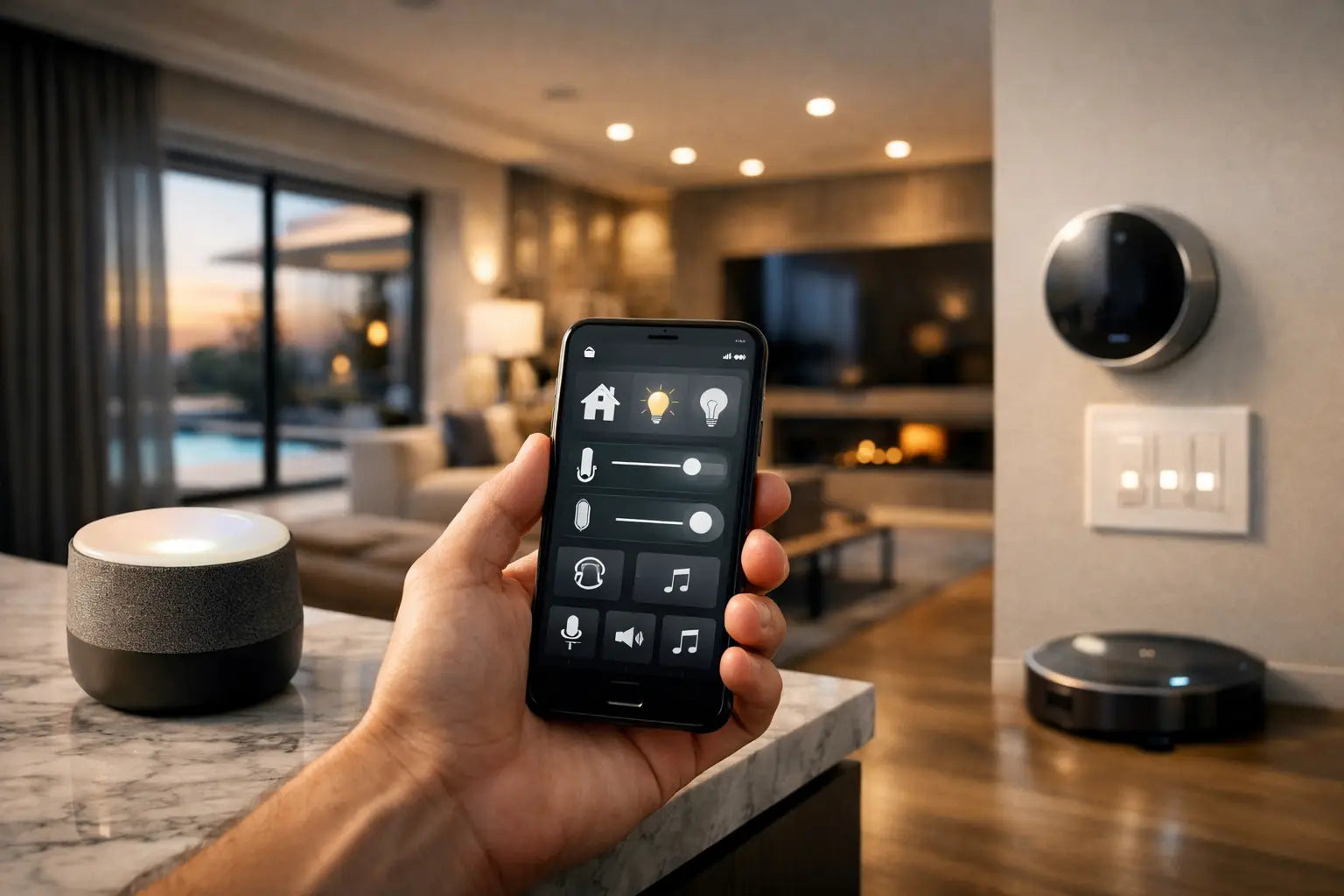
A well-designed automated space does not feel technical. It feels effortless. The best smart life automation examples are not about filling a property with gadgets - they are about shaping a home or commercial environment that responds intelligently, looks refined, and performs exactly as expected.
For villa owners, developers, architects, and design-conscious decision-makers, that distinction matters. A premium property should not rely on disconnected apps, visible clutter, or systems that work well only in isolation. True automation brings lighting, climate, shading, entertainment, security, and access into one coherent experience.
Why smart life automation examples matter in premium spaces
At the luxury end of the market, automation is less about novelty and more about consistency. A beautifully finished residence loses some of its appeal when lights are controlled by one app, curtains by another, and the sound system by a handheld remote that no one can find. The same is true in commercial settings where user confusion quickly becomes an operational problem.
That is why the most effective automation schemes begin with lifestyle and space planning. The question is not simply, "What can be automated?" It is, "What should happen in this room, at this time, for this user?" Once that is clear, automation becomes an invisible layer of comfort, performance, and control.
12 smart life automation examples worth considering
1. Lighting scenes that shift with the day
One of the most practical and elegant upgrades is intelligent lighting control. Instead of treating every switch as a separate command, scenes can be created for morning, entertaining, dining, reading, or evening wind-down.
In a villa, that might mean soft corridor lighting before sunrise, brighter kitchen lighting during breakfast, and warm, dimmed settings after sunset. In an office or showroom, scene-based control can support productivity during business hours and create a more inviting mood for client-facing events. The value is not only convenience. It is visual consistency, better energy use, and a more composed interior atmosphere.
2. Climate control that responds room by room
Luxury comfort is often defined by what never needs to be adjusted manually. Smart AC and HVAC automation can regulate temperature by zone, based on occupancy, schedule, or time of day.
This is especially useful in larger homes where certain rooms remain unused for long periods. A guest suite, gym, prayer room, or formal sitting area does not need constant cooling if it is empty. Zoned automation improves comfort while reducing unnecessary energy consumption. The trade-off is that proper performance depends heavily on system design, not just thermostat selection.
3. Motorized curtains and blinds tied to sunlight
Window treatments are among the clearest examples of automation improving both lifestyle and interior protection. Curtains can open gradually in the morning, close during the hottest part of the day, and adjust automatically to preserve privacy in the evening.
In premium homes with large glass facades, this becomes more than a convenience feature. It protects furnishings from harsh sunlight, supports cooling efficiency, and maintains a clean architectural look without repeated manual adjustment. In a hospitality or commercial setting, automated shading can also help maintain comfort while preserving the intended visual mood of the space.
4. One-touch arrival and departure modes
A well-integrated property should understand the rhythm of entry and exit. With an arrival mode, pathway lights can turn on, the AC can return to preferred settings, selected curtains can open, and music can begin in key areas. A departure mode can switch off non-essential lighting, lower shades, adjust climate settings, and arm the security system.
This is one of the strongest smart life automation examples because it simplifies daily behavior into a single action. It also reduces the likelihood of lights being left on, doors being unsecured, or systems operating needlessly. For busy households and executive spaces, that level of control quickly becomes indispensable.
5. Integrated home cinema preparation
In luxury residences, a cinema room should feel curated, not improvised. Automation can prepare the entire room with one command: lights dim to preset levels, blackout curtains close, the projector and screen activate, audio systems switch to the correct source, and climate settings adjust for occupancy.
This kind of orchestration turns entertainment into an experience rather than a setup process. It is also a reminder that premium automation works best when audio, video, acoustics, lighting, and interior design are considered together. A fine projector alone does not create a cinematic environment.
6. Multi-room audio that follows the occasion
Background music is often underestimated until it is properly integrated. In a refined residence, audio can be distributed across living areas, gardens, lounges, and wellness spaces with independent or synchronized control.
That means calm music in the spa area, something more energetic in the gym, and a different selection in the outdoor entertaining zone, all without visible equipment dominating the design. In retail, hospitality, and worship environments, multi-zone audio also improves atmosphere and operational flexibility. The key is discreet speaker placement and careful tuning, not simply volume.
7. Security automation that does more than record
Modern security should be active, intelligent, and integrated into the wider environment. Cameras, door contacts, motion sensors, gate control, and smart locks can work together to do more than send alerts.
For example, if motion is detected late at night in a garden or entry zone, selected exterior lights can illuminate automatically while the owner receives a notification. If a family member arrives, access can trigger pathway lighting and disarm only specific zones. These details create a stronger sense of protection without making the property feel institutional.
8. Smart access control for homes and commercial spaces
Access control is no longer limited to large corporate buildings. High-end residences increasingly benefit from keyless entry, video intercom integration, gate automation, and controlled access for staff, deliveries, or guests.
For property developers and commercial operators, the advantages are even broader. Permissions can be managed more precisely, entry logs can be tracked, and different user groups can be assigned different levels of access. The right setup depends on whether the priority is convenience, accountability, or a combination of both.
9. Outdoor automation for gardens and entertaining areas
Exterior spaces deserve the same intelligence as interiors. Garden lighting, irrigation timing, outdoor audio, pool area lighting, and perimeter monitoring can all be integrated into a unified control platform.
This matters in properties designed for hosting. An outdoor dinner scene might activate landscape lighting, set music levels across specific zones, and adjust fountain or water-feature schedules so the environment feels polished from the moment guests arrive. Good outdoor automation is subtle. It enhances the setting without drawing attention to the technology behind it.
10. Energy-aware automation without sacrificing comfort
There is a misconception that luxury automation is purely indulgent. In reality, some of the most effective systems are designed to reduce waste while preserving the highest comfort standards.
Lighting can dim in response to daylight levels. Cooling can ease back in unused zones. Motorized shading can reduce heat gain before the AC works harder. Occupancy sensors can support practical control in corridors, utility areas, and commercial washrooms. The point is not aggressive energy restriction. It is intelligent efficiency that respects how premium spaces are actually used.
11. Automated routines for wellness and daily rhythm
Automation can also support how people feel, not just what devices do. Morning routines can raise shades gradually, bring lights up gently, and activate selected music or news sources. Evening routines can soften the environment, reduce glare, and create a calmer transition into the night.
In wellness rooms, gyms, and spa settings, this becomes even more powerful. Temperature, lighting tone, and audio can be aligned with the intended use of the space. These are the kinds of details that make a property feel thoughtfully engineered rather than merely equipped.
12. Centralized control across the entire property
Perhaps the most valuable example is the least visible: one interface that brings everything together. Whether through elegant wall keypads, touch panels, or a well-designed mobile control system, centralized automation removes friction.
Instead of managing ten separate brands and interfaces, the user interacts with one system that has been programmed around the property itself. This is where bespoke integration becomes essential. The quality of the experience depends on the planning, commissioning, and aftercare behind it. For clients investing in premium spaces, that is often the difference between a smart home and a sophisticated one.
What separates good automation from expensive clutter
Not every connected product deserves a place in a luxury project. Many off-the-shelf devices promise convenience but create visual inconsistency, app overload, and unreliable performance over time. Premium automation should be designed as part of the architecture and interior concept, not layered on as an afterthought.
That means thinking carefully about wiring pathways, equipment storage, acoustic impact, keypad placement, user permissions, and how each room should behave. It also means accepting that more features do not always create a better result. In some spaces, simplicity is the higher form of luxury.
For clients seeking a truly elevated outcome, the right partner does more than supply devices. Firms such as I-Trust Systems approach automation as an engineered environment - one that balances aesthetics, usability, and long-term reliability.
The smartest spaces are not the ones with the most technology. They are the ones where comfort, control, security, and atmosphere feel perfectly resolved from the first touch.
Share:
How to Choose Smart Home Automation Companies
How to Set Up a Smart Home Automation System