

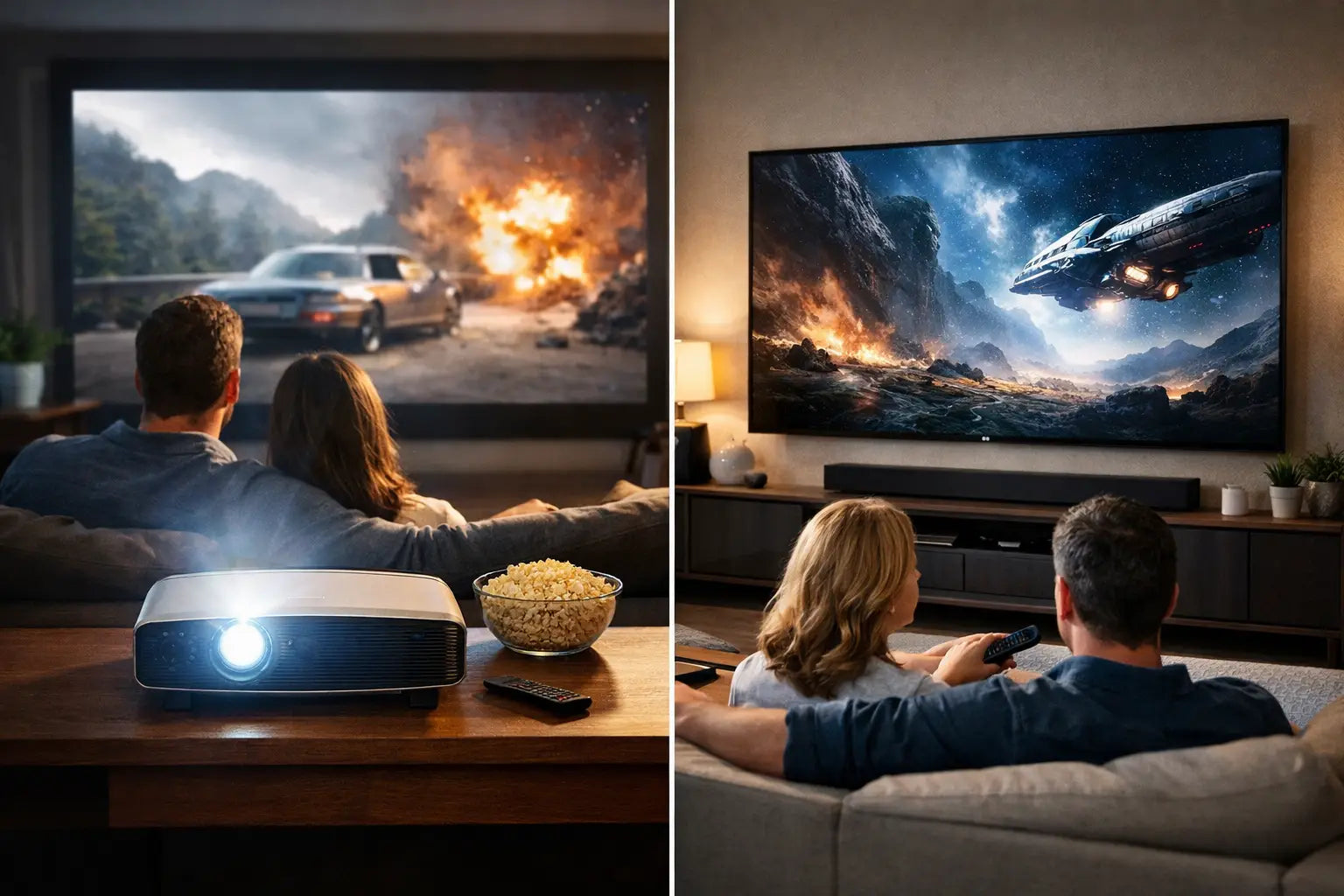
A 100-inch image changes the character of a room. It turns a casual movie night into an occasion, gives live sport real presence, and allows a carefully designed media space to feel genuinely cinematic. Yet the best display is not always the largest one. The projector vs large TV cinema decision depends on how you use the room, how much daylight enters it, the level of finish you expect, and whether the space is being designed as a dedicated theater or an elegant everyday living area.
For premium residences, the question is rarely about choosing one technology in isolation. It is about designing an experience where picture, sound, lighting, control, seating, and architecture work together.
Projector vs Large TV Cinema: The Defining Difference
A projector creates scale. A large TV creates consistency. Both can deliver an exceptional viewing experience, but they do so under very different conditions.
A modern 98-inch or 100-inch TV provides a bright, precise picture with strong contrast, especially in rooms with windows, open-plan layouts, or frequent daytime use. It is a compelling choice for a family lounge, a villa majlis, a games room, or a multifunctional entertainment space where the display must perform immediately at any hour.
A projector, paired with a properly specified screen, brings the proportions and visual immersion associated with a private cinema. Image sizes of 120, 150, or even more than 200 inches become possible without allowing a display panel to dominate the room when it is not in use. In a dedicated cinema, that scale matters. It creates a wider field of view, makes cinematic content feel more involving, and gives the room a distinct sense of destination.
The right answer is therefore not simply projector or TV. It is whether the room should behave like a cinema, a living space, or both.
When a Large TV Is the Better Choice
Large-format TVs have advanced considerably. Premium models now offer excellent 4K detail, high brightness, controlled black levels, and refined color performance straight from the panel. They are particularly well suited to environments where ambient light cannot be fully controlled.
Bright rooms and everyday viewing
If a room has large glass elevations, skylights, pale finishes, or open connections to kitchens and gardens, a TV is often the more practical display. Even with motorized curtains and lighting control, daylight is not always something homeowners want to block simply to watch the news or a football match.
A high-quality TV remains clear and impactful in these conditions. It also requires very little preparation: turn it on, select the source, and begin watching. For a media wall that is expected to work throughout the day, this convenience carries real value.
A clean, architectural media wall
A large TV can be integrated with exceptional restraint. It may sit flush within stone, timber, metal, or upholstered wall panels, with a soundbar concealed beneath it or architectural speakers integrated around the display. When the room is designed carefully, cables, equipment, and ventilation disappear from view.
This approach is ideal when the display needs to coexist with formal entertaining, family life, and interior design rather than define the entire room. The TV becomes one element of a composed wall, not a collection of visible technology.
Gaming, sports, and high-use spaces
For gaming, TV panels typically offer lower input lag and a direct, highly responsive image. Sports also benefit from their brightness and punch, especially when friends gather for daytime events. A 98-inch TV may not match a 150-inch projected image, but at the correct seating distance it can still feel commanding and immersive.
The trade-off is simple: the larger the TV, the more visually permanent it becomes. Even the finest installation cannot make a 100-inch black panel disappear when it is switched off.
When a Projector Creates the Better Cinema
A projector earns its place when cinematic scale, visual comfort, and room transformation are the priorities. It is the natural centerpiece of a dedicated theater, where lighting can be managed and sound can be designed with the same care as the picture.
The impact of screen size
There is a meaningful difference between watching a film on a very large TV and watching it on a screen sized for the room. With a projector, image width can be selected around seating position, viewing angles, and the room’s architectural proportions.
For example, a front row that is too close to a 150-inch screen will feel overwhelming rather than luxurious. A screen that is too small for a deep theater can make an otherwise impressive room feel underused. Correct screen sizing is a design decision, not an afterthought.
A projection system also offers greater freedom to create a true wide-screen experience. Films are often produced in formats wider than 16:9, and a cinema-grade screen can be specified to suit the content you value most. This is where a bespoke theater begins to feel distinctly different from a large television room.
A room that disappears into the film
In a well-designed cinema, the screen is only part of the effect. Darker finishes, controlled lighting, acoustic wall treatments, carefully placed speakers, and theater seating all reduce distraction. The room directs attention toward the image and soundtrack.
A projector supports this atmosphere because the screen can be acoustically transparent or designed to blend into the wall. Speakers can sit behind the image, allowing dialogue to come from the action on screen rather than from below it. With a TV, this arrangement is more difficult and often requires compromises in speaker placement.
Flexible concealment
Projectors can be discreetly recessed into ceilings, mounted within custom joinery, or hidden behind ventilation-conscious architectural details. Motorized screens can descend when needed and retract afterward, preserving the room for conversation, entertaining, or other uses.
This makes projection especially appealing in luxury spaces where visual calm is essential. The key is execution. A projector should never feel like an afterthought suspended from a ceiling. Proper lens position, cable routing, ventilation, and access for future service must be resolved during the design stage.
Ambient Light Is the Deciding Technical Factor
The projector vs large TV cinema comparison often comes down to one element: light control.
A projector works by reflecting light from a screen back toward the viewer. Any uncontrolled light in the room - daylight, decorative pendants, wall sconces, or reflections from glossy surfaces - reduces perceived contrast. Blacks become gray, subtle shadow detail fades, and the image loses depth.
A TV produces its own light, so it is far less affected by the room. That does not mean a TV is always superior in a bright environment. It means the installation must match the environment honestly. A projector in a sun-filled room can be successful only when paired with the right screen, appropriate projector brightness, and automated blackout shades or curtains.
Premium integration gives this process an advantage. One touch can lower the blinds, dim selected lighting zones, close curtains, power the AV system, and set the room for viewing. The technology should make the cinema mode effortless, not turn it into a sequence of manual adjustments.
Sound Quality Should Influence the Display Choice
A cinematic picture without proper sound is incomplete. This is especially relevant with very large TVs, which are often installed first and then asked to accommodate audio afterward.
A dedicated projector room can support immersive surround sound with speakers positioned behind an acoustically transparent screen, at the sides, overhead, and around the seating area. Acoustic treatment controls reflections so dialogue stays clear and bass remains powerful without becoming uncontrolled. The result is not merely louder sound. It is more believable sound.
A large TV room can also achieve outstanding audio, but the system may need to be adapted to architectural constraints. In-wall speakers, discreet subwoofers, ceiling speakers for immersive effects, and carefully engineered cabinetry can all preserve a refined interior. The important point is to design picture and sound together. Display selection should never force the audio system into a poor compromise.
Cost, Longevity, and the Value of Integration
A large TV can appear simpler because the display itself includes the image source in one panel. However, premium installations still require secure mounting, clean power, source distribution, network reliability, control, audio integration, and ventilation.
A projector system includes more components: projector, screen, mounting or lift solution, source equipment, and usually more deliberate room treatment. It can therefore represent a greater design investment, particularly in a dedicated theater. But it also creates an experience that a panel display cannot fully replicate at very large sizes.
Long-term ownership matters as well. TVs are relatively straightforward to replace when technology evolves. Projectors may require lamp, laser, or optical servicing depending on the model, while screens and infrastructure can remain part of the room for years. A well-engineered system allows equipment upgrades without rebuilding the interior around it.
The Best Choice for Your Space
Choose a large TV when the room is bright, multifunctional, and used frequently throughout the day. It offers immediate performance, superb brightness, and a polished solution for an integrated media wall.
Choose a projector when the objective is a private cinema with a truly expansive image, controlled atmosphere, and immersive audio. It is the stronger choice for dedicated theaters and for rooms where automation can manage light, conceal technology, and create a complete viewing scene.
For some residences, the most refined answer is both: a large TV for daily viewing in the main living area and a projector-based cinema for films, sport, gaming, and entertaining at a grander scale. I-Trust Systems approaches these decisions as part of the wider environment, balancing display performance with acoustics, lighting, control, and interior detail.
The finest home cinema does not begin with a screen size. It begins with the feeling you want the room to create when the lights lower and the first frame appears.
Share:
Conference Room AV Solutions That Perform
How to Automate Luxury Villas With Precision