

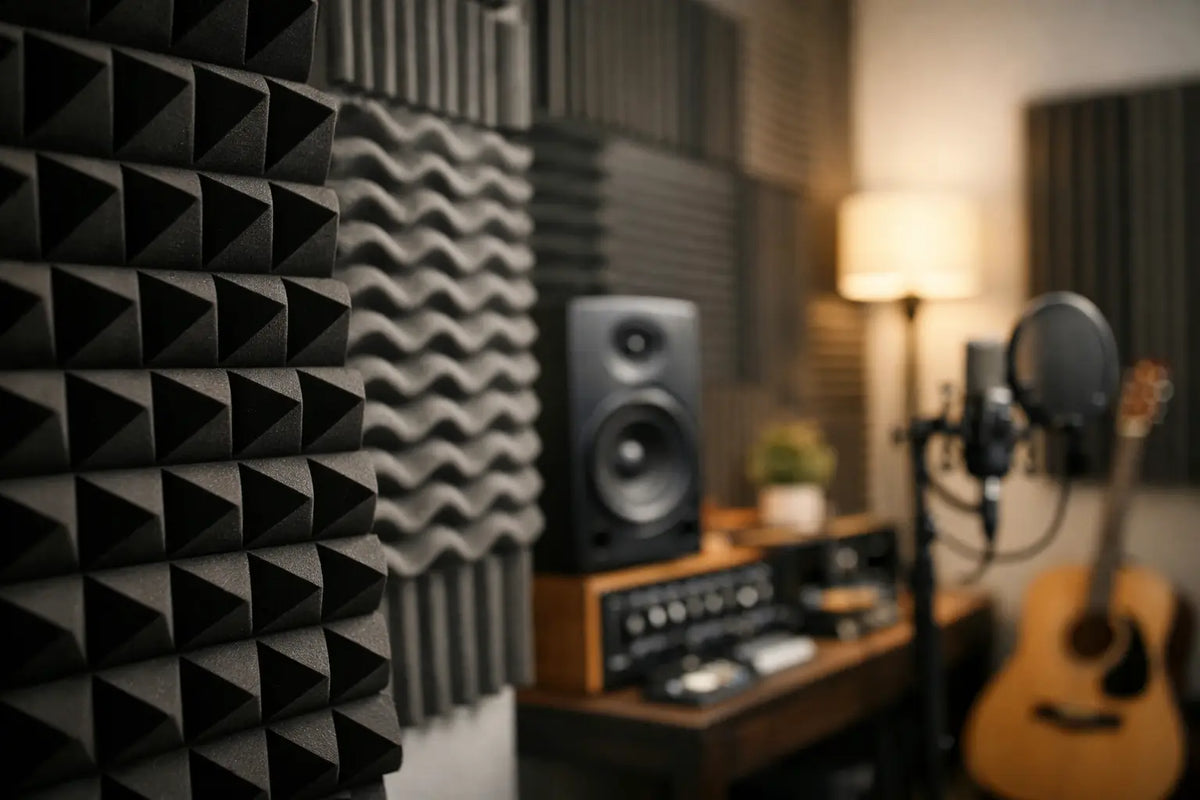
A cinema room can have an exceptional projector, reference-grade speakers, and beautifully tailored seating, yet still feel disappointing when the room itself is left untreated. Acoustic foam is often one of the first materials considered because it can reduce harsh reflections, improve speech clarity, and make a space feel more controlled. The key is understanding what it does well, where it belongs, and where a more complete acoustic strategy is required.
For luxury residences and high-performance commercial environments, acoustic treatment should never be an afterthought or a collection of panels added after the finish work is complete. It is part of the architecture of sound. When specified with care, it preserves the visual refinement of the space while allowing every soundtrack, presentation, conversation, and musical detail to be heard as intended.
What Acoustic Foam Actually Does
Acoustic foam is a porous, sound-absorbing material designed to reduce reflected sound energy within a room. When sound waves strike the foam's open-cell surface, a portion of that energy is converted into small amounts of heat rather than bouncing back into the space. This reduces reverberation, flutter echo, and some of the sharpness that can make a room feel loud or tiring.
Its greatest value is typically in the mid and high frequencies. In practical terms, acoustic foam can help tame the reflections that make dialogue less distinct in a home theater, cause vocal fatigue in a conference room, or make music feel overly bright in a gaming lounge or media room.
It does not, however, stop sound from traveling through walls, doors, ceilings, or floors. That distinction matters. A room with acoustic foam may sound cleaner inside, but it will not necessarily prevent a movie soundtrack from reaching an adjacent bedroom or office. Sound isolation requires a different approach involving mass, airtight construction, decoupling, specialized doors, glazing, and careful treatment of every potential sound path.
Acoustic Foam vs. Soundproofing: A Critical Difference
These terms are often used interchangeably, but they solve different problems. Acoustic treatment manages the sound behavior within a room. Soundproofing, more accurately called sound isolation, manages sound transfer between rooms or from outside noise into a room.
Consider a private cinema in a villa. If voices sound muddy and action scenes become overly aggressive at the listening seats, absorption panels may be part of the answer. If the same cinema disturbs family members upstairs, the project requires construction-level isolation measures. Adding foam to the walls alone will not resolve the second issue.
The same principle applies in commercial projects. A mosque, auditorium, fitness studio, restaurant, or boardroom may need internal acoustic treatment to improve intelligibility and comfort. But when activity must be contained within the space, the design must also account for partitions, HVAC penetrations, doors, ceiling voids, and structural transmission.
Premium results begin with an honest diagnosis. The question is not simply, “Where can we place foam?” It is, “What acoustic outcome does this room need to deliver?”
Where Acoustic Foam Performs Best
Acoustic foam can be highly effective when used in the right application and at the right locations. In a dedicated home cinema, it may be integrated behind fabric wall systems, within decorative panels, or at selected reflection points to support clearer imaging and more consistent listening. In a gaming room or recording environment, it can reduce distracting slap echo and help create a more focused, intimate sound field.
Offices and meeting rooms are also strong candidates, particularly spaces with glass partitions, polished stone, timber, or other reflective finishes. These materials can look exceptional, but without acoustic balance, they may make video calls difficult and private discussions uncomfortable. Discreet absorption can preserve the architectural intention while allowing voices to remain natural and intelligible.
In commercial AV spaces, the need is often even more apparent. Classrooms, training centers, prayer halls, retail environments, and hospitality venues all benefit when speech can be heard without excessive volume. The goal is not to make the room acoustically dead. It is to control reflections so the room supports its intended purpose.
Foam can be appropriate for secondary treatment zones, equipment rooms, vocal booths, and select wall or ceiling areas. In prestige interiors, however, exposed wedge-shaped foam is rarely the final aesthetic answer. The best installations use the absorption principle while delivering a finish that belongs in the room.
Thickness, Profile, and Placement Matter
Not all acoustic foam performs the same way. Thickness is particularly important because thicker material is generally more effective at absorbing lower frequencies than thin material. A slim decorative panel may reduce high-frequency flutter, while a deeper absorber can provide broader control across the vocal and music range.
Profile also affects performance. Pyramid, wedge, and egg-crate patterns increase surface area and can help diffuse the direct visual appearance of the material, but the profile alone is not a guarantee of superior acoustics. Density, thickness, mounting method, air gaps, coverage area, and the room's dimensions all influence the result.
Placement should be deliberate. In a listening room, first-reflection points on side walls and ceilings are often important because they influence stereo imaging and clarity. Rear-wall treatment can reduce distracting reflections, while carefully selected ceiling absorption may help in rooms with hard floors and extensive glazing. The correct balance depends on the speaker layout, seating positions, surface finishes, and the desired character of the room.
A room treated only with absorption can become unnaturally flat if too much material is used indiscriminately. That is why premium projects often combine absorption with diffusion, bass control, and thoughtfully selected soft finishes. The goal is a room that sounds composed, not muted.
Why Low Frequencies Need a Different Solution
The deeper frequencies created by subwoofers, cinema effects, and amplified music are among the most challenging elements of acoustic design. Bass has long wavelengths, builds up in corners, and interacts strongly with room dimensions. Thin acoustic foam cannot meaningfully resolve most low-frequency problems.
A cinema with powerful subwoofers may need bass traps, membrane absorbers, tuned treatment, or purpose-built architectural cavities. These solutions are selected according to measurements and room behavior, not guesswork. They can reduce booming, uneven bass response, and the frustrating experience of having one seat sound overwhelming while another lacks impact.
This is also where engineering-led design separates a visually attractive media room from a truly immersive cinema. Speakers, subwoofers, room proportions, seating layout, and acoustic treatment must operate as one system. Each decision influences the next.
Integrating Treatment Into a Luxury Interior
Premium acoustic design should complement the interior rather than compete with it. There are many ways to conceal or elevate sound-absorbing materials: acoustically transparent fabric walls, upholstered panels, slatted timber features with acoustic backing, perforated finishes, stretch ceilings, and custom joinery details can all provide treatment without sacrificing visual cohesion.
Color, texture, lighting, and panel geometry can be coordinated with cinema seating, wall finishes, and smart lighting scenes. In a private theater, treatment may become part of the room's cinematic identity. In a boardroom, it may be nearly invisible. In a high-end gym or retail environment, it may be expressed as a deliberate architectural feature that supports both the brand atmosphere and everyday comfort.
This integrated approach also allows acoustic needs to be considered alongside HVAC grilles, concealed speakers, projection equipment, lighting control, security devices, and cable routes. Retrofitting each system independently often compromises the result. Designing them together protects both performance and finish quality.
When a Custom Acoustic Assessment Is Worth It
For a small hobby room, a measured amount of acoustic foam can make a noticeable improvement. For a luxury home cinema, multi-purpose entertainment suite, executive meeting room, worship space, or commercial venue, professional assessment is usually the wiser investment.
A proper design process considers room volume, construction materials, reverberation targets, speaker coverage, intended use, occupancy, and aesthetic requirements. It can identify whether the issue is reflection, resonance, noise intrusion, poor speaker placement, or a combination of several factors. This prevents money from being spent on materials that look appropriate but address the wrong problem.
At I-Trust Systems, acoustic treatment can be developed as part of a complete AV and automation environment, ensuring the room performs as beautifully as it presents. The result is not simply quieter sound. It is greater detail, more convincing immersion, clearer communication, and a space that feels intentionally finished.
The most memorable rooms are not defined by how much technology they display. They are defined by how effortlessly everything works together. When the acoustics are right, the room allows the experience to take center stage.
Share:
Why Choose Centralized Home Control for a Villa?
Laser Versus Lamp Projectors: Which Fits Your Space?