

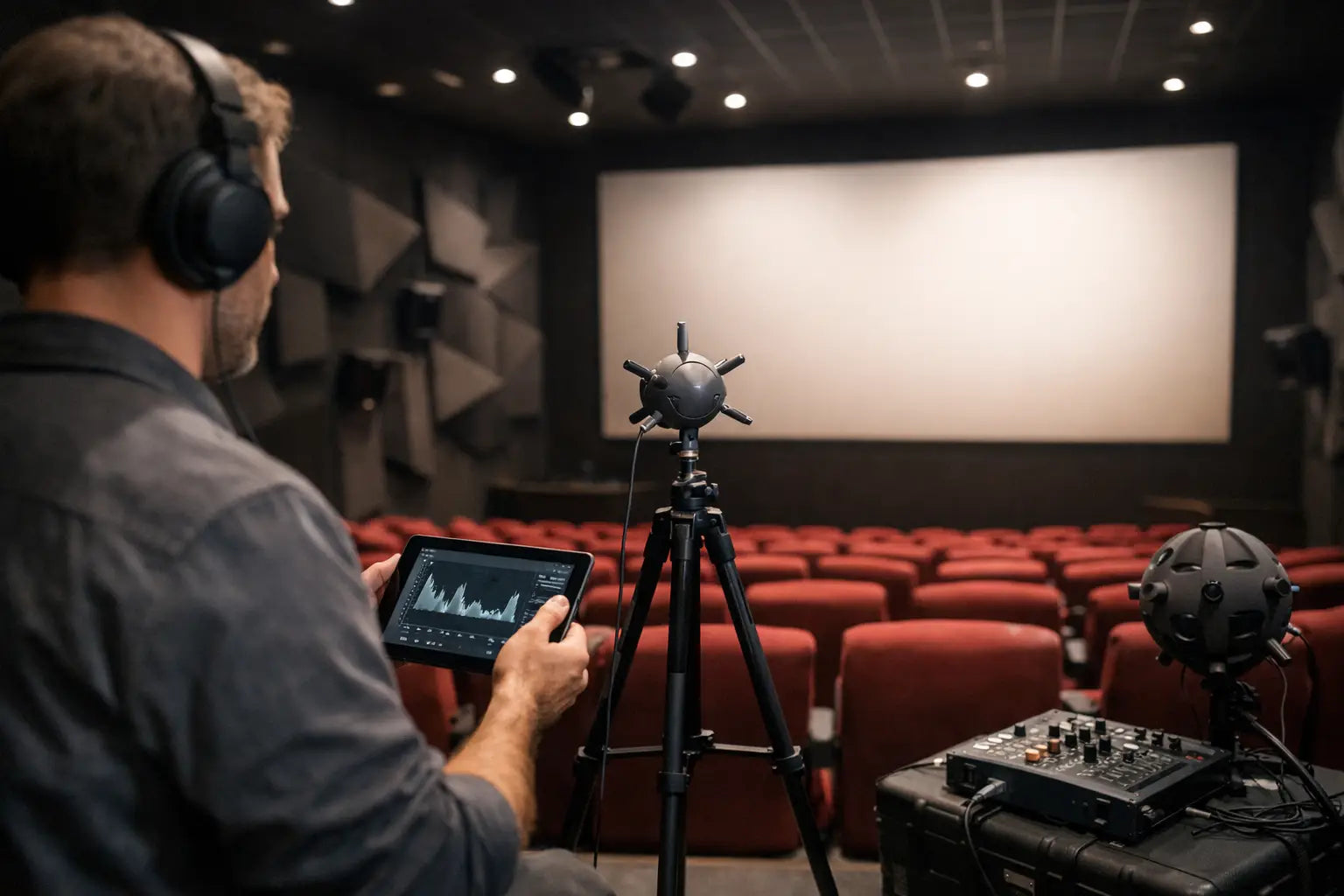
يمكن أن تبدو السينما استثنائية على الورق ومع ذلك تخيب الآمال لحظة بدء تشغيل الصوت. قد تكون الشاشة ذات حجم مثالي، والمقاعد مرتبة بشكل جميل، والإضاءة متناسقة بأناقة، ومع ذلك، إذا كانت الغرفة تبالغ في الجهير، أو تشوه الحوار، أو تعكس أصواتًا قاسية للمستمع، فإن التجربة تتدهور. هذا هو التحدي الحقيقي في كيفية تصميم صوتيات السينما - ليس مجرد جعل الغرفة صاخبة، بل جعلها واقعية ومتحكم فيها ومقنعة عاطفياً.
في تصميم السينما المنزلية الفاخرة، لا يجب أبدًا التعامل مع الصوتيات كإكسسوار يضاف بعد الموافقة على التشطيبات. فهي تشكل وضوح الكلام، وتغليف الصوت المحيطي، وتأثير الجهير، وراحة الاستماع. كما أنها تؤثر على أماكن وضع السماعات، وكيفية بناء الجدران، والمواد التي تنتمي إلى الغرفة. عندما يتم التعامل مع الصوتيات مبكرًا، فإنها ترفع من الأداء والجماليات على حد سواء. وعند إهمالها، يصبح تصحيحها مكلفًا.
كيفية تصميم صوتيات السينما بدءًا من الغرفة
تبدأ غرف السينما الأكثر نجاحًا بالهندسة المعمارية، وليس بالمعدات. قبل اختيار مكبرات الصوت أو المعالجات، يجب تقييم الغرفة نفسها من حيث أبعادها ونسبها ونوع بنائها ومستوى الاستماع المقصود. تتمتع السينما المخصصة بميزة واضحة على غرفة الوسائط متعددة الأغراض لأنه يمكن التخطيط للمعالجة الصوتية، ووضع السماعات، والعزل بتقليل التنازلات. ومع ذلك، حتى داخل المساحات المخصصة، فإن الهندسة مهمة.
غرفة مربعة نادرًا ما تكون مرغوبة لأن الأبعاد المتطابقة أو شبه المتطابقة تميل إلى تعزيز الموجات الواقفة الإشكالية. تخلق هذه الرنينات منخفضة التردد مقاعد ذات جهير طاغٍ وأخرى ذات تأثير ضعيف وغير متناسق. الغرفة المستطيلة الأطول عادة ما تكون أكثر تسامحًا. يلعب ارتفاع السقف أيضًا دورًا رئيسيًا، خاصة عندما تكون التنسيقات الغامرة والمعالجات المخفية جزءًا من التصميم.
هذا هو المكان الذي تحتاج فيه الفخامة والهندسة إلى العمل معًا. يجب أن تبدو الغرفة مصقولة، ولكن يجب أن تدعم النسب التوازن الصوتي قبل إدخال التشطيبات الزخرفية. إذا كان الهيكل خاطئًا، فإن المعدات الفاخرة ستكشف العيوب بشكل أوضح.
أبعاد الغرفة وتخطيط المقاعد يأتيان أولاً
يجب عدم وضع المقاعد في منتصف الغرفة تمامًا، حيث غالبًا ما تصبح إلغاءات التردد المنخفض أكثر وضوحًا. يتم تحديد موضع الاستماع الرئيسي عادةً فيما يتعلق بطول الغرفة، ثم يتم بناء مواقع السماعات واستراتيجيات المعالجة حول نقطة المرجع هذه. في السينمات الأكبر التي تحتوي على صفوف متعددة، يؤثر تصميم الرافعة أيضًا على الصوتيات. يمكن أن ترن الرافعات المجوفة إذا لم يتم بناؤها بشكل صحيح، بينما يمكن أن يؤثر وضعها على سلوك الجهير عبر منطقة الجلوس.
النقطة العملية بسيطة: صمم الغرفة وخريطة المقاعد قبل الانتهاء من عدد السماعات أو تفاصيل الجدران الزخرفية أو الأعمال الخشبية المخصصة. يعتمد الأداء الصوتي على هذا التسلسل.
عزل الصوت ليس هو نفسه المعالجة الصوتية
أحد أكثر المفاهيم الخاطئة شيوعًا في تخطيط السينما هو الافتراض بأن الغرفة المعالجة هي أيضًا غرفة عازلة للصوت. هذه تخصصات منفصلة. المعالجة الصوتية تحسن كيفية سلوك الصوت داخل السينما. عزل الصوت يتحكم في كمية الصوت التي تخرج من الغرفة أو تدخل من المناطق المجاورة.
بالنسبة لأصحاب الفلل والمطورين، هذا التمييز مهم. يمكن للسينما المصممة لتأثير صوتي واقعي منخفض التردد أن تزعج بسهولة غرف النوم المجاورة أو مساحات المعيشة أو الوحدات المجاورة إذا لم يتم عزل الهيكل بشكل صحيح. يتضمن العزل عادةً استراتيجيات هيكلية مثل الإطارات المفككة، والتجاويف المعزولة، والطبقات عالية الكتلة، والمواد المانعة للتسرب الصوتية، والأبواب المحددة بعناية. تحتاج مسارات التكييف، والإضاءة الغائرة، واختراقات الكابلات أيضًا إلى الاهتمام لأن الصوت يجد نقاط الضعف بسرعة.
هناك دائمًا مفاضلة هنا. يتطلب الأداء العالي للعزل عادةً مساحة أكبر، وعمق بناء أكبر، وميزانية أعلى. في المشاريع المميزة، غالبًا ما يكون هذا الاستثمار مبررًا لأنه يحمي كلاً من التجربة السينمائية وراحة العقار الأوسع.
الامتصاص، الانتشار، والتحكم في الجهير يجب أن تكون متوازنة
إذا كان العزل يهتم بالخصوصية، فإن المعالجة تهتم بالدقة. تحتاج غرفة السينما إلى التحكم في الانعكاسات دون أن تصبح باهتة أو بلا حياة. الكثير من الأسطح الصلبة تخلق وهجًا وتقلل من الوضوح. الكثير من الامتصاص يمكن أن يجعل الغرفة تبدو مسطحة بشكل غير طبيعي. النهج الصحيح هو المتوازن والمحدد للموقع.
نقاط الانعكاس المبكر على الجدران الجانبية والأسقف عادة ما تستفيد من الامتصاص لأن هذه الانعكاسات تتداخل مع التصوير ووضوح الحوار. الأقسام الخلفية من الغرفة قد تستفيد من الانتشار، اعتمادًا على حجم الغرفة، ومسافة الجلوس، وتخطيط القنوات. يساعد الانتشار في الحفاظ على الإحساس بالمساحة دون حدة الانعكاسات غير المعالجة.
الجهير هو الجزء الأصعب في إدارته بشكل جيد. الترددات المنخفضة طويلة، ونشطة، وتعتمد بشكل كبير على الغرفة. هذا هو السبب في أن السينما قد تبدو قوية في مقعد واحد وغير متحكم فيها في مقعد آخر. مصائد الجهير، والمعالجات القائمة على الضغط، ووضع مضخم الصوت المدروس، كل ذلك يلعب دورًا. في المسارح الفاخرة، يجب أن تكون إدارة الجهير سهلة - عميقة وسينمائية، ومع ذلك محكمة بما يكفي بحيث لا يتحول التأثير إلى ضجيج.
كيفية تصميم صوتيات السينما للحوار الواضح
يصف معظم العملاء سوء الصوتيات بعبارات بسيطة: من الصعب متابعة الأصوات، الموسيقى الخلفية تطغى على الكلام، أو تبدو مشاهد الحركة فوضوية بدلاً من أن تكون غامرة. غالبًا ما يكون وضوح الحوار هو أوضح مؤشر على سينما مصممة جيدًا.
للحفاظ على الوضوح، تحتاج القناة المركزية إلى وضع مناسب بالنسبة للشاشة، والحدود القريبة، وارتفاع المستمع. يجب أن تمنع الغرفة الانعكاسات المبكرة القوية التي تشوه الحروف الساكنة وتقلل التركيز. يجب أيضًا التحكم في زمن الرنين. إذا احتفظت الغرفة بالصوت لفترة طويلة جدًا، يفقد الكلام تعريفه. إذا كانت مفرطة التخميد، يمكن أن تبدو الأصوات جافة وغير طبيعية. الهدف هو التلاشي المتحكم فيه بوجود طبيعي.
هذا هو المكان الذي تتقاطع فيه المعالجة الصوتية وتصميم مكبرات الصوت. لا تأتي أفضل نتيجة من المعالجة وحدها أو الأجهزة وحدها. بل تأتي من تخطيط كليهما كنظام واحد.
يجب أن يتبع وضع السماعات الخطة الصوتية
لا يمكن لحزمة مكبرات الصوت عالية الجودة إنقاذ وضع سيء. يجب وضع مكبرات الصوت الأمامية للحصول على صورة متماسكة عبر المقاعد الرئيسية، مع تثبيت القناة المركزية بشكل صحيح على الحركة المعروضة على الشاشة. يجب أن تخلق مكبرات الصوت المحيطية والقنوات الغامرة إحاطة دون لفت الانتباه إلى مكبرات الصوت الفردية. يجب أن توضع مضخمات الصوت بناءً على سلوك التردد المنخفض المقاس، وليس للراحة.
تستخدم العديد من السينمات الفاخرة الآن شاشات شفافة صوتيًا بحيث يمكن أن يجلس المسرح الصوتي الأمامي خلف الصورة، تمامًا مثل المسرح التجاري. يمكن أن يحسن هذا التوطين بشكل كبير عند التنفيذ الصحيح. ومع ذلك، فإنه يتطلب أيضًا اختيار الشاشة الصحيح، وعمق التجويف، والمعالجة خلف جدار الشاشة. إنه حل متطور، وليس حلًا زخرفيًا.
في الغرف الصغيرة، تكون التنازلات ضرورية أحيانًا. قد تقيد التفاصيل المعمارية المخفية، أو قيود النجارة، أو الاستخدام متعدد الأغراض مواقع السماعات المثالية. هذا لا يجعل المشروع غير قابل للتطبيق، ولكنه يعني أن التصميم الصوتي يجب أن يتكيف بذكاء بدلاً من التظاهر بأن القيود غير موجودة.
التشطيبات مهمة أكثر مما يتوقع معظم العملاء
اللغة المرئية للسينما لها عواقب صوتية. تؤثر ألواح الخشب، وأنظمة الجدران المنجدة، والسجاد، والستائر، والمقاعد الجلدية، وتجاويف السقف، والألواح الزخرفية جميعها على الانعكاس، والامتصاص، والرنين. تبدو بعض المواد فاخرة ولكنها تتصرف بشكل سيء إذا تم الإفراط في استخدامها. يمكن هندسة البعض الآخر لخدمة الأهداف الجمالية والصوتية على حد سواء.
هذا أحد الفروق المميزة بين غرفة الوسائط الأساسية والسينما المصممة خصيصًا. في مشروع جيد التنفيذ، يتم دمج المعالجة الصوتية في مفردات التصميم. يتم إخفاء الألواح داخل تركيبات الجدران الأنيقة. يتم تناسب تفاصيل السقف حول التحكم في الانعكاس. يتم اختيار الأقمشة مع مراعاة المظهر والأداء.
بالنسبة للمهندسين المعماريين ومصممي الديكور الداخلي، هذا هو المكان الذي يصبح فيه التعاون ضروريًا. يجب ألا تبدو الغرفة تقنية لكي تؤدي بشكل رائع. يجب أن تبدو مقصودة، ومصقولة، ومنضبطة صوتيًا في نفس الوقت.
القياس هو ما يحول التصميم الجيد إلى أداء رائع
حتى أفضل سينما مخططة تحتاج إلى ضبط نهائي. بمجرد اكتمال البناء وتركيب المعدات، يجب قياس الغرفة لتأكيد استجابة التردد، وأوقات الاضمحلال، ومحاذاة السماعات، وتكامل مضخم الصوت. هذه ليست مجرد عملية وضع علامات. إنها المرحلة التي يلتقي فيها النظرية بالواقع.
يمكن أن تحدث التعديلات الصغيرة فرقًا كبيرًا. تحريك مضخم صوت، أو تحسين إعدادات التبديل، أو ضبط التأخيرات، أو إعادة معايرة المستويات، أو إضافة معالجة مستهدفة يمكن أن يحول تجربة الاستماع. لا يتعلق أداء السينما المميز فقط بمواصفات الأوراق. إنه يتعلق بتشغيل الغرفة بشكل صحيح.
بالنسبة لأصحاب المنازل المميزين، هذا هو أيضًا المكان الذي يضيف فيه الشريك المتكامل قيمة. لا تُعزل صوتيات السينما عن مشاهد الإضاءة، أو ضوضاء التكييف، أو أنظمة التحكم، أو تفاصيل الخزائن. إنها تقع ضمن نظام بيئي أوسع للتصميم والتكنولوجيا. تتعامل الشركات مثل I-Trust Systems مع هذه المساحات كبيئات متكاملة، وهذا غالبًا ما يكون الفرق بين غرفة تبدو باهظة الثمن وغرفة تبدو سينمائية حقًا.
الاستثمار الأذكى هو اتخاذ القرارات الصوتية مبكرًا
عادة ما تأتي أغلى أخطاء السينما من القرارات المتأخرة. بحلول الوقت الذي يتم فيه اختيار التشطيبات، وتصنيع النجارة، وإغلاق الأسلاك، تكون الغرفة قد أعلنت بالفعل عن العديد من نقاط قوتها وضعفها الصوتية. تصحيحها لاحقًا ممكن، ولكنه نادرًا ما يكون أنيقًا.
لهذا السبب يتم تصميم أفضل غرف السينما في طبقات: نسب الغرفة، استراتيجية العزل، تخطيط المقاعد، هندسة السماعات، تصميم المعالجة، تنسيق التشطيبات، والمعايرة النهائية. كل طبقة تدعم الطبقة التالية. كل خيار له عواقب.
إذا كنت تخطط لسينما في فيلا، أو شقة بنتهاوس، أو منزل عرض للمطورين، أو مساحة ترفيهية تنفيذية، فإن السؤال الصوتي الصحيح ليس كمية المعالجة التي يجب إضافتها في النهاية. بل هو مدى مبكرا يمكن للغرفة أن تبدأ في الأداء قبل تركيب أي تشطيب واحد. هذا هو المكان الذي تبدأ فيه السينما الغامرة حقًا - قبل وقت طويل من المشهد الافتتاحي.
مشاركة:
دليل المعالجة الصوتية للحصول على صوت أفضل
كيف تُصمم غرف السينما المنزلية