

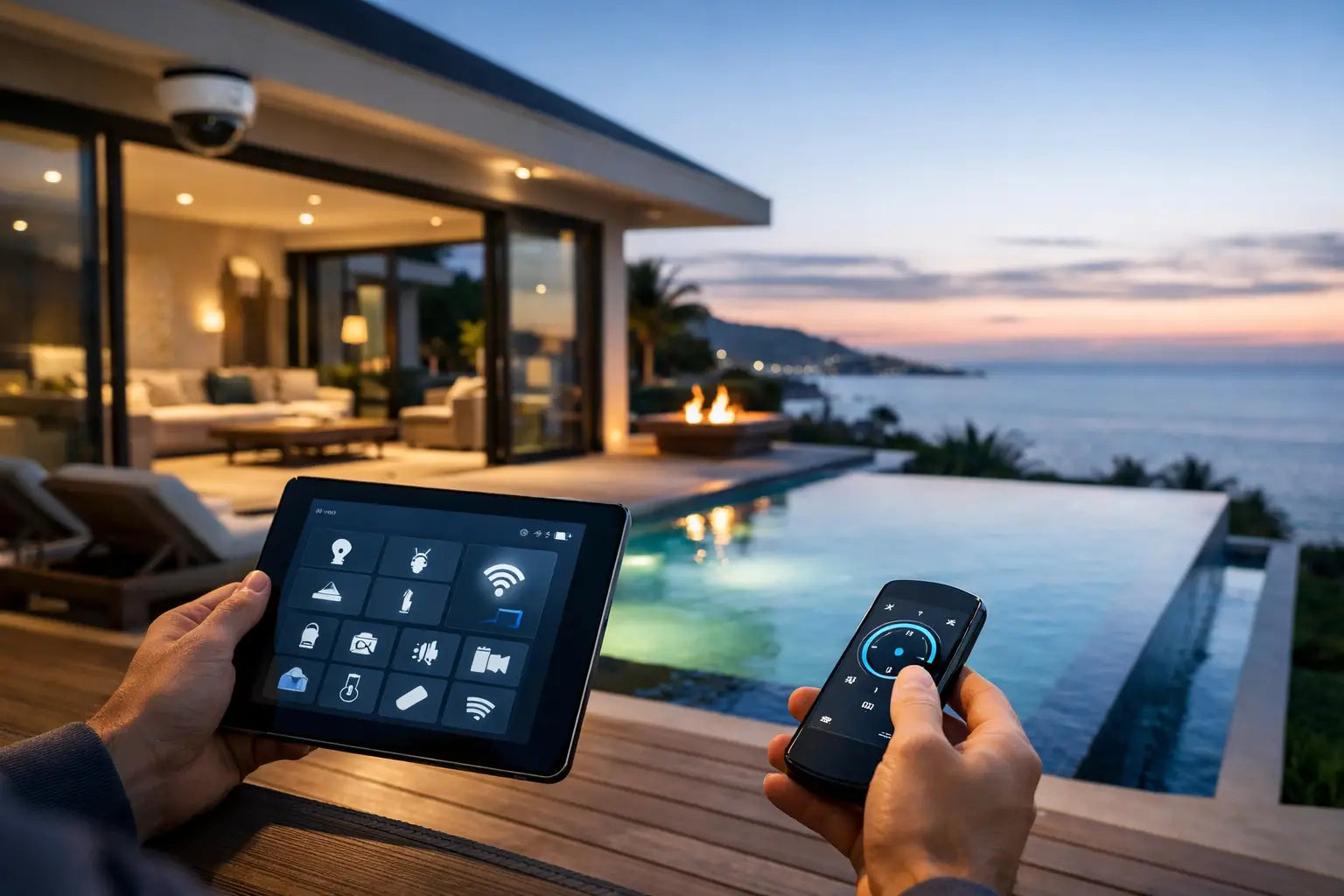
لا ينبغي أن تتطلب الفيلا الفاخرة جدارًا من المفاتيح، وأجهزة تحكم منفصلة، وعشرات التطبيقات لتشعر بالراحة. السؤال الحقيقي حول كيفية أتمتة الفلل الفاخرة هو كيفية جعل التكنولوجيا المعقدة تختفي في التصميم المعماري مع منح كل غرفة استجابة أكثر دقة للأشخاص الذين يعيشون فيها.
بالنسبة للفيلا المنفذة جيدًا، الأتمتة ليست مجموعة من الأدوات. إنها نظام هندسي دقيق يربط الإضاءة، والمناخ، والتظليل، والترفيه، والأمن، والوصول في تجربة واحدة بديهية. والنتيجة هي مسكن يشعر بأنه متكامل من لحظة الوصول الأولى في اليوم إلى المشهد الأخير في الليل.
ابدأ بالفيلا، وليس بالأجهزة
تبدأ أقوى مشاريع الأتمتة قبل اختيار المعدات. للفيلا إيقاعاتها الخاصة: كيف تصل العائلة، أين يتجمع الضيوف، أي المساحات تحتاج إلى خصوصية، متى يصبح الضوء الطبيعي غير مريح، وكيف يُستخدم المنزل خلال عطلات نهاية الأسبوع أو الإجازات أو السفر.
قد تحتاج غرفة المعيشة الرسمية إلى إضاءة متعددة الطبقات، وموسيقى خلفية هادئة، وستائر تحمي الأثاث الفاخر من شمس الظهيرة. وقد تعطي غرفة العائلة الأولوية للتحكم السهل في الوسائط ومشهد مسائي مريح. تتطلب الشرفات الخارجية، ومناطق المسبح، ومجالس الضيوف، ومناطق الموظفين، والمرائب، والأجنحة الخاصة بالضيوف مستويات مختلفة من التحكم والوصول والموثوقية.
ولهذا السبب فإن التخطيط على أساس كل غرفة على حدة أمر مهم. بدلاً من السؤال عن المنتجات الذكية التي يجب تثبيتها، حدد ما يجب أن تقوم به كل مساحة. يجب إشراك المهندسين المعماريين ومصممي الديكور الداخلي مبكرًا حتى تدعم لوحات المفاتيح، ومكبرات الصوت، وأجهزة الاستشعار، والظلال الآلية، والكاميرات، ومواقع المعدات التصميم بدلاً من مقاطعته.
بناء البنية التحتية قبل الانتهاء من التشطيبات
تعتمد الأتمتة الفاخرة على بنية تحتية نادرًا ما تكون مرئية بمجرد اكتمال المشروع. تؤثر الأسلاك المنظمة، والتغطية المخطط لها جيدًا لشبكة Wi-Fi، وخزائن الشبكة، وتخطيط الحمل الكهربائي، ومسارات القنوات، وتهوية المعدات، والطاقة الاحتياطية على جودة التجربة النهائية.
يمكن أن تكون الأجهزة اللاسلكية مناسبة لوظائف مختارة أو مشاريع تجديد، ولكن الفيلا المبنية حديثًا تستفيد من العمود الفقري السلكي حيثما أمكن ذلك عمليًا. توفر أدوات التحكم السلكية والشبكات المصممة باحترافية اتساقًا أكبر، واستجابة أسرع، وأساسًا أكثر موثوقية للأنظمة التي يجب أن تعمل يوميًا. وهذا ينطبق بشكل خاص على المنازل الكبيرة ذات الجدران الحجرية، والحدائق الطبيعية، والطوابق المتعددة، ومباني الضيوف أو الموظفين المنفصلة.
كيفية أتمتة الفلل الفاخرة حول المشاهد اليومية
التحكم الفردي مفيد، ولكن المشاهد هي ما يجعل الفيلا تبدأ في الشعور بالذكاء الحقيقي. يجمع المشهد عدة إجراءات في أمر واحد، مما يسمح للعقار بالاستجابة للحظة بدلاً من طلب جهاز واحد.
قد يفتح "مشهد الوصول إلى المنزل" البوابة لمركبة مصرح لها، ويضيء الممر والمدخل، ويضبط درجة الحرارة الداخلية المفضلة، ويرفع بعض الستائر المختارة، ويجلب موسيقى هادئة إلى الردهة. وفي الليل، يمكن لأمر "تصبح على خير" إطفاء أضواء المناطق المشتركة، وخفض الستائر الآلية، وتفعيل نظام الأمان المحيطي، وتقليل إعدادات المناخ في الغرف غير المستخدمة، وترك إضاءة الممرات المختارة بعناية فقط نشطة.
أفضل المشاهد شخصية. قد يرغب المالك الذي يستضيف الضيوف بشكل متكرر في إعدادات منفصلة للعشاء، والاستقبال، والمسبح، وليلة الأفلام، والاستخدام الهادئ في المساء. وقد تفضل العائلة التي لديها أطفال صغار مشهدًا صباحيًا يرفع ستائر غرفة النوم تدريجيًا، ويضبط درجة الحرارة، ويزيد الإضاءة برفق بدلاً من فجأة.
لا تفرط في أتمتة كل قرار. بعض الملاك يريدون مستشعرات إشغال في الممرات والغرف الخدمية، ولكنهم يفضلون التحكم اليدوي في الإضاءة الزخرفية في المساحات الرسمية. يفضل آخرون جداول المناخ التي تتكيف تلقائيًا، مع الحفاظ على التحكم المباشر في غرف النوم الرئيسية. يجب أن يحترم النظام المتميز هذه التفضيلات بدلاً من فرض روتين موحد.
تصميم الإضاءة كتجربة
غالبًا ما تكون الإضاءة هي التعبير الأكثر وضوحًا عن أتمتة الفيلا. فهي تؤثر على العمارة، والأعمال الفنية، والمواد، والمزاج، والانتقال بين النهار والمساء. يستبدل نظام التحكم المركزي في الإضاءة الفوضى البصرية بلوحات مفاتيح أنيقة، وسلوك خافت محسّن، ومشاهد تحافظ على الأجواء المقصودة لكل غرفة.
يجب التخطيط للإضاءة الطبقية مع التصميم الداخلي نفسه. فالإضاءة المحيطة تحدد النغمة العامة، وإضاءة المهام تدعم الاستخدام العملي، والإضاءة المركزة تضيف عمقًا إلى أعمال النجارة، والفن، والمناظر الطبيعية، والجدران ذات الملمس، والتفاصيل المعمارية. تمنح الأتمتة هذه الطبقات غرضًا. يمكن أن تكون نفس الصالة مشرقة ومرحبة في وجبة الإفطار، ومصقولة للضيوف، وهادئة لمحادثة متأخرة في المساء.
تستحق الإضاءة الخارجية نفس الاهتمام. يجب أن تعمل إضاءة المناظر الطبيعية، وإضاءة الواجهة، وتوجيه الممرات، وإضاءة الشرفات في مناطق منسقة، مع جداول زمنية تستجيب لغروب الشمس والإشغال عند الاقتضاء. الهدف ليس إضاءة كل زاوية بأقصى إخراج. بل هو خلق حضور وراحة وأمان دون التضحية بطابع الفيلا.
دمج التحكم في المناخ والتظليل الآلي
يجب أن يشعر بالراحة قبل أن يتم ملاحظته. يتيح دمج التحكم في التدفئة والتهوية وتكييف الهواء لأصحاب المنازل إدارة درجة الحرارة من واجهة موحدة، بينما يمكن أن تساعد الجدولة والمستشعرات في تجنب تكييف الغرف الفارغة دون داعٍ. في الفيلا الكبيرة، تعتبر المناطق أمرًا ضروريًا لأن احتياجات منطقة المعيشة المواجهة للشمس، وغرفة السينما، وصالة الألعاب الرياضية، وغرفة نوم الضيوف نادرًا ما تكون متطابقة.
تضفي الستائر والظلال الآلية مظهرًا جماليًا وتحكمًا بيئيًا عمليًا. يمكنها حماية التصميمات الداخلية من أشعة الشمس المباشرة، وتحسين الراحة الحرارية، ودعم الخصوصية، والعمل جنبًا إلى جنب مع مشاهد الإضاءة. خلال الجزء الأكثر حرارة من اليوم، قد تنخفض الستائر في مناطق مختارة بينما تتكيف إعدادات المناخ وفقًا لذلك. وفي المساء، يمكن أن تُغلق مع تفعيل الإضاءة الخارجية، مما يخلق انتقالًا طبيعيًا من المناظر المفتوحة إلى جو أكثر خصوصية.
اختيار الأقمشة، وتصميم المسارات، وأبعاد الفتحات، وتشغيل المحركات الهادئة كلها أمور مهمة. فالستارة الآلية الجميلة التي تتعثر، أو تتحرك بصخب، أو تكشف عن محاذاة سيئة ستقوض تصميمًا داخليًا استثنائيًا بخلاف ذلك. يفضل حل هذه التفاصيل في مرحلة التصميم، وليس بعد وضع الأثاث والتشطيبات.
اجعل الترفيه يبدو سهلاً
يجب أن تسمح الفيلا الفاخرة بالاستمتاع بتجارب الموسيقى والتلفزيون والسينما دون فوضى تقنية ظاهرة. يمكن أن يوفر الصوت متعدد الغرف صوتًا متحكمًا فيه عبر مناطق المعيشة، وغرف النوم، والشرفات، والحمامات، والحدائق، حيث تقوم كل منطقة بتشغيل مصدرها الخاص أو الانضمام إلى قائمة تشغيل مشتركة للترفيه.
للحصول على ترفيه أكثر تركيزًا، تستحق السينما المنزلية المخصصة اهتمامًا متخصصًا. تؤثر الإسقاط، وحجم الشاشة، وهندسة المقاعد، وموضع السماعات، المعالجة الصوتية، والإضاءة، وضوضاء المناخ على النتيجة النهائية. المعدات الراقية وحدها لا يمكنها تعويض سوء تصميم الغرفة. يتم تصميم أكثر دور السينما إقناعًا كبيئات متكاملة، حيث يكون الصوت واضحًا، والحوار دقيقًا، والباس متحكمًا فيه، وتبقى الغرفة متناسقة بصريًا.
تستفيد غرف الوسائط أيضًا من التحكم البسيط. يمكن لواجهة واحدة إدارة الشاشة ونظام الصوت ومصدر البث والإضاءة والستائر والمناخ. مشهد "فيلم" واحد أكثر أناقة من مطالبة الضيوف بتحديد عدة أجهزة تحكم عن بعد قبل بدء عرض الافتتاح.
تعامل مع الأمن كجزء من نمط الحياة
يجب أن يكون الأمن شاملًا دون أن يجعل الفيلا تبدو دفاعية. يمكن إدارة التحكم المتكامل في الوصول، والمراقبة بالفيديو، وأجهزة الاتصال الداخلي، والتحكم في البوابات، واكتشاف الاقتحام، ومراقبة المحيط من خلال نظام منسق مصمم حول العقار وساكنيه.
يمكن تخصيص أذونات الوصول لأفراد العائلة، والضيوف، وموظفي المنزل، وفرق الصيانة، وموظفي التوصيل. تسمح أجهزة الاتصال الداخلي بالفيديو للسكان بالتحقق من الزوار قبل منحهم الوصول، بينما يمكن للكاميرات توفير الرؤية عند البوابات، والمداخل، والمرائب، والمناطق المحيطية. عندما تسافر العائلة، توفر الإشعارات عن بعد وفحوصات الحالة طمأنة دون الحاجة إلى اهتمام مستمر.
الخصوصية مهمة بنفس القدر. يجب أن يكون وضع الكاميرات متعمدًا، ويجب التعامل مع أمان الشبكة بجدية مثل الأمن المادي. تحتوي الفيلا المتصلة على بيانات شخصية، وسجلات وصول، وموجزات كاميرا، وأدوات تحكم في الأجهزة. يعد تقسيم الشبكة الاحترافي، والوصول عن بعد المحمي، وصيانة النظام المنتظمة أجزاء أساسية من التثبيت، وليست إضافات اختيارية.
اختر تجربة تحكم واحدة
تبدو الفيلا مجزأة عندما تكون الإضاءة لها تطبيق واحد، والتدفئة والتهوية وتكييف الهواء لها تطبيق آخر، والأمان تطبيق ثالث، ومعدات الصوت والصورة لها مجموعة من أجهزة التحكم عن بعد. يجمع التحكم المركزي هذه الوظائف معًا من خلال لوحات المفاتيح المثبتة على الحائط، ولوحات اللمس، والأجهزة المحمولة، وعند الاقتضاء، التحكم الصوتي.
يجب أن تكون الواجهة مصممة خصيصًا للمنزل ومستخدميه. قد تحتاج الأجنحة الرئيسية إلى بضع أوامر واضحة فقط بجانب السرير. قد يحتاج مدير المنزل إلى تحكم أوسع في غرف الضيوف، والبوابات، والمناطق المشتركة، والجداول الزمنية. يمكن أن تظل الخيارات المعقدة متاحة دون أن تصبح أول ما يراه مالك المنزل.
يجب أن تكون الموثوقية هي المحرك الأساسي لكل قرار. تعتمد المنصة الصحيحة على حجم الفيلا، والنظام البيئي للمعدات المفضل، وخطط التوسع المستقبلية، وما إذا كان المشروع بناءً جديدًا أم تجديدًا. يوفر التصميم المدروس أيضًا تحكمًا يدويًا احتياطيًا، بحيث تظل الوظائف الأساسية قابلة للاستخدام حتى في حالة عدم توفر اتصال بالإنترنت.
التخطيط للتشغيل والرعاية طويلة الأجل
التركيب ليس المرحلة النهائية. التشغيل هو المكان الذي يتم فيه اختبار وتحسين كل دائرة، ومصدر، وستارة، وكاميرا، ومستشعر، ومشهد، وواجهة تحكم في المنزل المكتمل. هذا هو الوقت الذي يتم فيه ضبط مستويات التعتيم، وموازنة مناطق الصوت، وتعديل الجداول الزمنية، وتشكيل النظام حول الروتين العائلي الحقيقي.
يجب أن يكون تدريب مالك المنزل هادئًا وعمليًا. لا يتطلب النظام المصمم جيدًا خبرة فنية، ولكن يجب أن يعرف المقيمون والموظفون كيفية استخدام الوظائف الرئيسية، والاستجابة للتنبيهات، والوصول إلى الدعم عند الحاجة. كما تحمي الصيانة المستمرة الاستثمار مع تطور البرامج، وتغير احتياجات الشبكة، وإضافة مناطق جديدة إلى الفيلا.
بالنسبة لأصحاب المنازل والمطورين ومحترفي التصميم، فإن القرار الأكثر قيمة هو تعيين شريك تكامل في وقت مبكر بما يكفي للتنسيق مع المهندس المعماري وفريق MEP ومصمم الديكور الداخلي ومصمم الإضاءة والمقاول. تتعامل i-Trust Systems مع هذا العمل كبيئة هندسية كاملة، حيث يحمل الأداء والتصميم البصري نفس الوزن.
تصبح الفيلا الفاخرة أكثر متعة عندما تتوقع التكنولوجيا الإعداد دون التنافس على الاهتمام. ابدأ بالشعور الذي يجب أن تكون عليه العقار، ثم اجعل كل تحكم، ومكبر صوت، وستارة، ومستشعر، ونقطة أمان تخدم هذه التجربة بدقة وهدوء.
مشاركة:
جهاز العرض (البروجيكتور) مقابل تلفزيون السينما كبير الحجم: أيهما أفضل؟
كيف تعمل أنظمة الصوت متعددة الغرف في المنازل الفاخرة