

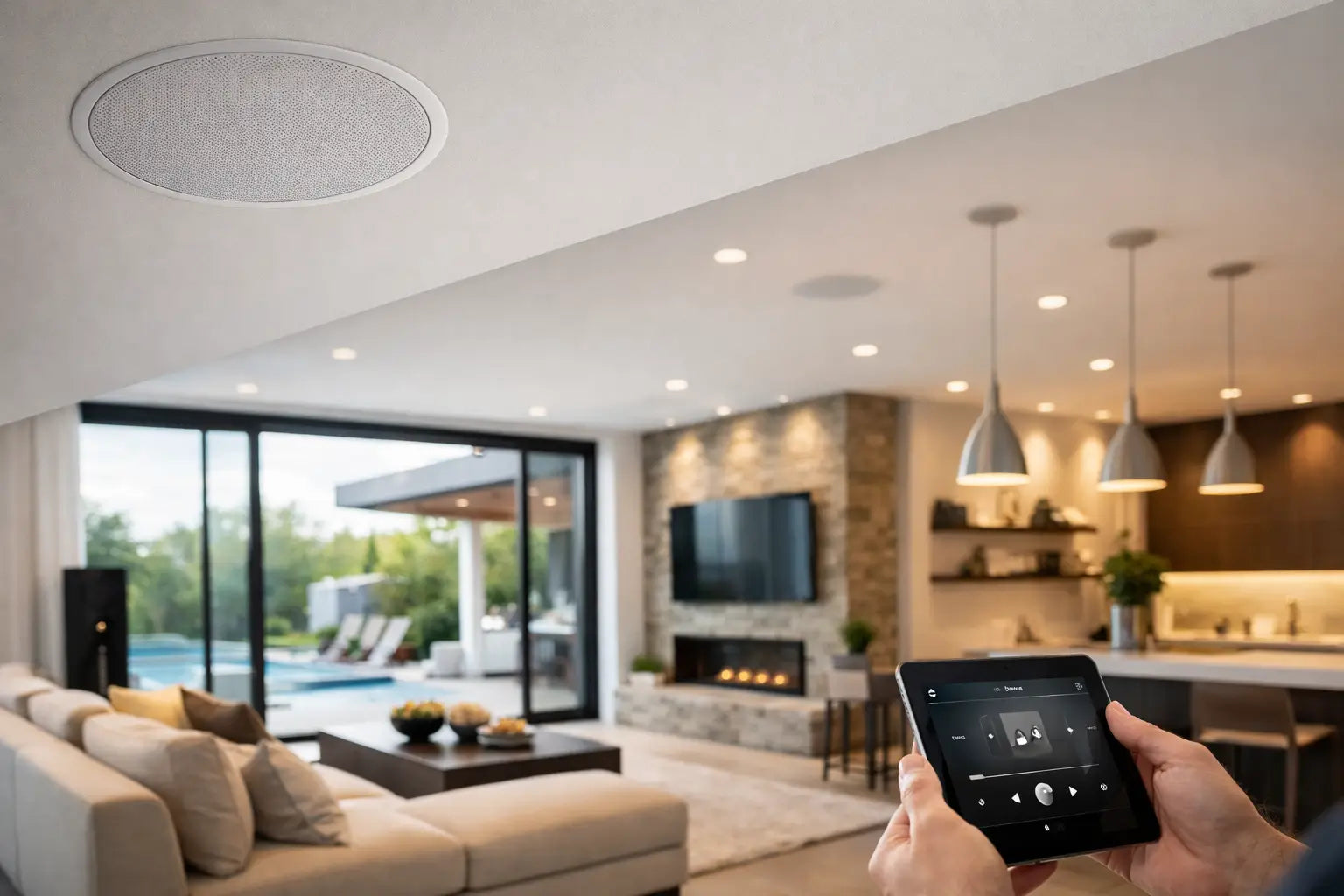
يجب ألا يجبر المنزل الموسيقى على التوقف عند مغادرة غرفة المعيشة. يمكن للموسيقى أن تتبع الروتين الصباحي من غرفة النوم إلى المطبخ، أو أن تضفي الحيوية على تجمع في الحديقة، أو أن تخلق أجواءً هادئة في جميع أنحاء الفيلا دون ملء المساحة بالمعدات المرئية. هذه هي أفضل طريقة لعمل الصوت متعدد الغرف: كبيئة صوتية مصممة بعناية، يتم التحكم فيها غرفة تلو الأخرى.
بالنسبة للمساكن الفاخرة والبيئات التجارية، فإن الصوت متعدد الغرف هو أكثر بكثير من مجرد مجموعة من مكبرات الصوت اللاسلكية. إنه نظام مصمم للمصادر والشبكات والتضخيم ومكبرات الصوت وأدوات التحكم والقرارات الصوتية. يلعب كل مكون دورًا في تقديم صوت سهل الاستخدام مع الحفاظ على وضوحه وتوازنه وتناسبه مع الهندسة المعمارية.
كيف يعمل نظام الصوت متعدد الغرف
يقوم نظام الصوت متعدد الغرف بتوزيع الموسيقى أو صوت التلفزيون أو مصادر أخرى مختارة إلى مناطق متعددة من العقار. تسمى كل منطقة "منطقة". قد تكون المنطقة غرفة واحدة، مثل المطبخ أو صالة الألعاب الرياضية، أو مساحة أكبر مثل منطقة المعيشة وتناول الطعام ذات المخطط المفتوح. يمكن لعدة مناطق تشغيل نفس المحتوى في توقيت مثالي، أو يمكن لكل منها تشغيل شيء مختلف تمامًا.
يبدأ النظام بمصدر صوتي. قد يكون هذا خدمة بث موسيقى، أو هاتفًا أو جهازًا لوحيًا، أو قرصًا دوارًا، أو خادم وسائط، أو صوت تلفزيون، أو مصدر صوت تجاري لبيئة بيع بالتجزئة أو ضيافة. ثم يتم إرسال المصدر عبر منصة صوت مركزية أو مشغل صوت شبكي إلى المنطقة ذات الصلة.
من هناك، يوفر مكبر الصوت الطاقة اللازمة لتشغيل السماعات. في التركيبات المعمارية السرية، غالبًا ما يتم وضع مكبرات الصوت في رف معدات جيد التهوية، بعيدًا عن أماكن الاستماع. يمر كابل السماعة عبر الجدران أو الأسقف إلى سماعات السقف أو الجدران أو الخارجية أو السماعات المثبتة خصيصًا. والنتيجة هي غرفة تحافظ على هدوئها البصري مع توفير صوت كامل ومتحكم فيه.
يرى المستمع فقط ما قصده التصميم: ربما لوحة مفاتيح راقية، أو شاشة لمس أنيقة، أو لا شيء على الإطلاق بخلاف شبكات السماعات الموضوعة بعناية.
التزامن هو الفرق بين النظام والمجموعة
عندما يتم تشغيل نفس المقطع الصوتي في عدة غرف، فإن التوقيت مهم. إذا كانت إحدى المناطق متأخرة قليلاً عن الأخرى، فإن التأثير يكون مشتتًا، خاصة عبر المساحات المتجاورة. تدير منصات الصوت متعدد الغرف هذا عن طريق تخزين بيانات الصوت مؤقتًا ومزامنتها قبل وصولها إلى كل منطقة.
يضمن النظام المحدد بشكل صحيح أن تظل الموسيقى متناسقة بينما يتنقل الأشخاص بين المطبخ وغرفة المعيشة والممرات والتراس. هذا أحد الأسباب التي تجعل الصوت المدمج احترافيًا له طابع مختلف عن وضع سماعات مستقلة غير مرتبطة حول العقار. يتم اعتبار التجربة ككل، ولا يتم تجميعها غرفة تلو الأخرى.
المناطق تخلق تحكماً شخصياً
أكبر ميزة للصوت متعدد الغرف ليست مجرد سماع الموسيقى في كل مكان. بل هي تحديد مكان سماعها، وبأي مستوى، ومن قبل من.
يمكن لمالك المنزل تشغيل موسيقى الجاز في الصالة، وبودكاست في صالة الألعاب الرياضية المنزلية، وقائمة تشغيل مختلفة في جناح الأطفال. أثناء الترفيه، يمكن تجميع الغرف المختارة والحديقة بحيث تملأ قائمة تشغيل واحدة المنطقة الاجتماعية بأكملها. عندما ينتقل المساء إلى الداخل، يمكن إيقاف تشغيل المنطقة الخارجية بشكل مستقل دون التأثير على بقية المنزل.
يجب أن يتبع تصميم المنطقة كيفية استخدام العقار بالفعل. قد تحتاج غرفة الطعام الرسمية إلى موسيقى خلفية عالية الجودة وعرضية. تتطلب صالة الألعاب الرياضية إنتاجًا أكبر وصوتًا أكثر حيوية. يستفيد المنتجع الصحي أو غرفة النوم من تغطية لطيفة ومتساوية بحجم منخفض. يجب أن يأخذ سطح حمام السباحة في الاعتبار التعرض للعوامل الجوية، وفقدان الصوت في الهواء الطلق، والممتلكات المجاورة.
لا يوجد عدد عالمي من المناطق لمنزل فاخر. قد يحتاج مسكن صغير إلى أربع مناطق مخططة جيدًا، بينما يمكن أن تتطلب فيلا كبيرة، أو مكان ضيافة، أو مدرسة، أو مسجد، أو مكتب عشرات المناطق. يعتمد النهج الصحيح على مخطط الأرضية، ونمط الحياة، والتشطيبات المعمارية، ومتطلبات المصدر، ومستوى التحكم المستقل المتوقع في كل منطقة.
الهياكل الصوتية السلكية واللاسلكية والهجينة
يمكن بناء الصوت متعدد الغرف حول بنية تحتية سلكية، أو مكونات لاسلكية، أو مزيج من الاثنين. كل منها له مكانه.
تستخدم الأنظمة السلكية كابل مكبر صوت مخصص، وفي كثير من الحالات، كابل شبكة يعود إلى موقع مركزي. إنها خيار ممتاز أثناء البناء أو التجديد الكبير لأنه يمكن إخفاء البنية التحتية قبل الانتهاء من الأسقف والجدران. كما أن التضخيم المركزي يبقي الإلكترونيات خارج مناطق المعيشة ويجعل الصيانة المستقبلية أكثر تنظيمًا.
تستخدم الأنظمة اللاسلكية شبكة Wi-Fi الخاصة بالعقار أو الاتصال اللاسلكي المخصص بين الأجهزة الصوتية. يمكن أن تكون عملية في المنازل المكتملة حيث لا يكون فتح الجدران مرغوبًا فيه، أو في المساحات التي قد تتغير بمرور الوقت. ومع ذلك، فإن أداء اللاسلكي يعتمد فقط على الشبكة التي تدعمه. تتطلب الخرسانة السميكة والألواح الأرضية الكبيرة والتشطيبات المعدنية وظروف Wi-Fi المزدحمة جميعها اهتمامًا في العقارات الفاخرة.
غالبًا ما يوفر الحل الهجين أفضل توازن. يمكن أن تستخدم مكبرات الصوت المعمارية الثابتة في الغرف الرئيسية تضخيمًا سلكيًا للاتساق والتقدير، بينما تدعم المنتجات اللاسلكية المرنة أجنحة الضيوف أو المساحات المؤقتة أو الإضافات اللاحقة. الهدف ليس اختيار أحدث التقنيات لذاتها. بل هو إنشاء نظام يعمل بشكل موثوق وينتمي بشكل طبيعي داخل العقار.
الشبكة وراء الموسيقى
الصوت المتدفق هو خدمة شبكة بقدر ما هو خدمة صوتية ومرئية. يجب أن تتواصل كل وحدة تحكم ومشغل وشاشة تعمل باللمس ونقطة نهاية بث دون انقطاع. في منزل كبير، نادرًا ما يكون جهاز توجيه المستهلك الأساسي كافيًا لدعم الصوت جنبًا إلى جنب مع بث الفيديو وكاميرات الأمان ووحدات التحكم في التشغيل الآلي والأجهزة العائلية اليومية.
تقوم الشبكة المخططة باحتراف بفصل الأنظمة الحيوية عند الاقتضاء، وتوفر تغطية لاسلكية قوية، وتستخدم محولات وكابلات عالية الجودة للحفاظ على اتصال مستقر. غالبًا ما تُفضل التوصيلات السلكية لرفوف المعدات الثابتة ومناطق التلفزيون والمناطق عالية الطلب. ثم يتم تصميم Wi-Fi لخدمة التحكم المحمول والأجهزة المحمولة بدلاً من أن يُطلب منها أداء كل مهمة بدون تخطيط.
يؤثر هذا الأساس أيضًا على وقت الاستجابة. عندما يختار العميل قائمة تشغيل مفضلة، أو يجمع عدة غرف، أو يضبط مستوى الصوت من واجهة التشغيل الآلي، يجب أن يكون الأمر فوريًا. الشبكة الأساسية هي ما يجعل هذا التحسين ممكنًا.
يجب أن تناسب مكبرات الصوت الغرفة، وليس فقط السقف
السماعة هي الصوت النهائي للنظام، ويستحق وضعها اهتمامًا أكبر من مجرد وضع زوج من الشبكات في المنتصف. يؤثر ارتفاع السقف، ونسب الغرفة، والتزجيج، والمفروشات، والأسطح الحجرية، ومستوى الاستماع المقصود، على النتيجة.
في المطابخ والممرات ومناطق المعيشة غير الرسمية، يمكن أن توفر مكبرات الصوت داخل السقف تغطية واسعة ومتساوية بأقل تأثير بصري. في صالة رسمية أو غرفة استماع مخصصة، قد تكون مكبرات الصوت داخل الجدار عالية الأداء، أو الموديلات القائمة على الأرضية المدمجة ببراعة، أو مضخمات الصوت المدمجة بعناية، أكثر ملاءمة. تتطلب مكبرات الصوت الخارجية بناءً مقاومًا للعوامل الجوية وتحديدًا دقيقًا للموقع بحيث يصل الصوت إلى منطقة الترفيه دون أن يُصدر أصواتًا غير ضرورية خارج العقار.
يمكن أن تكون المعالجة الصوتية ذات قيمة متساوية في المساحات ذات التشطيبات الصلبة. تبدو أرضيات الرخام والجدران الزجاجية والأسقف الواسعة استثنائية، ولكنها يمكن أن تعكس الصوت وتقلل من وضوح الكلام. يمكن للسجاد والمفروشات المنجدة والألواح الصوتية واستراتيجيات المعالجة المخفية أن تحافظ على رؤية التصميم مع جعل الموسيقى أكثر تناسقًا ومريحة للاستماع.
لا تعني زيادة عدد مكبرات الصوت تلقائيًا صوتًا أفضل. التغطية الصحيحة، والقوة المناسبة، والضبط المنضبط أهم بكثير من الكمية.
التحكم يمكن أن يكون غير مرئي حتى الحاجة إليه
يجب أن يوفر نظام الصوت متعدد الغرف الفاخر تحكمًا يناسب اللحظة. قد توفر لوحة مفاتيح الحائط وصولاً فوريًا إلى مستوى الصوت، والإيقاف المؤقت، والمحطات المفضلة، وتجميع الغرف دون أن يطلب من أي شخص العثور على هاتف. يمكن لشاشة اللمس أن توفر اختيارًا أعمق وتغذية راجعة مرئية. توفر تطبيقات الهاتف المحمول راحة شخصية، بينما يمكن لنظام التشغيل الآلي للمنزل بأكمله دمج الصوت مع الإضاءة، والستائر، والمناخ، ومشاهد السينما.
فكر في مشهد ترفيهي: تخفت الأضواء، وتغلق الستائر، وتبدأ المناطق الداخلية والخارجية المختارة في تشغيل نفس قائمة التشغيل، ويتم ضبط مستوى الصوت على مستوى مدروس. في بيئة تجارية، يمكن للتشغيل المجدول أن يخلق الجو المناسب قبل وصول الموظفين أو الضيوف. هذه الإجراءات ممكنة لأن الصوت يُعامل كجزء من البيئة الأوسع، وليس كجهاز معزول.
يمكن أن يكون التحكم الصوتي مفيدًا للطلبات البسيطة، ولكن يجب أن يكمل ولا يحل محل التحكم المادي والتحكم القائم على التطبيقات. يجب أن يكون الضيوف والأطفال والموظفون قادرين على تشغيل النظام دون تعلم تسلسل معقد أو الاعتماد على حساب شخص واحد.
التخطيط المبكر يحمي الأداء والتصميم
يتم تخطيط أفضل تركيبات الصوت متعدد الغرف قبل أن تصبح تفاصيل البناء ثابتة. يتيح التنسيق المبكر محاذاة مكبرات الصوت مع الإضاءة، وشبكات تكييف الهواء، وميزات السقف، وتخطيطات الأثاث. يوفر مساحة لرفوف المعدات، والتهوية، ولوحات الوصول، ومسارات الكابلات، وأجهزة الشبكة دون المساس بالتصميم الداخلي.
لا يزال التحديث ممكنًا، ولكنه يتضمن المزيد من التنازلات. قد تقلل الخيارات اللاسلكية من الاضطراب، بينما يمكن أن تحسن مسارات الكابلات الانتقائية المناطق المهمة. يعتمد القرار على هيكل المبنى، ومستوى التشطيب، والتوقعات المتعلقة بجودة الصوت والمرونة على المدى الطويل.
في I-Trust Systems، يتم تصميم الصوت متعدد الغرف كجزء من بيئة ذكية كاملة، مع نفس الاهتمام بالأداء، والتحكم، والجماليات، وقابلية الصيانة المستقبلية. النتيجة الأكثر إرضاءً ليست منزلًا يبدو مليئًا بالتكنولوجيا. بل هو منزل حيث يبدو كل مكان بالضبط كما ينبغي عندما تدعو اللحظة إلى ذلك.
مشاركة:
كيف تتم أتمتة الفيلات الفاخرة بدقة؟
دليل أتمتة المنزل الذكي للمعيشة الفاخرة