

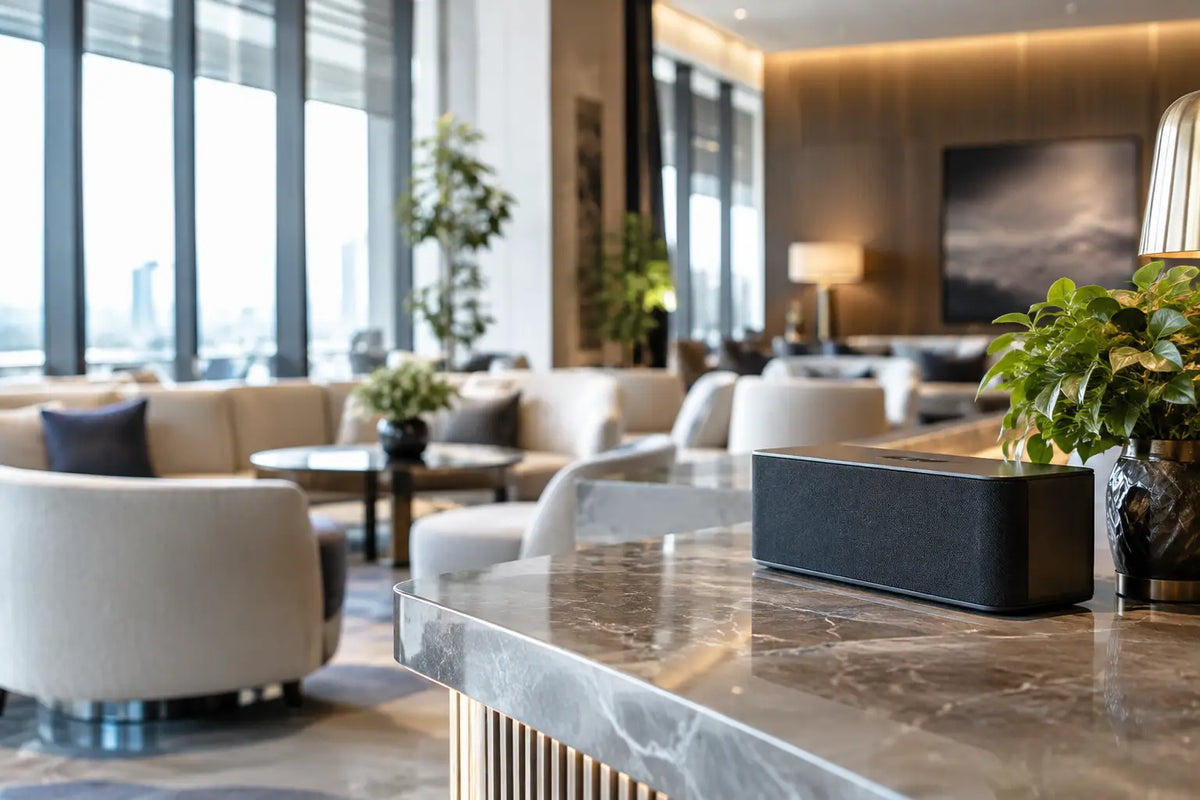
A thoughtful commercial background music guide begins with a simple truth: sound is part of the architecture. Guests may not consciously notice a well-designed music system, yet they feel its effect in the pace of a retail floor, the comfort of a reception area, the energy of a fitness studio, or the calm of a hospitality lounge. Poor sound, on the other hand, is immediately disruptive - uneven volume, harsh voices, dead zones, or music that competes with conversation.
For premium commercial environments, background music should never be treated as an afterthought or a collection of ceiling speakers installed after the interiors are complete. It is an integrated system that brings together acoustics, speaker placement, content licensing, amplification, control, and the character of the space itself.
Start With the Experience You Want to Create
The correct system begins with the intended atmosphere, not with a speaker model. A luxury boutique may need discreet, warm sound that encourages guests to browse without overwhelming the room. A gym requires greater energy and higher output, with a system capable of remaining clear over equipment noise. In an office, the goal may be subtle sound masking and a more polished arrival experience in reception and meeting areas.
Consider how the space changes throughout the day. A restaurant may open with understated daytime playlists, move into a livelier evening service, and host private events after hours. A mall may need coordinated music in common areas but separate control for individual tenants. A mosque, school, auditorium, or medical facility has very different requirements for clarity, scheduling, volume limits, and content selection.
The music should support the brand without demanding attention. That balance is where professional system design makes a meaningful difference.
Define Your Audio Zones Before Selecting Equipment
One volume level for an entire property is rarely the right answer. Commercial spaces work best when divided into independent audio zones, allowing each area to have its own volume, source, and schedule.
A hospitality venue, for example, may separate its entrance, dining room, restrooms, outdoor terrace, private room, and staff areas. A fitness club may need individual zones for the lobby, cardio floor, weight room, studios, changing rooms, and recovery lounge. Each zone has different ambient noise, occupancy patterns, and expectations.
Zone design also protects the guest experience. Music can be lowered in a consultation room without changing the atmosphere elsewhere. A manager can mute an outdoor area during maintenance. A private event can use a dedicated source without taking over the entire building.
At I-Trust Systems, this level of control is approached as part of the wider technology ecosystem. Background music can be coordinated with lighting scenes, automated schedules, AV displays, and centralized touch control, creating a more composed operational environment.
Speaker Placement Matters More Than Raw Power
A common mistake is specifying too few speakers and then increasing the volume to compensate. The result is usually loud sound near the speakers and weak coverage between them. In premium interiors, this creates an uneven and tiring experience.
A better approach uses distributed audio: more appropriately placed speakers operating at lower levels. This delivers consistent coverage, improves speech and music clarity, and keeps the system visually discreet. Ceiling speakers may suit offices, corridors, retail floors, and restaurants with finished ceilings. Surface-mount speakers can be the better choice for exposed ceilings, industrial-style venues, gyms, gardens, and outdoor terraces.
Speaker location should be coordinated early with ceiling details, lighting, air-conditioning grilles, sprinklers, and architectural features. An audio plan that ignores these elements often produces compromised coverage or visible equipment in the wrong place. Premium integration means protecting both the sound field and the visual language of the interior.
Outdoor areas require additional care. Weather-rated speakers, controlled coverage, and thoughtful placement help contain sound within the property while maintaining a comfortable listening level for guests. The goal is presence, not noise spill.
Match the System to the Acoustic Reality
Even excellent speakers cannot fully overcome a highly reflective room. Hard surfaces such as glass, stone, polished concrete, and large windows can make music feel sharp and uncontrolled. In spaces with high ceilings or open-plan layouts, sound can build up quickly and reduce comfort.
Acoustic treatment is not only for cinemas, studios, and auditoriums. Carefully selected acoustic panels, ceiling treatments, soft furnishings, and design-led finishes can reduce excessive reverberation while preserving the intended aesthetic. This is particularly valuable in restaurants, executive offices, training rooms, showrooms, and multipurpose halls where people need to speak comfortably.
The right balance depends on the use of the space. A retail showroom may benefit from a lively but controlled character. A meeting room needs greater speech intelligibility. A gym can tolerate more energy, but it still needs clear music and intelligible instructor announcements. Acoustic performance should be measured against the real activity taking place in the room, not judged by appearance alone.
Choose Sources and Control That Staff Can Actually Use
A sophisticated system should not require technical expertise for daily operation. Staff need a straightforward way to select approved music, adjust volume within defined limits, schedule zones, and make temporary changes for events.
For many businesses, a commercial streaming service or licensed music platform is the practical source. These services are designed for business use and can provide curated playlists, scheduling, and content suited to different venue types. Avoid relying on a personal consumer music account. Consumer subscriptions are generally not intended for public performance in commercial settings.
Control can be handled through an in-wall keypad, touchscreen, mobile interface, or centralized automation platform. The best option depends on who will manage the system. A single boutique may prefer a simple local controller. A larger property with multiple floors and managers may require role-based access, remote monitoring, and a central control interface.
Keep day-to-day controls simple, but build the infrastructure with enough flexibility for future changes. A venue may later add a private event room, outdoor seating, digital signage audio, or a paging requirement. Planning for expansion at the beginning is more cost-effective than rebuilding the system after the interiors are complete.
Understand Commercial Music Licensing
Music played for customers, visitors, or staff in a business setting may require public performance licensing. The specific requirements depend on where the business operates, the type of content being played, the service used, and whether music is being performed, streamed, broadcast, or played from stored media.
This is not a detail to leave unresolved. Using the right commercial music provider and confirming appropriate licensing protects the business while ensuring playlists remain available and professionally managed. For multi-site brands, a standardized content and licensing strategy also helps preserve a consistent identity across locations.
A systems integrator can design and install the technology, but the business owner or operator should confirm licensing obligations with the relevant rights organizations or a qualified legal advisor. The system and the music rights are related, yet they are separate parts of the project.
Design for Reliability, Not Just Opening Day
Commercial background music runs for long hours, often every day. Equipment should be selected for this duty cycle, installed with proper ventilation, protected power, organized cabling, and accessible service points. Consumer-grade components may appear attractive at first, but they can create maintenance issues when asked to operate continuously across multiple zones.
Professional amplifiers, network-capable audio components, and properly rated speakers provide more predictable performance. Equipment racks should be neat, labeled, and designed to allow future servicing without disrupting the business. If the venue has critical announcements, emergency procedures, or paging needs, those functions should be planned separately and integrated correctly with the background music system.
Reliability also comes from commissioning. Every zone should be tuned after installation, not merely switched on. Volume limits, equalization, source behavior, scheduling, and handover controls need to be tested in real operating conditions, with people present and ambient noise in the room.
A Commercial Background Music Guide for Better Decisions
The strongest commercial audio systems are almost invisible in use. They deliver a consistent sound level from one area to the next, respect the design of the property, give staff simple control, and leave room for the business to evolve.
Before selecting products, walk the site and listen to what the building is asking for: ceiling height, surface materials, traffic flow, operating hours, neighboring properties, and the way guests will move through each space. When music, acoustics, architecture, and control are designed together, background audio becomes more than a utility. It becomes part of the reason people choose to stay a little longer.
مشاركة:
KNX vs Control4 Automation for Luxury Homes
Home Automation Controllers for Refined Living