

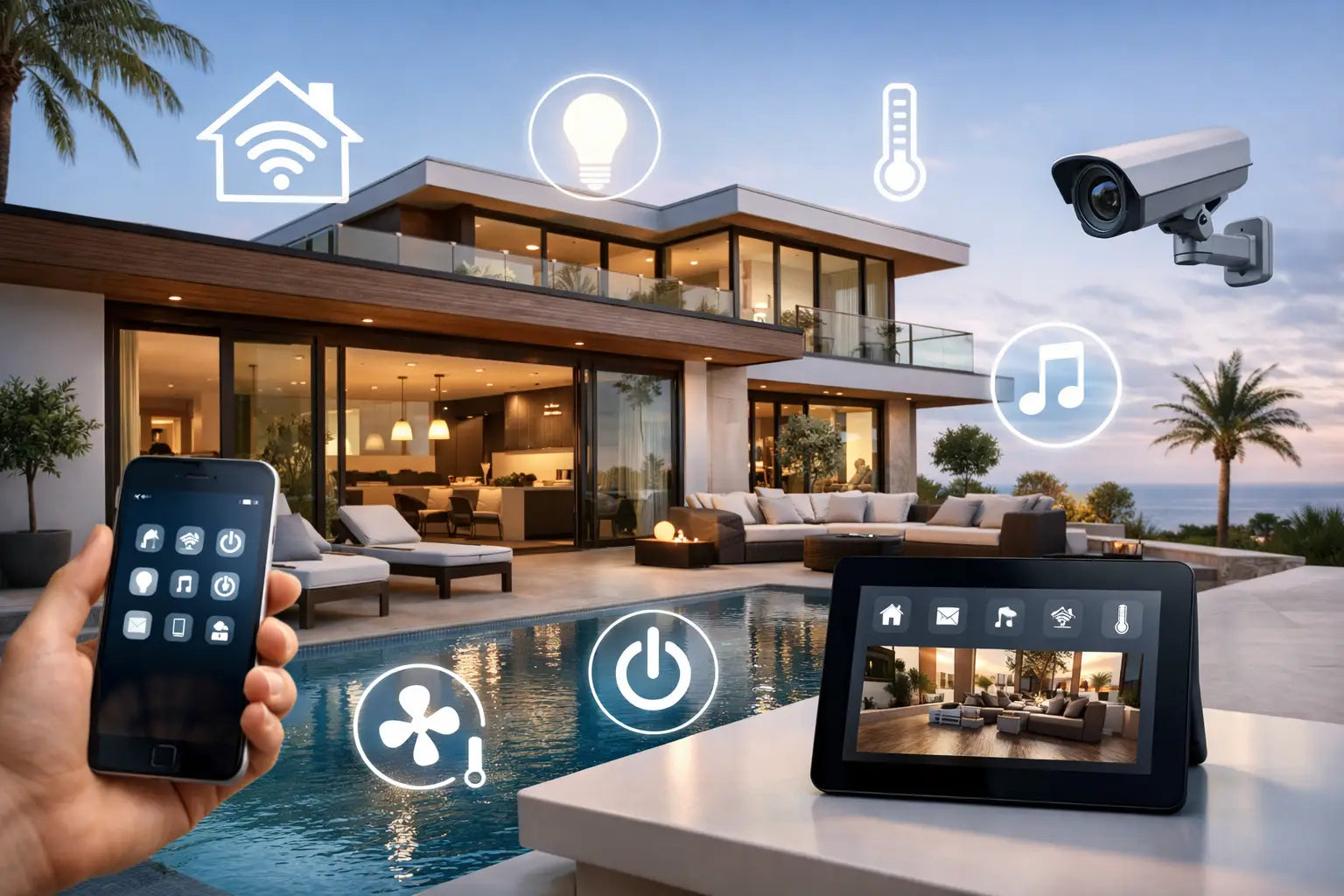
لا ينبغي أبدًا أن تبدو الفيلا الفاخرة وكأنها مجموعة من الأنظمة المنفصلة. إذا كانت الإضاءة وتكييف الهواء والأمن والتظليل والصوت والترفيه تتطلب جميعها تطبيقات منفصلة وأجهزة تحكم عن بُعد منفصلة وتعديلات مستمرة، فإن العقار يعمل بجهد أكبر مما ينبغي. تخلق أفضل ميزات أتمتة الفيلا إقامة تشعر بالتركيب والحدس والاستثناء الهادئ من الصباح إلى الليل.
بالنسبة لأصحاب الفلل والمهندسين المعماريين والمطورين، فإن القيمة الحقيقية للأتمتة ليست حداثة. إنها التحكم بالأناقة. إنها التكنولوجيا التي تدعم الهندسة المعمارية، وتحمي الخصوصية، وتحسن الراحة، وتقدم المنزل في أفضل حالاته على الإطلاق.
ما الذي يجعل أفضل ميزات أتمتة الفيلا تستحق الاستثمار
في المساكن الفاخرة، تكون الأتمتة أكثر فاعلية عند التخطيط لها كجزء من البيئة المبنية بدلاً من إضافتها بعد الواقع. يقلل النظام المصمم جيدًا من الفوضى البصرية، ويحد من ازدحام الجدران، ويخفي التعقيد التقني، ويمنح صاحب المنزل واجهة واحدة راقية للعقار بأكمله.
وهذا مهم بشكل خاص في الفلل الكبيرة، حيث يتسبب الحجم في الاحتكاك. يمكن أن يصبح المنزل الذي يحتوي على طوابق متعددة وأجنحة للضيوف ومناطق خارجية ومناطق للموظفين ومساحات ترفيه مخصصة صعب الإدارة يدويًا. يحل التكامل الذكي هذه المشكلة، ولكن فقط عندما تكون الميزات المختارة عملية ومستقرة ومصممة خصيصًا لنمط حياة الأشخاص الذين يعيشون هناك.
يعطي بعض الملاك الأولوية للخصوصية وحماية المحيط. ويريد آخرون استضافة سهلة، أو إدارة أفضل للطاقة، أو تجربة ترفيهية بجودة السينما. في معظم الحالات، الإجابة الصحيحة ليست كل الميزات المتاحة. إنها التوليفة الصحيحة، المصممة بشكل صحيح.
أفضل ميزات أتمتة الفيلا للراحة والتحكم والمكانة
التحكم الذكي في الإضاءة
غالبًا ما يكون نظام الإضاءة هو أول نظام يقوم أصحاب الفلل بأتمتته، ولسبب وجيه. فهو يغير طبيعة المساحة على الفور. باستخدام التحكم الذكي، يمكن للفيلا أن تنتقل من وظيفة النهار الساطعة إلى إعداد مسائي أكثر نعومة بأمر واحد.
تتجاوز الميزة الحقيقية الراحة. تتيح مشاهد الإضاءة المتعددة قراءة الهندسة المعمارية بشكل صحيح في كل ساعة. يمكن لتسلسلات الدخول استقبال الضيوف بإضاءة متوازنة. يمكن أن تشعر مناطق الطعام بالدفء والخصوصية. يمكن للممرات والسلالم توفير التنقل الآمن ليلاً دون إغراق المساحة بالوهج.
هناك أيضًا فائدة تصميمية. بدلاً من الجدران المزدحمة بالمفاتيح، يمكن دمج الإضاءة في لوحات مفاتيح أنيقة أو لوحات لمس أو تحكم متنقل. ولكن، يجب التخطيط للتحكم في الإضاءة بعناية. إذا كان البرمجة متسرعة أو كانت الدوائر الكهربائية غير مدروسة جيدًا، حتى الأجهزة الفاخرة ستشعر بالإحباط.
التحكم في المناخ وتكييف الهواء حسب المنطقة
نادرًا ما تحتاج الفيلا الكبيرة إلى نفس درجة الحرارة في كل مكان. تتصرف غرف النوم والصالونات الرسمية والمطابخ وصالات الألعاب الرياضية والمكاتب المنزلية بشكل مختلف اعتمادًا على الإشغال والوقت من اليوم والتعرض لأشعة الشمس. يتيح التحكم في المناخ بالمنطقة لكل منطقة الاستجابة وفقًا لذلك.
هذه إحدى أفضل ميزات أتمتة الفيلا لأنها تحسن الراحة مع تقليل الهدر أيضًا. يمكن للملاك تبريد المناطق المشغولة بدقة أكبر، وجدولة التغييرات حسب الروتين، وإدارة المنزل عن بُعد قبل الوصول. في المناخات الحارة، هذا المستوى من التحكم له قيمة خاصة.
ما يهم هنا هو التكامل. يجب أن يعمل التحكم في المناخ مع إعدادات الإشغال، ومعالجة النوافذ، وحتى حالة الأبواب أو النوافذ عند الاقتضاء. يبدو النظام الفاخر منسقًا، وليس ميكانيكيًا.
الستائر والظلال الآلية
قليلة هي ميزات الأتمتة التي تقدم هذا المزيج الواضح من الفخامة والأداء. تمنح الستائر والستائر الآلية الفيلا إيقاعًا يوميًا أكثر أناقة. عند شروق الشمس، يمكن فتح مساحات مختارة تدريجيًا للضوء الطبيعي. خلال ذروة الحرارة، يمكن إغلاق الواجهات المظللة تلقائيًا لحماية التصميمات الداخلية وتقليل اكتساب الطاقة الشمسية. في المساء، يمكن تفعيل إعدادات الخصوصية في جميع أنحاء العقار دون أن يمشي أحد من غرفة إلى أخرى.
بالنسبة للمنازل الطموحة من الناحية المعمارية ذات الزجاج الكبير، تعتبر الأتمتة ضرورية تقريبًا. يصبح التشغيل اليدوي غير متناسق وغير عملي على نطاق واسع. تعمل أتمتة التظليل أيضًا على حماية المواد، مما يحافظ على الأرضيات والأعمال الفنية والمفروشات من التعرض الطويل لأشعة الشمس.
ومع ذلك، التفاصيل مهمة. المحركات الهادئة، واختيار الأقمشة المناسب، والإخفاء الأنيق هي ما يميز النتيجة الراقية عن النتيجة الفنية الواضحة.
نظام أمان متكامل والتحكم في الوصول
تتطلب الحياة الفاخرة أكثر من مجرد أجهزة إنذار عند نقاط الدخول. يجب أن يكون للفيلا استراتيجية أمان كاملة يسهل مراقبتها وتشغيلها. تخلق المراقبة المتكاملة والأقفال الذكية والإنتركوم بالفيديو والتحكم في البوابات وأجهزة استشعار المحيط وإشعارات الإنذار نظامًا بيئيًا أقوى بكثير من الأجهزة المستقلة.
فئة الميزات هذه مهمة بشكل خاص للمساكن بدوام جزئي ومنازل العطلات والعقارات التي تضم موظفين منزليين أو وصولًا متكررًا للخدمات. يريد الملاك رؤية واضحة دون احتكاك. يريدون التحقق من الوصول، ومنح الوصول عن بُعد، ومراجعة حالة العقار في أي وقت.
تدعم أقوى الأنظمة أيضًا أذونات متعددة الطبقات. يجب ألا يتمتع أفراد الأسرة والموظفون وفرق الصيانة جميعًا بنفس مستوى التحكم. الأتمتة الجيدة تميز هذا بوضوح. الأنظمة سيئة التصميم تجعل الأمان أصعب، وليس أقوى.
التحكم المركزي عبر التطبيق ولوحة المفاتيح
الفخامة الخفية في الأتمتة لا تكمن في عدد الأنظمة المثبتة، بل في مدى سهولة استخدامها. يجمع التحكم المركزي بين الإضاءة والتكييف والصوت والستائر والأمان والترفيه في تجربة واحدة متكاملة.
وهذا يعني عددًا أقل من التطبيقات وأجهزة التحكم عن بعد، ولحظات أقل من التردد. لا يجب على صاحب المنزل تذكر مكان كل وظيفة. سواء كان يستخدم شاشة تعمل باللمس مثبتة على الحائط، أو لوحة مفاتيح بجانب السرير، أو هاتفًا، يجب أن يكون المنطق متسقًا في جميع أنحاء الفيلا.
هنا تبرز أهمية التكامل الاحترافي. واجهة المستخدم الجميلة لا تكون مفيدة إلا إذا كانت البرمجة تعكس طريقة عيش المالك بالفعل. أفضل الأنظمة هي تلك المخصصة، مع مشاهد مثل "الوصول إلى المنزل" و"الترفيه" و"تصبح على خير" أو "وضع الغياب" التي تؤدي مهام متعددة في وقت واحد.
الصوت متعدد الغرف الذي يختفي في الهندسة المعمارية
بالنسبة للعديد من أصحاب الفلل، لا يقتصر الترفيه على غرفة واحدة. قد تكون الموسيقى مطلوبة في المجلس، ومنطقة تناول الطعام، وتراس المسبح، والجناح الرئيسي، والحديقة، وكل ذلك بمستويات صوت مختلفة أو محتوى مختلف. يجعل الصوت متعدد الغرف ذلك ممكنًا مع الحفاظ على المعدات والأسلاك بشكل سري.
المعيار المتميز بسيط: صوت ممتاز، الحد الأدنى من التداخل البصري، وتحكم بديهي. يمكن للسماعات المثبتة في السقف أو السماعات المعمارية الحفاظ على التصميم الداخلي مع توفير تجربة استماع غنية. تتطلب المناطق الخارجية اهتمامًا خاصًا، حيث تؤثر مقاومة الطقس وتخطيط التغطية على الأداء على المدى الطويل.
يوجد أيضًا جانب عملي لهذه الميزة. أثناء التجمعات، يغير الصوت المتزامن عبر المناطق الاجتماعية إحساس الحدث. في الحياة اليومية، يمنح كل جزء من المنزل جوه الخاص.
تكامل السينما الخاصة وغرفة الوسائط
في الفلل الراقية، لم تعد السينما المخصصة مساحة إضافية. غالبًا ما تكون جزءًا أساسيًا من متطلبات نمط الحياة. لكن تجربة السينما الحقيقية تتطلب أكثر من شاشة كبيرة ومكبرات صوت محيطية. تعتمد على المعالجة الصوتية، هندسة العرض أو الإسقاط، التحكم في الإضاءة، تكامل المصادر، تصميم المقاعد، وعزل الغرفة.
عند توصيله بنظام الأتمتة الأوسع، يصبح استخدام السينما سهلاً. يمكن لأمر واحد أن يخفت الأضواء، ويغلق الستائر، ويشغل جهاز العرض، ويحول أوضاع الصوت، ويهيئ الغرفة للمشاهدة. هذا التنسيق هو ما يرفع مستوى التجربة.
ليست كل فيلا تتمتع بمساحة لسينما كاملة، وهنا قد تكون غرفة الوسائط هي الحل الأفضل. النقطة ليست فرض تنسيق واحد، بل تصميم الترفيه حول العقار وعادات المالك.