

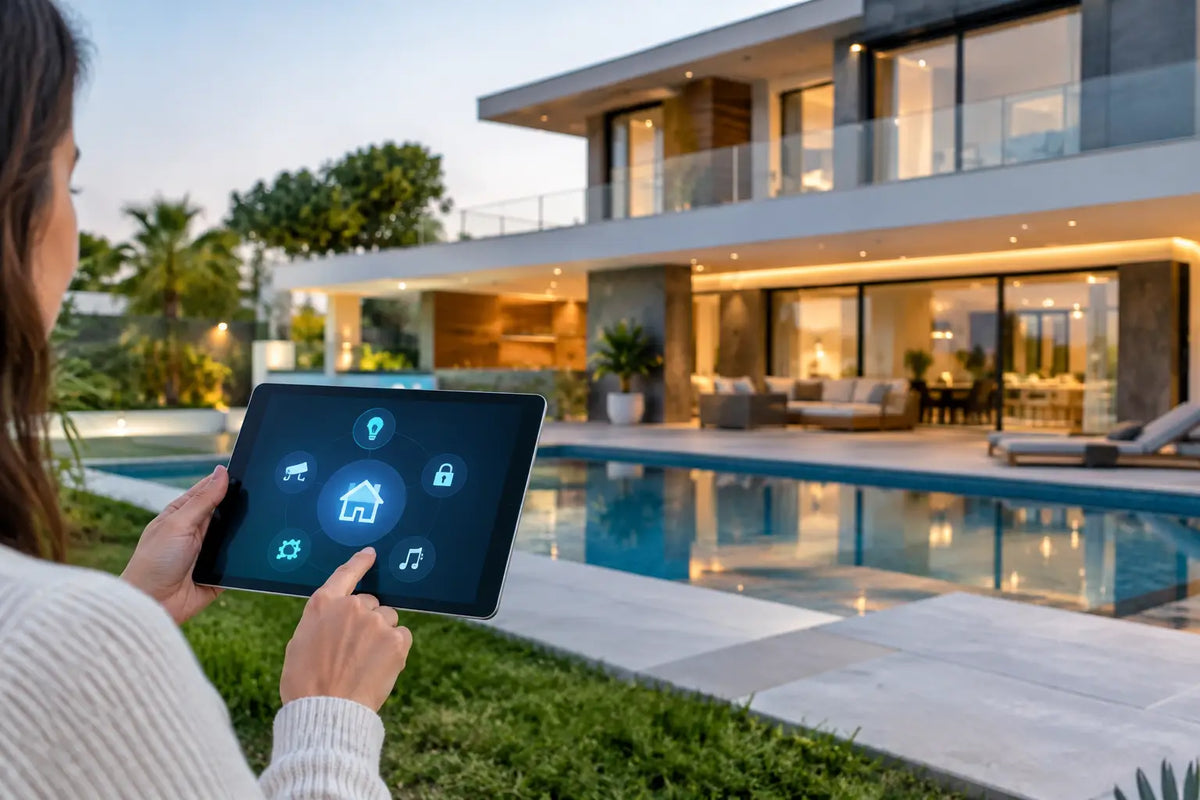
A villa is not simply a larger house. It is a composition of spaces: arrival courts, formal living rooms, family lounges, suites, gardens, service areas, and often dedicated entertainment rooms. Each space has a different purpose, atmosphere, and technical requirement. That is why do villas need automation is not really a question about adding gadgets. It is a question of whether a substantial home should feel considered and effortless, or remain a collection of disconnected switches, remotes, apps, and control panels.
For villa owners, automation turns complexity into a more elegant daily experience. Lighting, air conditioning, curtains, security, audio, and entertainment can work together according to the time of day, occupancy, and the way the home is used. The result is not technology demanding attention. It is a home that responds with quiet precision.
Why Do Villas Need Automation for Better Living?
The larger and more detailed the property, the more visible fragmented control becomes. One room may use dimmers from one supplier, AC thermostats from another, motorized shades controlled by handheld remotes, and a separate app for cameras. This may be acceptable in a compact apartment. In a villa, it quickly becomes inconvenient for residents, guests, and household staff.
A professionally designed automation system creates one intelligible control layer. A wall keypad can set the mood of an entire living area. A discreet touchscreen can manage several zones without cluttering the interior. A carefully configured mobile interface can provide access when the owner is traveling. The value is not that every function must be controlled from a phone. The value is that the right level of control is available in the right place.
This also protects the visual discipline of a luxury interior. Instead of crowded walls filled with switches, thermostats, and remotes, the home can use fewer, better-considered interfaces. Technology supports the architecture rather than competing with it.
A Villa Should Respond to Its Rhythm
The best automation begins with lifestyle, not a product list. A family that entertains regularly will use the home differently from an owner who visits only on weekends. A property with expansive glazing faces different climate and shading demands than a shaded urban villa. There is no single scene package that suits every project.
Lighting that changes the character of a room
Lighting is often the most immediately felt benefit. A formal dinner, a quiet evening, early-morning preparation, and a large gathering all require different light levels and focal points. With scene-based control, one command can adjust architectural lighting, decorative fixtures, accent lighting, and garden illumination to an appropriate setting.
This is more refined than treating every circuit independently. It gives each room a deliberate character while allowing the homeowner to change that character in seconds. Timed exterior lighting can also strengthen curb appeal and make arrival after dark more welcoming.
Climate control that respects comfort and efficiency
Villas commonly have multiple floors, large open spaces, guest wings, staff areas, and rooms that are not occupied every day. Running every area at the same temperature is rarely the most comfortable or sensible approach.
Integrated HVAC control allows the property to be divided into useful zones. Bedrooms can be prepared before bedtime, main living spaces can be comfortable before the family returns, and unoccupied areas can follow an energy-conscious schedule. Automated curtains and shades can work alongside climate settings by reducing direct solar gain during the hottest hours.
Automation does not eliminate the need for a well-engineered HVAC system. It makes that investment easier to manage. The actual savings depend on insulation, glazing, local weather, occupancy patterns, and system design, so energy claims should be realistic rather than exaggerated. Comfort and control are usually the more immediate return.
Security Becomes Part of the Home Experience
Security in a premium residence should feel reassuring, not intrusive. Cameras, access control, gate intercoms, perimeter protection, door contacts, and alarms are most effective when they are designed as one coordinated system rather than installed as isolated additions.
At the gate, a homeowner can identify a visitor and grant access from an appropriate control point. When the home is placed in away mode, selected lights can switch off, shades can move to a chosen position, and the security system can arm according to the household's routine. If a relevant event occurs, notifications can be configured for the people who need them.
Thoughtful design matters here. A badly planned security system creates unnecessary alerts and frustrating routines. A well-planned system accounts for household staff, pets, gardeners, guest access, delivery patterns, and the privacy expectations of the family. It should be reliable in everyday use, not only impressive during a demonstration.
Entertainment Without the Technical Friction
A villa has the scale to create exceptional entertainment spaces, but the experience can be undermined by complicated operation. Nobody should need to search for three remotes, select inputs manually, or call for assistance just to watch a film.
In a bespoke home cinema, a single cinema scene can lower the lights, close the curtains, power the projector and screen, set the source, and adjust the audio environment. In living areas and outdoors, multi-room audio can carry different music to different zones or synchronize the whole property for an event. The technology disappears behind a simple, tailored experience.
Audio quality deserves particular attention. Premium speakers alone cannot solve poor acoustics, reflective surfaces, or unsuitable placement. Cinema performance depends on the room, speaker layout, amplification, projection, screen selection, acoustic treatment, seating position, and calibration working together. This is where engineering-led integration has a clear advantage over piecemeal purchases.
Automation Simplifies Life for Everyone in the Home
The owner is not the only person using a villa. Family members, guests, house managers, security personnel, and maintenance teams all interact with the property in different ways. Automation can give each group an appropriate, uncomplicated level of access.
A guest bedroom may offer simple controls for lights, temperature, shades, and privacy. Staff can access daily operational functions without being given control of private areas. A property manager may receive alerts about equipment conditions or be able to prepare the home before the owner arrives. Permissions should be deliberate and easy to revise as household needs change.
This is particularly valuable in second homes. Before arrival, the villa can be brought to a comfortable state. During an extended absence, the owner can check selected systems remotely and receive meaningful updates. Remote access is useful, but it should complement physical controls rather than replace them. The home must remain intuitive when a phone is unavailable, when guests are present, or when internet connectivity is disrupted.
The Right Time to Plan Villa Automation
Automation is most effective when it is considered early, alongside architecture, interiors, electrical design, HVAC coordination, lighting design, and security planning. Retrofitting is possible, but it can introduce compromises in wiring routes, equipment locations, wall finishes, and control placement.
Early coordination allows infrastructure to be planned discreetly. Equipment racks can be located where they can be serviced without disturbing living spaces. Wi-Fi coverage, network capacity, speaker positions, sensor locations, projector sightlines, and motorized shading pockets can all be resolved before construction closes access. These decisions protect both performance and aesthetics.
The goal is not to automate every possible function. Some features offer lasting value, while others add complexity without improving daily life. A focused system that handles lighting, climate, shading, security, and entertainment exceptionally well is often more satisfying than an overloaded installation with features nobody uses.
Choose Integration Over a Collection of Devices
The temptation to build a smart villa one device at a time is understandable. Individual products can appear convenient, especially during renovation or furnishing. Yet separate devices often create separate apps, separate support paths, inconsistent user experiences, and uncertain compatibility when the property evolves.
A unified approach considers the entire environment: power, network, control, AV, security, acoustics, and interior detailing. It also considers what happens after handover. Systems need documentation, commissioning, owner training, and a clear path for service and upgrades. Premium technology should continue to feel dependable years after installation.
I-Trust Systems approaches villa automation as part of a complete living environment, combining design, engineering, installation, and performance tuning across the systems that shape a home. That single-point responsibility is especially valuable where the project includes a cinema, professional AV, acoustic treatment, security, and intelligent control.
A well-automated villa should never feel like a showroom of technology. It should feel calmer on arrival, more comfortable through the day, safer when empty, and more memorable when shared. Start with the moments that matter most in your home, then let the system be designed around them.
مشاركة:
In-Wall Versus Ceiling Speakers Compared
Home Theater Wiring for a Refined Cinema Room