

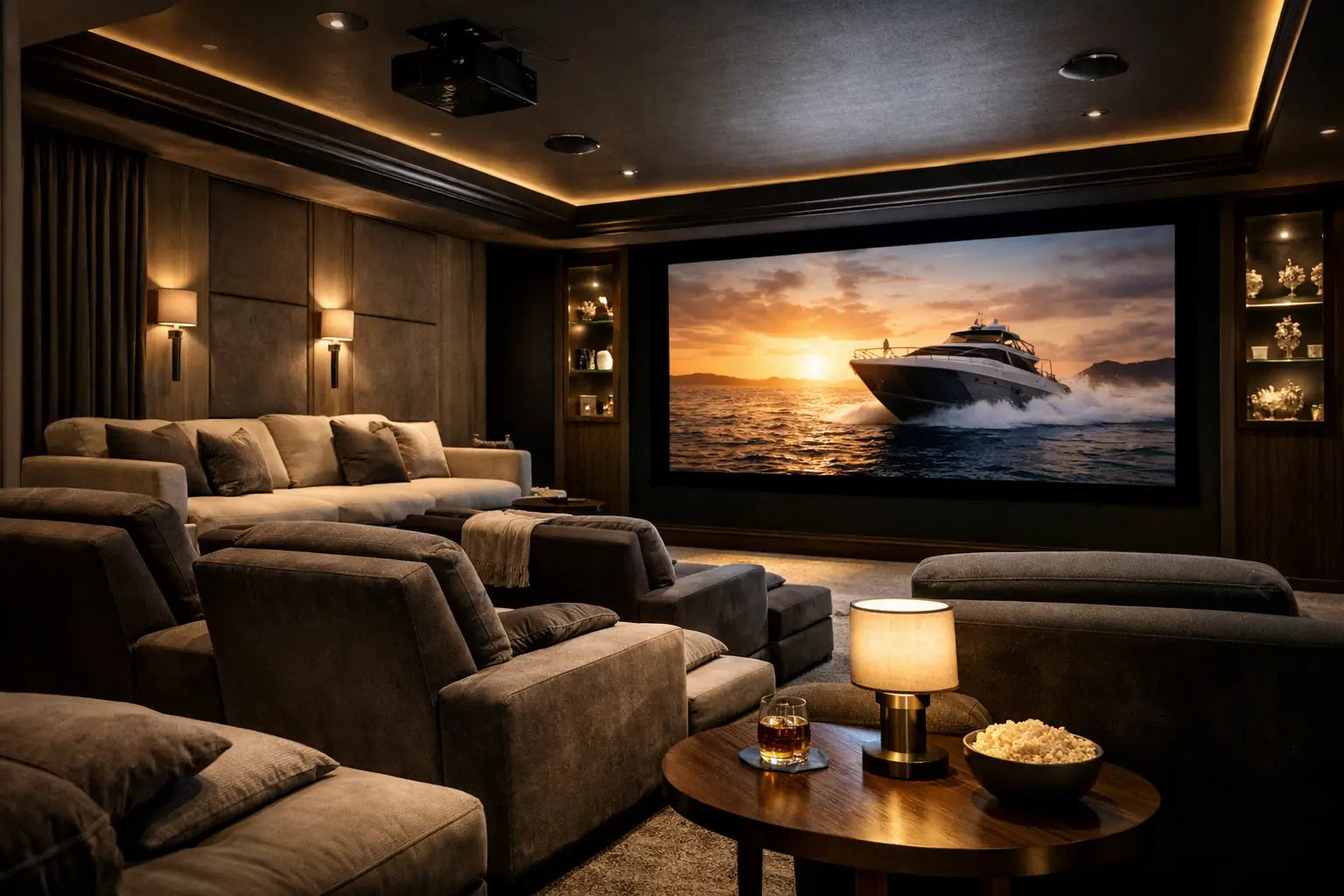
نادراً ما تُعرّف السينما المنزلية التي لا تُنسى بحجم الشاشة وحدها. يكمن الفرق بين الغرفة التي تعرض الأفلام فحسب وتلك التي تبدو سينمائية منذ الخطوة الأولى في الداخل في التناسب، والصوتيات، والإضاءة، والراحة، والتحكم. تم تصميم دليل غرفة السينما الفاخرة هذا لأصحاب المنازل، والمهندسين المعماريين، والمطورين الذين يرغبون في الحصول على مساحة تعمل بمستوى عالٍ مع الحفاظ على ملاءمتها للمنزل المحيط بها.
في المساكن الفاخرة، لم تعد غرفة السينما تُعامل كصندوق تقني معزول. إنها جزء من لغة التصميم الشاملة للممتلكات، وتحتاج إلى تقديم تأثير بصري وسهولة يومية. وهذا يعني أن كل قرار، من أبعاد الغرفة إلى تشطيبات الأقمشة، يجب أن يدعم الانغماس دون المساس بالأناقة.
ما الذي يميز غرفة السينما الفاخرة
غرفة السينما الفاخرة ليست مجرد غرفة إعلامية بمعدات باهظة الثمن. إنها بيئة مصممة خصيصًا لجودة الصورة، والصوت المتحكم فيه، والراحة البصرية، والتشغيل البديهي. يجب أن تشعر الغرفة بالهدوء والتوازن والقصد قبل بدء الفيلم.
وهذا يعني عادةً مكبرات صوت مدمجة بشكل سري، وخطوط رؤية مخططة بعناية، وكابلات مخفية، ومشاهد إضاءة متعددة الطبقات، ومعالجة صوتية تحسن الأداء دون جعل الغرفة تبدو تقنية بشكل مفرط. الهدف هو الصقل. عندما يتم ذلك بشكل جيد، تتراجع التكنولوجيا ويسيطر التجربة.
هناك أيضًا تمييز عملي بين غرفة ترفيه عادية وسينما مخصصة. يمكن أن تكون صالة عائلية متعددة الأغراض مثيرة للإعجاب، ولكن إذا كنت تريد أداءً بمستوى مرجعي، فيجب تصميم الغرفة حول السينما أولاً. وهذا يؤثر على التخطيط والتشطيبات واختيارات المعدات وحتى كيفية التعامل مع الأبواب وأنظمة التدفئة والتهوية وتكييف الهواء (HVAC).
يبدأ دليل غرفة السينما الفاخرة بالغرفة نفسها
الغرفة هي الأساس. حتى أفضل جهاز عرض ومجموعة مكبرات صوت ستعاني في مساحة ذات نسب سيئة، أو أسطح عاكسة، أو ضوء محيط غير متحكم فيه. التخطيط المبكر أهم بكثير من الترقيات في المراحل المتأخرة.
شكل الغرفة هو أحد الاعتبارات الأولى. يساعد التناظر في توازن مكبرات الصوت ومحاذاة المشاهدة، بينما تخلق خطوط السقف غير الملائمة أو الزجاج الزائد غالبًا تحديات صوتية وإضاءة. هذا لا يعني أن كل سينما يجب أن تكون مستطيلة مغلقة، ولكنه يعني أن العمارة يجب أن تدعم الأداء بدلاً من محاربته.
يؤثر الحجم أيضًا على كل شيء آخر. يمكن أن تكون السينما المدمجة مثيرة للإعجاب للغاية عند تصميمها بشكل صحيح، بينما قد تتطلب الغرفة الكبيرة جدًا عرضًا أكثر قوة، وقنوات مكبرات صوت أكثر، وتحكمًا صوتيًا أكبر، وتخطيطًا مناخيًا أكثر جوهرية. الأكبر ليس الأفضل تلقائيًا. المقياس الصحيح هو الذي يدعم مسافات مشاهدة مريحة وتغطية صوتية مناسبة.
إذا كانت الغرفة قيد التخطيط أثناء البناء أو التجديد، فهذه هي اللحظة المثالية لحساب عزل الصوت، والكابلات المنظمة، ورفوف المعدات، ومسارات التهوية، والمساحات المخصصة للشاشات أو مكبرات الصوت. التعديل ممكن، ولكنه عادة ما يتضمن تسوية.
اختيارات الشاشة وجهاز العرض تشكل التجربة بأكملها
في غرفة السينما الراقية، يجب أن تبدو الصورة سلسة. يأتي ذلك من اختيار حجم شاشة يناسب الغرفة وجهاز عرض يوفر السطوع والتباين والتفاصيل المناسبة للبيئة.
الخطأ الأول الذي يرتكبه العديد من أصحاب المنازل هو اختيار أكبر شاشة ممكنة دون النظر في مسافة الجلوس. يجب ألا تشعر السينما الفاخرة أبدًا بالإرهاق البصري أو الإجهاد. يجب أن تملأ الصورة مجال رؤيتك بشكل مريح، مع حجم كافٍ للشعور بالانغماس والقيود الكافية للحفاظ على الأناقة.
يظل الإسقاط هو الخيار المفضل لغرف السينما المخصصة لأنه يوفر الحجم والجو الذي يربطه معظم العملاء بتجربة المشاهدة السينمائية الحقيقية. ومع ذلك، لا تناسب كل غرفة نفس حل الإسقاط. تسمح الغرفة التي يمكن التحكم في الضوء فيها بالكامل بمرونة أكبر، بينما قد تتطلب المساحات التي تحتوي على بعض الضوء المحيط جهاز عرض عالي السطوع أو مادة شاشة أكثر تخصصًا.
تعد نسبة العرض إلى الارتفاع مهمة أيضًا. يفضل بعض العملاء تنسيقًا سينمائيًا عريض الشاشة للمشاهدة التي تركز على الأفلام، بينما يرغب آخرون في إعداد أكثر تنوعًا يعمل بشكل جيد بنفس القدر للبث المباشر والرياضة والألعاب. لا يوجد حل عالمي صحيح. يعتمد الخيار الصحيح على كيفية استخدام الغرفة في أغلب الأحيان.
الصوت هو ما يميز الغرف الفاخرة عن غيرها
يميل الناس إلى ملاحظة الصورة أولاً، لكن الصوت غالبًا هو ما يجعل السينما تبدو باهظة الثمن. غرفة ذات صوت دقيق ومحيط تخلق تأثيرًا عاطفيًا لا تستطيع غرفة التلفزيون العادية مضاهاته.
هذا هو المكان الذي تصبح فيه الهندسة ضرورية. يشارك وضع السماعات، وأبعاد الغرفة، والمعالجة الصوتية، واستراتيجية مضخم الصوت، والمعايرة جميعها معًا. الصوت السينمائي الفاخر لا يتعلق بحجم الصوت المطلق. إنه يتعلق بالوضوح والعمق والتوازن والتحكم. يجب أن تبدو الحوارات ثابتة وطبيعية. يجب أن يكون الصوت الجهير قويًا ولكنه غير مبالغ فيه أبدًا. يجب أن تتحرك المؤثرات المحيطية بشكل مقنع دون لفت الانتباه إلى مكبرات الصوت الفردية.
يمكن للنظام المصمم جيدًا أن يكون سريًا في المظهر مع تقديم أداء استثنائي. يمكن لمكبرات الصوت المعمارية المخفية خلف الجدران القماشية أو المدمجة في الأعمال الخشبية المصممة بعناية أن تحافظ على النقاء البصري للغرفة. المفتاح ليس إخفاء التكنولوجيا في حد ذاتها، ولكن دمجها بطريقة تدعم التصميم والصوتيات على حد سواء.
بالنسبة للفلل الكبيرة والمساكن الفاخرة، قد تكون تنسيقات الصوت المحيط الغامرة مناسبة، بما في ذلك القنوات العلوية لزيادة الأبعاد. بالنسبة للغرف الأصغر، قد يوفر التكوين الأبسط نتائج أفضل إذا لم تتمكن المساحة من دعم تصميم أكثر تعقيدًا بشكل صحيح. لا يعني عدد أكبر من مكبرات الصوت دائمًا أداءً أفضل.
المعالجة الصوتية ليست اختيارية
يجب أن يتناول أي دليل جاد لغرفة السينما الفاخرة الصوتيات بشكل مباشر. هذا أحد أكثر العناصر التي يتم تجاهلها في المشاريع السكنية وأحد أهمها.
تخلق الأسطح الصلبة انعكاسات تشوش الحوار وتجعل الغرفة تبدو قاسية. يمكن أن تتراكم الترددات المنخفضة بشكل غير متساوٍ، مما يتسبب في أن تبدو بعض المقاعد ثقيلة بشكل مفرط بينما تبدو الأخرى رفيعة. تعالج المعالجة الصوتية هذه المشكلات عن طريق التحكم في الانعكاسات، وإدارة الارتداد، وتحسين التوازن النغمي العام.
في سينما فاخرة، يجب أن تكون المعالجة الصوتية جزءًا من لغة تصميم الغرفة. يمكن لأنظمة الجدران القماشية، وتفاصيل الخشب المخططة، والتحكم في الصوت الجهير خلف الجدران الأمامية، والأسقف الصوتية، والسجاد المختار بعناية أو المفروشات أن تسهم جميعها. يجب أن تبدو اللمسة النهائية معمارية، وليست مرتجلة.
عزل الصوت طبقة أخرى بالكامل. إذا كانت السينما مجاورة لغرف النوم، أو مساحات المعيشة الرسمية، أو العقارات المجاورة، يصبح العزل ضروريًا. قد يشمل ذلك تركيبات جدران مطورة، وأسقف معزولة، وأبواب متخصصة، والتحكم في الاهتزاز. يعتمد ذلك على العقار والهدف من الأداء، ولكن في المنازل عالية القيمة، يعد الهدوء والخصوصية جزءًا من العرض الفاخر.
المقاعد والإضاءة والراحة تكمل الغرفة
حتى السينما الأكثر تطوراً تقنياً ستظل قاصرة إذا لم تكن مريحة. يجب أن تدعم المقاعد جلسات مشاهدة طويلة وتحافظ على خطوط رؤية مناسبة للشاشة. يتضمن ذلك تباعد الصفوف، وارتفاع المنصة، وعرض المساند، وعمق الانحدار، والعلاقة بين المقاعد الرئيسية ومركز الصورة.
يفضل بعض أصحاب المنازل مقاعد السينما التقليدية المتدرجة. بينما يرغب آخرون في ترتيب يشبه الصالة مع عدد أقل من المقاعد، ومساحة أوسع، وجو أكثر حميمية. كلاهما يمكن أن يعمل بشكل جميل. يعكس أفضل تصميم عادات الأسرة بدلاً من صيغة عرض عامة.
تستحق الإضاءة نفس الاهتمام الذي يولى للسمعيات والبصريات. تتضمن غرفة السينما الراقية عادةً مشاهد إضاءة متعددة الطبقات للوصول، والاستراحة، والتنظيف، والمشاهدة. يمكن أن تكون أضواء الدرج، ولهجات الحائط، والإضاءة المخفية، وأسقف النجوم فعالة جميعها عند استخدامها باعتدال. الهدف هو الجو والاستخدامية، وليس التشتيت.
التحكم في المناخ لا يقل أهمية. تولد معدات العرض ومضخمات الصوت والغرف المغلقة الحرارة. إذا لم يتم تصميم التهوية وتكييف الهواء بشكل صحيح، فإن الراحة تتأثر وقد يقل عمر المعدات. تصميم أنظمة التدفئة والتهوية وتكييف الهواء الهادئة مهم بشكل خاص لأن حتى الضوضاء الخفيفة في الهواء يمكن أن تتداخل مع مشاهد الأفلام الأكثر هدوءًا.
يجب أن يكون التحكم الذكي سلسًا
يجب ألا تتطلب السينما الفاخرة أجهزة تحكم عن بُعد متعددة أو روتين تشغيل معقد. التحكم بلمسة واحدة هو جزء من التجربة.
عندما يتم دمج النظام بشكل صحيح، يمكن لأمر واحد أن يخفض الأضواء، ويشغل جهاز العرض، ويضبط وضع الصوت، ويغلق الستائر، ويبدأ التشغيل. وهنا تكمن قيمة استراتيجية المنزل الذكي الأوسع. يجب أن تكون السينما متناغمة بشكل طبيعي ضمن النظام البيئي الأكبر للتحكم في الإضاءة، والتظليل، والمناخ، والأمن، وأتمتة المنزل بأكمله.
بالنسبة للعملاء المتميزين، فإن الفائدة الحقيقية هي الراحة دون فوضى بصرية. يمكن اختيار وحدات التحكم المثبتة على الجدران، أو أجهزة التحكم عن بُعد المحمولة، أو لوحات اللمس السرية لتناسب التصميم الداخلي، بينما يضمن البرمجة الأساسية أن تتصرف الغرفة بشكل متسق. يجب أن تبدو التكنولوجيا الفاخرة بديهية، وليست مسرحية.
لماذا التصميم المخصص مهم في دليل غرفة السينما الفاخرة
لا توجد قائمة معدات عالمية تضمن سينما رائعة. الحل الصحيح يعتمد على الهندسة المعمارية، وتوقعات المستخدم، ومستوى طموح التصميم، وكيف تتناسب الغرفة مع العقار الأوسع.
لهذا السبب يهم التصميم المخصص. قد تتطلب سينما في فيلا على الواجهة البحرية استراتيجيات صوتية مختلفة عن سينما في ملحق سفلي. قد تعطي صالة عرض المطور الأولوية للدراما البصرية والموثوقية، بينما قد تركز سينما عائلية خاصة على الراحة والبساطة. حتى ضمن نفس النطاق الميزاني، تختلف الأولويات.
هنا يحدث النهج الذي يقوده الهندسة فرقًا ذا معنى. تأتي أقوى النتائج من تنسيق التصميم، والبنية التحتية، والمعدات، والصوتيات، والتحكم منذ البداية بدلاً من التعامل مع كل منها كطبقة منفصلة. بالنسبة للعملاء الذين يتوقعون أن تبدو الغرفة استثنائية وتؤدي بنفس المستوى، فإن التكامل هو الفرق بين الأجزاء باهظة الثمن والتجربة النهائية.
في أنظمة آي-ترست، تقع هذه الفلسفة في قلب تصميم السينما الفاخرة. تُعتبر الغرفة بيئة متكاملة، حيث تدعم التكنولوجيا والراحة والتطور الداخلي بعضها البعض.
تغير غرفة السينما المنفذة بشكل جيد إيقاع المنزل. إنها تخلق مكانًا يرغب الناس حقًا في قضاء الوقت فيه، سواء لعرض فيلم أول، أو أمسية عائلية، أو هروب خاص في نهاية اليوم. إذا خططت لها بعناية، فإن النتيجة ليست مجرد ترفيه أفضل. إنها غرفة ذات حضور وهدف وقيمة دائمة.
مشاركة:
أتمتة سلكية أم لاسلكية: أيهما الأنسب؟
كيف تعمل أتمتة الفيلا الذكية