

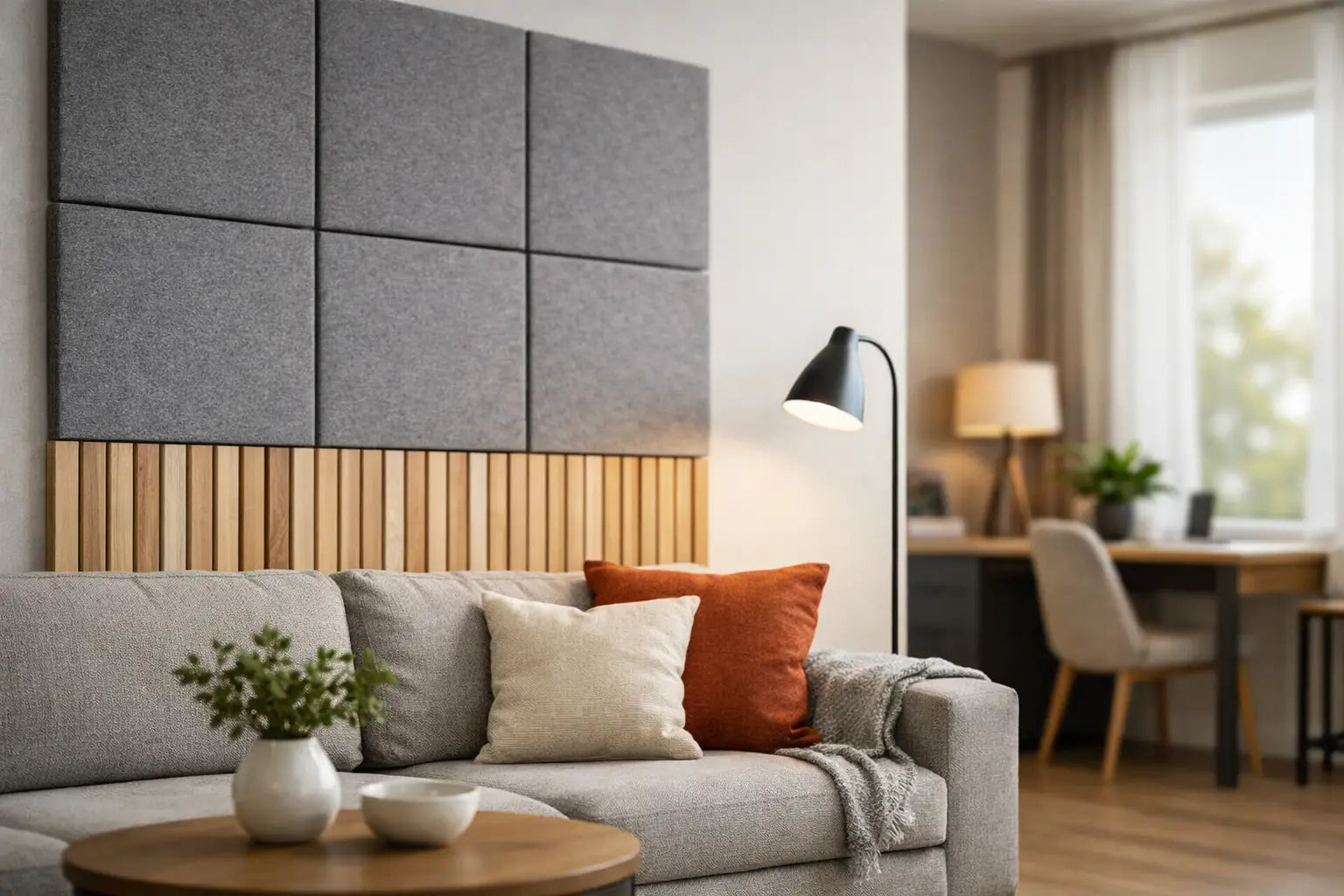
A beautifully designed room can still feel unfinished the moment sound enters it. Dialogue becomes hard to follow, music loses detail, voices carry too far, and the room develops a busy, unsettled character. Understanding how acoustic wall panels help is the first step toward creating spaces that sound as considered as they look - whether that space is a private cinema, a luxury villa, a boardroom, or a high-traffic commercial venue.
Acoustic treatment is not simply a technical add-on. In a premium interior, it is part of the experience. It gives a home cinema its intimacy, makes a meeting room more authoritative, and lets a restaurant, gym, or auditorium feel controlled rather than chaotic. When specified correctly, wall panels improve the way a room performs without compromising the architecture, materials, or visual identity of the space.
How Acoustic Wall Panels Help Control Reflections
Every hard surface reflects sound. Glass, stone, marble, painted drywall, polished concrete, and timber floors may look exceptional, but they can also send sound energy bouncing around a room. Those reflections arrive at the listener’s ear fractions of a second after the original sound. The result is reverberation: speech becomes less distinct, music becomes smeared, and a room can feel louder than it actually is.
Acoustic wall panels absorb a controlled portion of this reflected energy. Most panels use a sound-absorbing core, often mineral wool, fiberglass, recycled acoustic fiber, or engineered foam, behind an acoustically transparent fabric, timber finish, or decorative facing. Rather than allowing sound to ricochet repeatedly across the room, the panel converts part of that energy into a small amount of heat.
The benefit is not a lifeless or overly muted room. The objective is balance. A well-designed acoustic scheme retains the natural character of a space while reducing the reflections that interfere with clarity and comfort. The difference is often felt immediately: conversations become easier, sound systems become more articulate, and the room feels calmer even when it is occupied.
Clearer Speech in Rooms That Matter
Speech intelligibility is one of the strongest reasons to invest in acoustic treatment. In a large living room with stone finishes, family conversations can feel strained because voices compete with their own reflections. In an executive conference room, poor acoustics can make a presentation seem less polished, even with a high-quality display and video conferencing system.
Wall panels reduce the buildup of reverberant sound so the direct voice reaches listeners with greater definition. This is especially valuable in spaces where communication carries commercial, educational, or social value: meeting rooms, classrooms, mosques, reception areas, restaurants, multipurpose halls, and auditoriums.
For video conferencing, the improvement is equally important. Microphones capture both the speaker and the room. If reflections are excessive, remote participants hear a hollow, distant sound that no camera or display can correct. Acoustic panels help create a more natural voice pickup, allowing an integrated AV system to perform as intended.
A More Convincing Home Cinema Experience
In a dedicated cinema room, untreated walls can undermine even the finest projector, screen, loudspeakers, and seating. Reflections from side walls and the rear of the room blur imaging, reduce dialogue intelligibility, and make action sequences sound tiring rather than immersive.
Acoustic wall panels help define the soundstage. Carefully positioned absorption at key reflection points allows left, center, and right speakers to communicate with greater precision. Dialogue appears anchored to the screen. Subtle soundtrack details are easier to hear. Effects move around the room with more convincing placement.
Not every surface should be absorbent. A cinema designed with too much absorption can sound unnaturally dry and reduce the sense of scale. The strongest results usually combine absorptive wall panels with selected diffusion, bass management, speaker calibration, and considered room geometry. Acoustic performance is a system, not a single product.
A Quieter Feeling Without Confusing It With Soundproofing
Acoustic wall panels improve the sound within a room. They are not, by themselves, a complete solution for stopping sound from traveling through walls, doors, ceilings, and structural gaps.
This distinction matters in villas, apartments, offices, hospitality venues, and entertainment spaces. If the requirement is to prevent cinema sound from reaching a bedroom, reduce music transfer to a neighboring property, or contain gym noise, the project may require soundproofing construction. That can include decoupled walls, insulation within cavities, acoustic doors, sealed penetrations, floating floors, or resilient ceiling systems.
Panels may still be part of that project because they improve the internal listening environment. But the right approach depends on the problem. Echo and poor clarity call for acoustic treatment. Noise transfer calls for sound isolation. Many premium projects require both, designed together from the earliest stages.
Better Audio From the Equipment You Already Own
A refined audio system cannot overcome an unsuitable room on its own. Loudspeakers are engineered and tuned in controlled conditions, but their performance changes dramatically when they are installed beside reflective finishes, expansive glazing, or irregular open-plan architecture.
Acoustic panels give an AV system a more stable foundation. Music gains separation between instruments, bass becomes more controlled, and high frequencies lose the harsh edge often caused by excessive reflections. This can be particularly noticeable in multi-room audio zones, formal lounges, media rooms, private studios, and high-end gaming spaces.
The value is not limited to expensive equipment. Better acoustics allow a modest system to sound more composed and enjoyable, while a premium system can reveal the performance its owners invested in. For a luxury home, this is the difference between installing technology and creating an experience.
Design Freedom, Not Visual Compromise
The outdated image of acoustic treatment is a wall covered in generic foam tiles. Premium acoustic wall panels are far more adaptable. They can be upholstered in a curated fabric palette, integrated behind stretched fabric systems, finished with timber slats, printed with bespoke artwork, or shaped to support the design language of the room.
In a contemporary villa, panels might be concealed within architectural wall features. In a cinema, they may become part of a dramatic dark interior that supports both visual focus and sound control. In a corporate setting, they can introduce warmth, color, and texture while serving a precise performance purpose.
This flexibility makes early coordination essential. When acoustic treatment is considered alongside lighting, joinery, HVAC grilles, screen placement, speaker locations, and automation keypads, the final result feels intentional. Retrofitting remains possible, but it may involve more visual compromise and fewer placement options.
Where Panel Placement Makes the Difference
More panels do not automatically mean better acoustics. Placement, thickness, air gaps, room dimensions, ceiling height, furnishings, and intended use all affect the outcome. A compact cinema needs a different approach from a double-height living area. A busy gym requires different absorption characteristics than a quiet executive boardroom.
A professional acoustic assessment considers how the room is used and where the most disruptive reflections occur. Side-wall first reflection points are often a priority for stereo and cinema systems. Rear walls may need additional absorption or diffusion. Large open spaces may benefit from a combination of wall and ceiling treatment, especially where hard floors and glass dominate the architecture.
Low-frequency control deserves particular attention. Standard thin panels are highly effective for mid and high frequencies but have limited impact on deep bass. Home cinemas, music rooms, and venues with powerful sound systems may require deeper bass traps, tuned treatments, or purpose-built architectural solutions to prevent bass buildup in corners and boundaries.
Acoustic Comfort Is a Luxury You Notice Every Day
The most successful acoustic projects are rarely noticed as individual panels. What people notice is the ease of the room. They can speak without raising their voice. They can enjoy film dialogue without turning up the volume. They can listen to music for longer without fatigue. Guests sense a quieter, more composed environment, even if they cannot identify why.
For developers and designers, that level of comfort adds tangible value to a finished property. For homeowners, it makes daily living more relaxed and entertainment more compelling. For commercial spaces, it supports clearer communication, stronger customer experiences, and a more professional impression.
At I-Trust Systems, acoustic treatment can be planned as part of a wider environment that brings AV, lighting, automation, and interior design into alignment. The best time to consider acoustic wall panels is before the finishes are finalized, when every technical decision can support the atmosphere you want the room to deliver.
A room should not only look exceptional when it is empty. It should feel exceptional when people begin to live, talk, work, and listen within it.
مشاركة:
Home Theater Room Dimensions Guide for Luxury Homes
How to Choose Access Control for Luxury Properties